Add Us As A Trusted Google Source
 Sheet Pan Dinners for Two — The Complete Guide to One-Pan Cooking at Small Scale
»

Eleven high-protein lunch recipes from this site sized for exactly two people — organized into five categories from fastest to most satisfying. Here is what makes this post different from most of the high-protein lunch recipes lists online. Every recipe is from this site — not a roundup of other bloggers’ creations — and every one serves exactly two
Let me describe a scenario that is more common than any food blog is willing to admit: it is 3:15pm. You ate lunch at noon. You had something that seemed reasonable — a salad, maybe some crackers, something from the fridge that seemed fine. And now you are genuinely, uncomfortably hungry. Not ‘I could eat’ hungry. Hunger that is starting to affect your concentration, your patience, and your ability to make good choices about what you eat next.
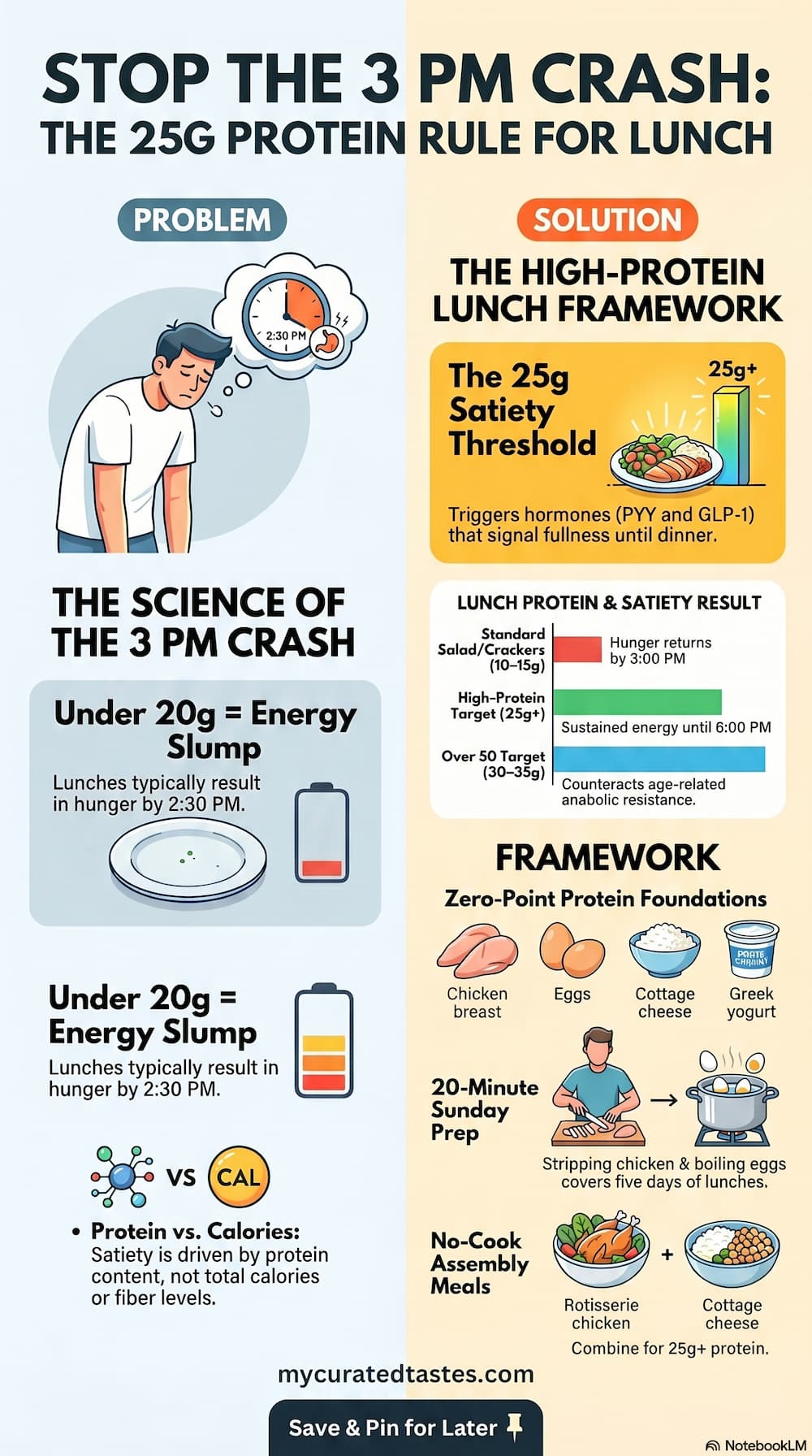
This is the 3pm energy crash, and it is not a willpower problem. It is a lunch problem. Specifically, it is a protein problem. Research published in the Journal of Nutrition found that high-protein lunches — those delivering 25 grams or more of protein — produced significantly greater satiety, reduced afternoon hunger, and decreased evening snacking compared to lower-protein lunches at identical calorie levels. The mechanism is straightforward: protein triggers the release of satiety hormones (peptide YY and GLP-1) more powerfully and for longer than carbohydrates or fat. A high-protein lunch keeps those hormones elevated from noon until dinner. A low-protein lunch does not.
The practical implication: the difference between a lunch that carries you cleanly to 6pm dinner and one that sends you to the pantry at 3:30 is almost entirely the protein content. Not the calorie count. Not the fiber. Not the ‘healthiness’ in any general sense. Specifically the protein. This collection is built around that fact. Trust me, I’ve learned the hard way over the years. Grabbing some crackers or a banana because I was “in a rush”, didn’t work. It wasn’t until I had some solid protein options in my arsenal of tricks, that I was able to lose weight and maintain it.
For the complete high-protein recipe collection on this site, visit the High-Protein Recipes Guide. For the two-person cooking framework that sizes every recipe correctly, see the Complete Guide to Cooking for Two. For the WW approach to protein eating throughout the day, see the Cooking for Two on Weight Watchers guide.
Lunch for two has a structural challenge that breakfast and dinner do not. Breakfast is typically identical for both people — the same overnight oats, the same yogurt, the same egg scramble. Dinner is a planned meal that both people sit down to eat together. But lunch? Lunch is the meal where schedules diverge, one person might be working from home while the other commutes, one might want something hot and one might want something cold, and the entire meal needs to come together in 5–10 minutes without standing over a stove. I work a lot…I mean a lot. And when I’m in “the zone”, the last thing on my mind is making lunch. I’ve had to learn to stop and get something to eat in order to fuel my body. Eating lunch is not a natural thing for me (don’t get mad, it is just a fact for me). So having good choices ready to go has been key to making sure I eat a healthy, protein rich lunch every day.
Most lunches — even ones that feel substantial — deliver 10–15 grams of protein. That sounds adequate until you consider that research consistently shows 25 grams as the threshold for meaningful satiety response. Here is the practical breakdown:
The Protein Lunch Tiers
Under 15g: The typical desk lunch. A salad with some chicken but no other protein sources, a turkey sandwich on regular bread, a yogurt with fruit. Feels fine at noon. Creates the 3pm crash reliably.
15–24g: Better but not optimal. Suppresses hunger for 2–3 hours. Still produces some afternoon snacking in most people, especially those over 50 where anabolic resistance means protein is used less efficiently.
25–35g: The target range. Research-supported satiety response. Carries most people cleanly from noon to dinner. Every recipe in this collection is designed to hit this range.
35g+: Optimal for adults over 50 and anyone with high activity levels. Achievable through protein stacking — combining two protein sources in a single lunch. Several recipes in this collection exceed this mark.
The single most effective two-person lunch strategy is not meal prepping separate lunches on Sunday. It is cooking slightly more of a dinner component — the protein, the grain, the vegetable — and repurposing it deliberately into a completely different lunch the next day. This is the planned-overs system, and it is different from leftovers in one critical way: you are not eating the same meal again. You are using the same ingredient in a completely different preparation.
The practical guide: every Sunday, when you strip a rotisserie chicken, hard-boil 6 eggs, and cook one dinner that uses ground turkey — you have the protein foundation for three to four different lunches this week. The lunches require no additional cooking. Just assembly, dressing, and a refrigerator. For the complete Sunday prep system, see the Meal Planning for Two guide.
The most common WW lunch mistake is spending too many points at midday and arriving at dinner with too little budget left for a satisfying evening meal. The solution is building lunch around zero-point protein foundations and adding flavor through low-point additions rather than point-heavy bases.
For the complete zero-point meal formula that applies at lunch as well as dinner, see the Zero-Point Recipes for Two guide. For the full WW meal plan that integrates lunch into the weekly strategy, see the WW-Friendly Meal Plan for Two — 7 Days.
Organized by category. Every recipe is from My Curated Tastes, sized for two servings, and verified to deliver 20g+ protein per person.
Chicken salads are the highest-protein, most versatile, and most make-ahead-friendly lunch category. Every recipe in this section uses rotisserie or grilled chicken that can be prepped Sunday for the whole week.

🥗 Healthy Creamy Chicken Caesar Salad for Two
⏱ 20 minutes (5 minutes with pre-prepped chicken) 🥩 30g+ per serving ⭐ WW: 3–5 points
The Caesar salad reinvented for WW without sacrificing a single thing that makes a Caesar worth eating. A Greek yogurt-based Caesar dressing — creamy, garlicky, with anchovy paste and Dijon for depth — coats crisp, properly prepared romaine. Diane’s technique for the romaine is worth noting separately: she cuts the tough core out of the larger leaves with a paring knife before chopping, producing a Caesar that is genuinely pleasant to eat rather than one where you are fighting woody stems. The Parmesan appears in two forms — grated through the dressing, shaved over the top — for maximum cheese impact at minimum points. With pre-stripped rotisserie chicken, this assembles in five minutes.
💡 Lunch Tip: Remove the tough inner core from large romaine leaves with a paring knife — it makes an enormous difference in texture. Make the dressing in double batches and refrigerate for up to a week: it improves as the flavors meld and transforms any protein-over-greens combination into a restaurant-quality salad.
🍑 Apricot Chicken Salad with Dill
⏱ 20 minutes (5 minutes with rotisserie chicken) 🥩 28g+ per serving ⭐ WW: 3–5 points
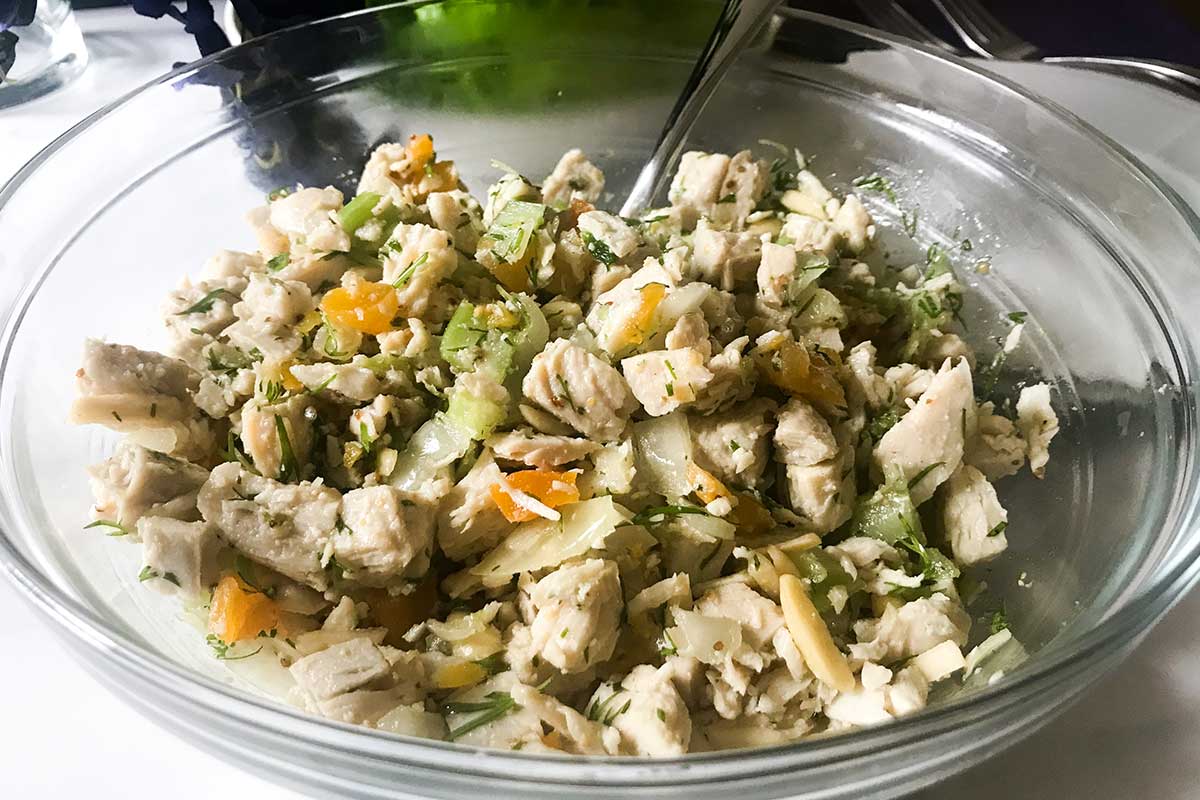
One of the most unexpectedly wonderful lunches on this site — and the one that earns the most ‘what is that flavor?’ reactions. Rotisserie chicken tossed with fresh dill, dried apricots, celery, slivered almonds, and a light dressing built on artisanal olive oil and balsamic vinegar. Served in butter lettuce leaves (doubled for structural integrity, as Diane notes — always use two or three leaves per wrap). The apricot-dill pairing is genuinely unusual and genuinely addictive. Make it at least 30 minutes before eating — overnight in the fridge is even better, as the flavors marry into something far more complex than the individual ingredients suggest.
💡 Lunch Tip: Let the salad sit for at least 30 minutes before serving — the olive oil and balsamic penetrate the chicken and the apricots plump slightly with the dressing. Overnight is ideal. This is one of the few recipes that actively improves the longer it sits in the fridge.

🫐 Blackberry Chicken Salad for Two
⏱ 20 minutes (5 minutes with rotisserie chicken) 🥩 28g+ per serving ⭐ WW: 2–4 points
One of the most visually beautiful lunches on the entire site — grilled or rotisserie chicken over a bed of mixed greens (spinach, arugula, and iceberg) with fresh blackberries, avocado, cucumber, feta, and walnuts, dressed with a sugar-free blackberry jam vinaigrette. The fresh blackberries are genuinely extraordinary here — antioxidant powerhouses with flavor that no dressing can replicate. Diane uses her beloved iceberg in the mix (and is unrepentant about it — the crunch and hydration it provides make the salad noticeably better) alongside spinach for nutrition and arugula for a peppery note. Make the vinaigrette Sunday and use it all week on any protein-over-greens combination.
💡 Lunch Tip: Make the blackberry jam vinaigrette in a jar on Sunday — whisk vinegar, sugar-free preserves, salt, pepper, then stream in olive oil. It keeps a week refrigerated and transforms any lunch salad into something genuinely special.
🍎 Red Apple and Chicken Salad with Nut Clusters
⏱ 20 minutes (5 minutes with pre-made nut clusters) 🥩 28g+ per serving ⭐ WW: 3–5 points
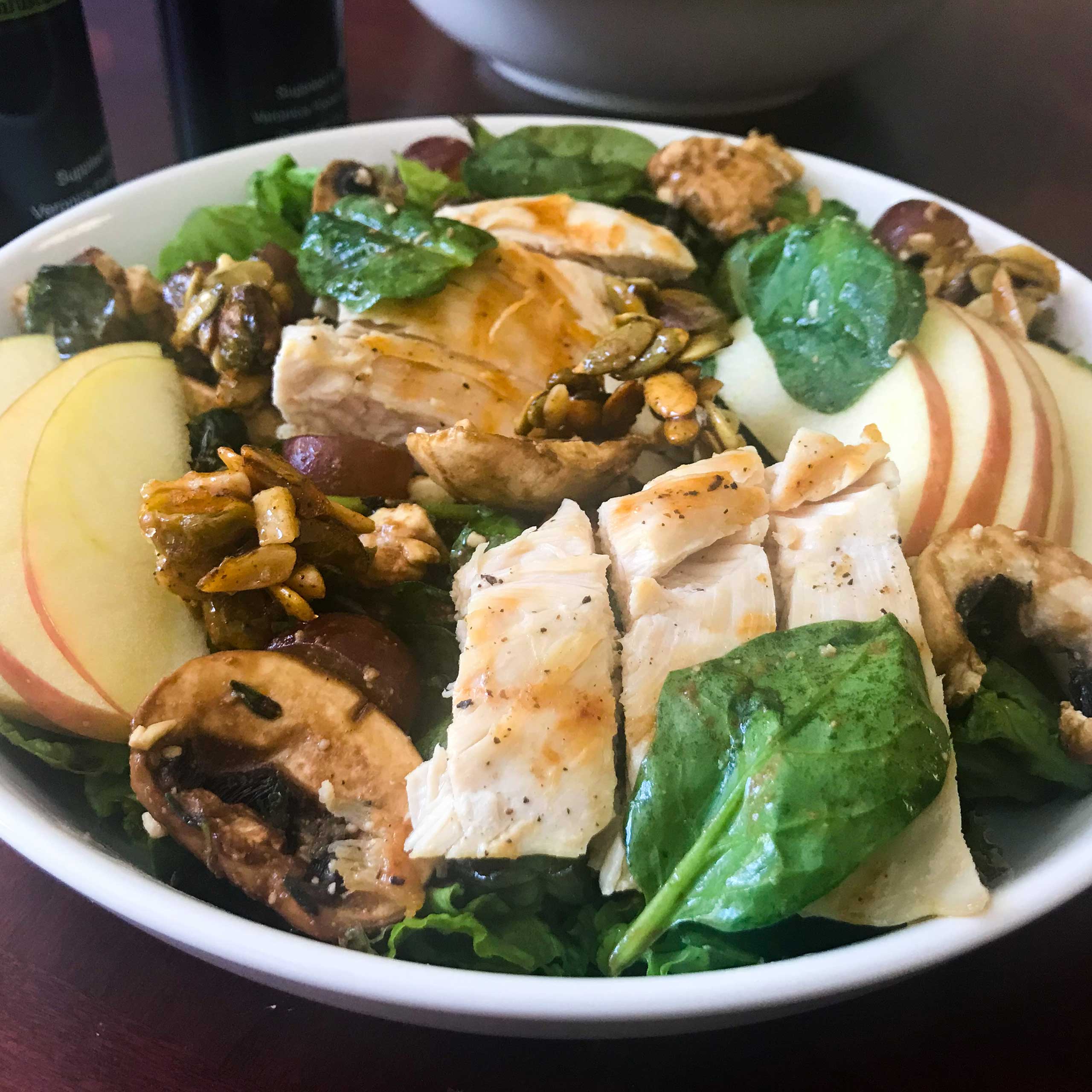
The chicken salad that converts people who think they do not like chicken salad. Sliced rotisserie chicken over mixed greens with crisp red apple slices, homemade honey nut clusters, and a light dressing that lets the apple and nut flavors lead. The nut clusters — made separately and stored in a jar — add the kind of crunchy, toasted, slightly sweet element that makes this salad feel genuinely special rather than functional. The apple brings natural sweetness that eliminates any need for sugary dressing. Make the nut clusters on Sunday and this is a five-minute assembly lunch all week.
💡 Lunch Tip: Make a batch of the honey nut clusters on Sunday and store in an airtight container at room temperature — they keep a week and transform any salad from ordinary to outstanding. They also work as a standalone snack straight from the jar.
These salads are the lunch-time zero-point heroes — substantial enough to satisfy but light enough to leave the daily budget largely intact for dinner.

⏱ 15 minutes assembly 🥩 10–12g per serving (add chicken to reach 25g+) ⭐ WW: 1–3 points
The assembly-only lunch for the days when there is no time to cook anything. Chopped Greek salad — cucumber, tomato, red onion, Kalamata olives, feta, and a simple red wine vinegar and olive oil dressing — served in gem lettuce cups that you eat with your hands like a taco. Light, fresh, genuinely satisfying when you add rotisserie chicken (zero points, already in the fridge from Sunday). The lettuce cup format makes this feel like a restaurant appetizer platter rather than a desk lunch. Diane found baby Gem lettuce at Sprouts that worked perfectly for the cups — two leaves stacked per serving.
💡 Lunch Tip: Add 4 ounces of stripped rotisserie chicken (zero points, zero cooking) to bring the protein to 25g+ per serving and turn this from a light side into a complete high-protein lunch. The Greek salad mixture keeps refrigerated for 2 days — assemble the lettuce cups fresh.
⏱ 15 minutes 🥩 8–10g per serving (add protein to reach 25g+) ⭐ WW: 2–4 points
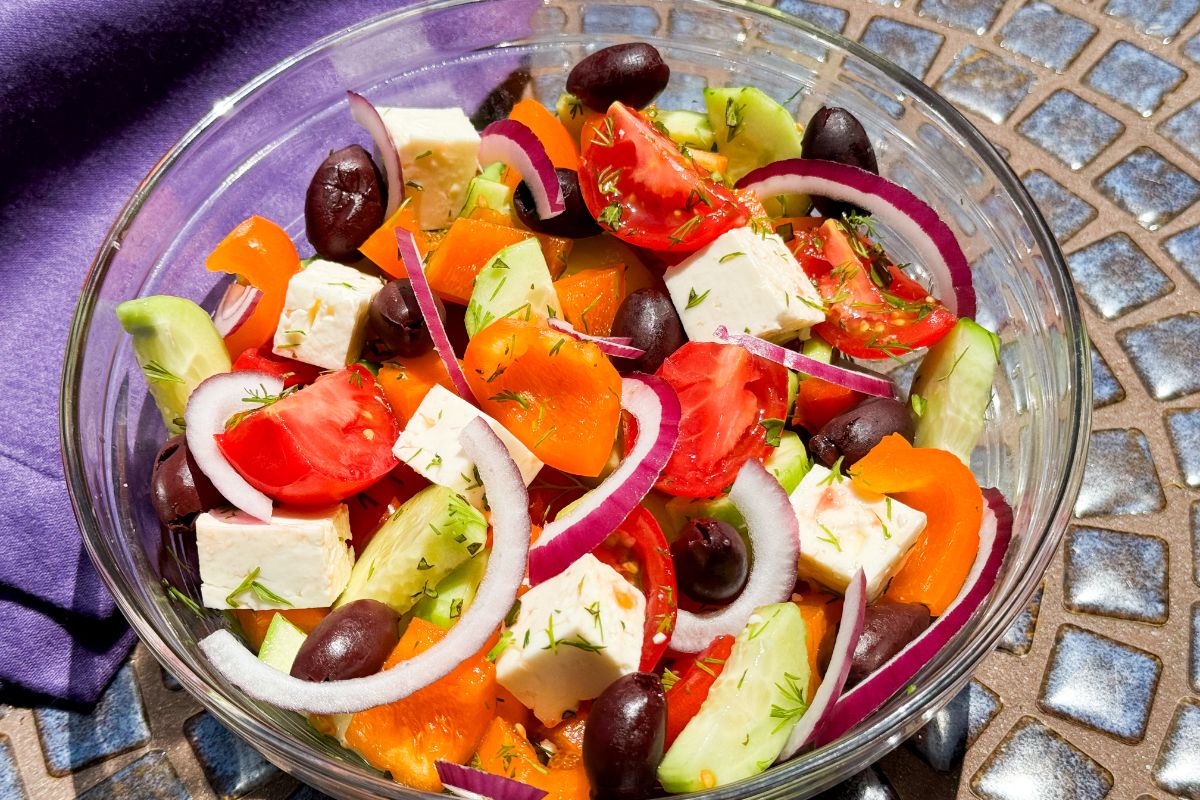
The authentic Greek village salad — no lettuce, as tradition demands — built on tomatoes, cucumbers, red onion, bell pepper, Kalamata olives, and a generous slab of authentic PDO feta in brine. Dressed simply with extra virgin olive oil, red wine vinegar, and dried oregano. This is the salad that gets better as it sits — make it Sunday, eat it through Tuesday, the vegetables absorbing the vinaigrette becoming slightly more complex each day. Serve with grilled chicken or shrimp for the protein needed to reach the 25g+ lunch target. The feta is non-negotiable: authentic sheep’s milk feta aged in brine is a completely different product from the crumbled domestic variety.
💡 Lunch Tip: Buy feta in a block and slice it yourself — the brine it is stored in is the key to authentic Greek salad. The crumbled dry-packed version has a completely different flavor and texture. Kalamata olives, not regular black olives, for the wine-like depth that authentic Greek salad requires.
These are the lunches for the days when sitting at a table is aspirational rather than achievable. High-protein, handheld, and genuinely satisfying.

🥯 Skinny Everything Bagel Egg & Cheese Sandwich
⏱ 20 minutes (10 minutes with pre-made bagels) 🥩 22g+ per serving ⭐ WW: 3–5 points
The most satisfying handheld lunch on this site — and the one with the most impressive construction. A Skinny Everything Bagel (the two-ingredient Greek yogurt and self-rising flour bagel baked until chewy and golden) topped with a baked egg cooked in a donut pan (so it fits perfectly on the bagel), a slice of cheese, sliced tomato, smashed avocado with salt and pepper, and microgreens. The baked egg is the technique detail that makes this work: cooked in a donut-shaped cavity so it is perfectly round and sits flush on the bagel rather than sliding off. Dial in the bagel batch on Sunday and this is a 10-minute lunch all week.
💡 Lunch Tip: Make a batch of Skinny Everything Bagels on Sunday — slice, wrap individually, and refrigerate. They toast perfectly from the fridge all week. The baked egg in the donut pan is the game-changer: spray the cavity well, add the egg, bake at 350°F for 7–10 minutes. Perfect round eggs every time.

⏱ 20 minutes 🥩 28g+ per serving ⭐ WW: 2–4 points
The lightest and most fun handheld lunch in this collection — and the one that works equally as a dinner and a lunch. Seasoned ground turkey with mushrooms, water chestnuts, ginger, garlic, and hoisin sauce in crisp butter lettuce leaves. The lettuce wrap format creates natural individual servings that are easy to eat at a desk, at a table, or standing at the kitchen counter. The filling can be made in advance and refrigerated for three days — reheat in 90 seconds, assemble in the lettuce cups, lunch is done. Use ground chicken instead of turkey for a lighter-tasting variation.
💡 Lunch Tip: The filling reheats beautifully — make a full batch Sunday or Monday and refrigerate. Scoop into fresh lettuce cups at lunch without any additional cooking. The mushrooms deepen the umami flavor as the filling sits, so day-two and day-three wraps are arguably better than day-one.
Eggs are the most efficient high-protein lunch ingredient available: zero WW points, 6 grams of complete protein each, and already prepped if you hard-boiled them Sunday.
⏱ 10 minutes (with pre-hard-boiled eggs) 🥩 18g+ per serving ⭐ WW: 2–4 points
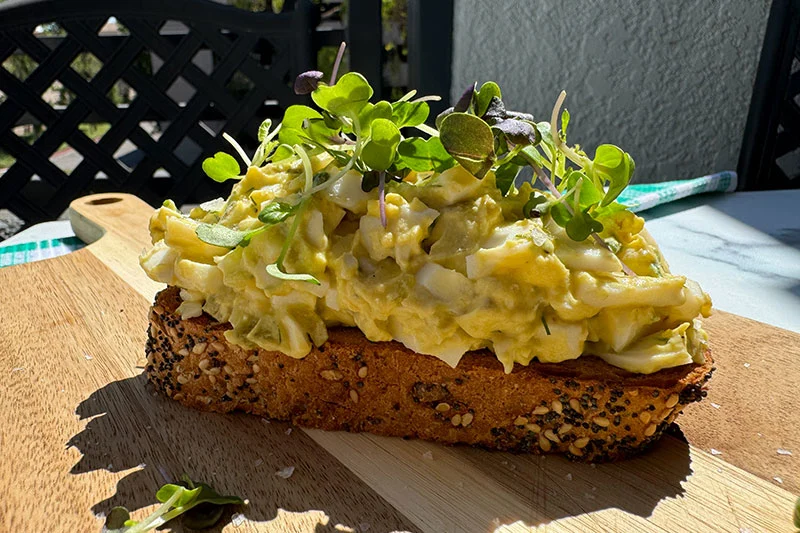
The egg salad with a twist that earns its place at the top of the egg-based lunch category — and the one that converts people who think they do not like egg salad. Hard-boiled eggs combined with a base of mayonnaise and avocado (the avocado replaces half the mayo, adding creaminess and healthy fats while reducing points), then loaded with two types of pickles, pickle juice, Dijon mustard, relish, chives, and fresh dill. Served on toasted crusty bread, in lettuce cups, or with crackers. The pickle-dill combination is genuinely addictive — bright, tangy, and deeply satisfying in a way that plain egg salad never quite achieves. Hard-boil the eggs Sunday; this is a 10-minute lunch any day of the week.
💡 Lunch Tip: The key to great egg salad texture: chop the egg whites separately from the yolks. Smash the yolks with the mayo and avocado for the creamy base, then fold in the chopped whites. This produces a more textured, more interesting egg salad than simply chopping everything together.
Soup is the planned-overs champion. Make a batch on Sunday and you have lunch for Tuesday through Thursday with zero additional cooking. Both soups below reheat in 90 seconds and improve as they sit.
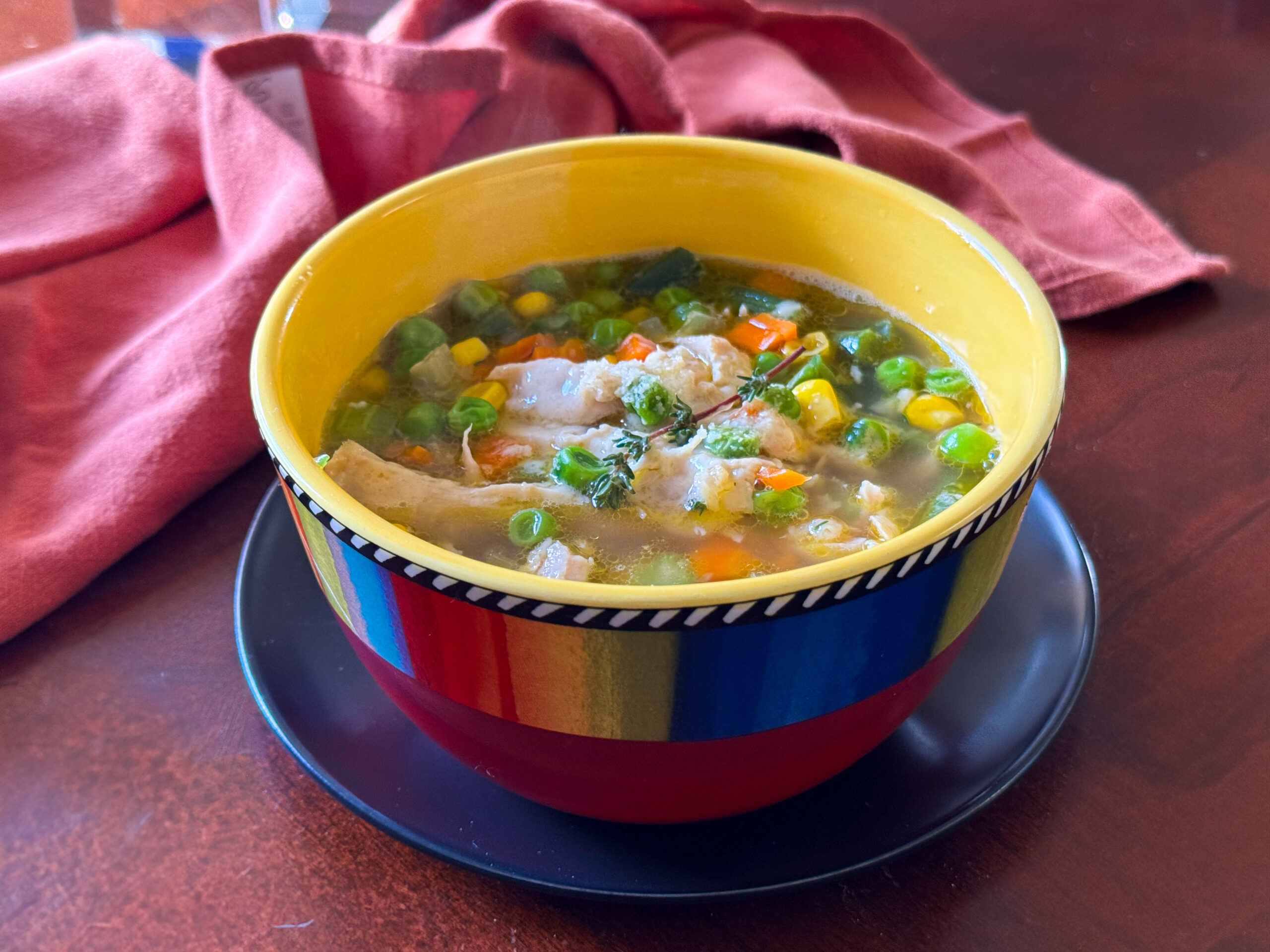
⏱ 35 minutes total (make ahead) 🥩 25g+ per serving ⭐ WW: 3–5 points
A properly made, from-scratch chicken and rice soup sized for exactly two people — so there is no enormous pot of leftovers and no compromise on quality. Tender chicken, long-grain rice, carrots, celery, onion, and herbs in a clear, deeply flavored broth. This is the soup for the days when someone is under the weather, the week has been hard, or nothing else sounds right. The rice adds body and satisfaction; the from-scratch broth (versus canned soup) makes an enormous flavor difference. Made in one pot in 35 minutes. Double the batch and freeze half in two-cup portions — lunch is then a 90-second microwave away any time.
💡 Lunch Tip: Use low-sodium broth and season with salt at the end — starting with regular broth and reducing it produces an oversalted soup. Freeze individual portions in 2-cup containers for the most efficient lunch prep system possible: pull one from the freezer the night before, refrigerate overnight, microwave for 90 seconds at lunch.
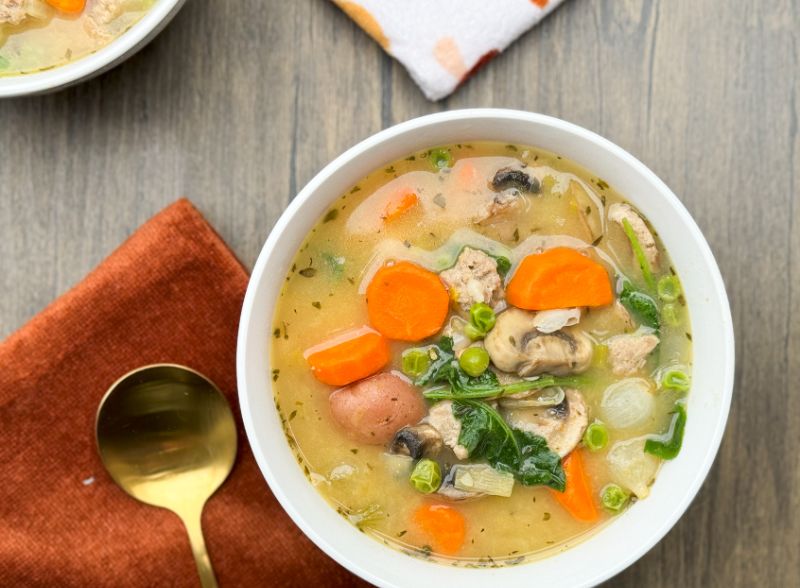
🫘 Cannellini Bean and Sausage Soup
⏱ 45 minutes (make ahead) 🥩 25g+ per serving ⭐ WW: 4–6 points
A hearty, chunky soup that is practically a stew — turkey sausage, white beans, and abundant vegetables in a rich broth that becomes more deeply flavored the longer it sits. This is the soup that fills the kitchen with extraordinary smell during Sunday afternoon prep and provides substantive, satisfying lunches through the middle of the week. The cannellini beans contribute both protein and fiber, creating a satiety combination that carries most people from a noon lunch all the way to dinner without any afternoon snacking. Make a double batch — freeze half in individual portions for emergency lunches weeks later.
💡 Lunch Tip: The soup genuinely improves for three days after making — the sausage flavor infuses the broth and the beans absorb the seasoning. Make Sunday, eat better Tuesday than Monday. Always make at least a double batch: the time investment is identical and the payoff in ready lunches is enormous.
For the days when nothing is prepped and lunch needs to happen in five minutes or less. Every option below delivers at least 20 grams of protein:
The best high-protein lunches for two combine a zero-point protein foundation (rotisserie chicken, hard-boiled eggs, cottage cheese, or Greek yogurt) with flavor-forward additions that make the meal genuinely enjoyable rather than functional. Top picks from this site: Healthy Creamy Chicken Caesar Salad for Two (30g+ protein, 3–5 WW points, 20 minutes), Apricot Chicken Salad with Dill (28g+ protein, one of the most unexpectedly delicious flavor combinations on the site), Dill Pickle Egg Salad (18g+ protein, 10 minutes with pre-boiled eggs, genuinely addictive), Skinny Everything Bagel Egg & Cheese Sandwich (22g+ protein, the most satisfying handheld option), and Chicken & Rice Soup for Two (25g+ protein, make ahead, reheats perfectly all week). The consistent structural principle: start with a zero-point protein base, add flavor through low-point additions, and reach 25g+ total protein per serving to guarantee afternoon satiety.
Research published in the Journal of Nutrition found that 25 grams of protein at lunch produced significantly greater satiety and reduced afternoon snacking compared to lower-protein lunches at identical calorie levels. The mechanism is the release of satiety hormones — peptide YY and GLP-1 — which are triggered more powerfully and for longer by protein than by carbohydrates or fat. For adults over 50, the target is higher — closer to 30–35 grams — due to anabolic resistance, the age-related decrease in protein use efficiency. The practical benchmark: if your lunch delivers under 20 grams of protein, you will almost certainly experience the 3pm hunger that makes the afternoon difficult. Build every lunch around a protein source that contributes at least 20 grams, then add supplemental protein sources to reach 25–35 total.
The most effective make-ahead high-protein lunches for two: all four chicken salads in this collection (Apricot, Blackberry, Caesar, Red Apple) improve in flavor for 1–2 days in the fridge — make Monday, eat better Tuesday. The Cannellini Bean and Sausage Soup keeps refrigerated for 4 days and frozen for 3 months — make a double batch Sunday and you have lunches for two weeks. The Chicken & Rice Soup keeps 3–4 days refrigerated. The Dill Pickle Egg Salad keeps 3 days (store the avocado component separately if making more than a day ahead to prevent browning). Hard-boiled eggs keep 1 week peeled in a sealed container. The Sunday prep session in the Meal Planning for Two guide covers exactly what to prep each week for maximum lunch efficiency.
The WW lunch strategy is to build from zero-point protein foundations and keep the total daily lunch spend at 0–6 points. Best options by point cost: Zero-point lunches — rotisserie chicken (zero points) over any zero-point greens with red wine vinegar; cottage cheese with chickpeas and cherry tomatoes; Greek yogurt with cucumber and za’atar. 1–3 point lunches — the Greek Lettuce Cups with added rotisserie chicken (the cups add minimal points, the chicken is zero); the Village Greek Salad with grilled chicken; Turkey Lettuce Wraps (hoisin contributes 2–4 points). 3–6 point lunches — Healthy Creamy Chicken Caesar Salad (Parmesan and dressing are the point contributors); Skinny Everything Bagel Egg & Cheese Sandwich; Apricot Chicken Salad (almonds and dressing). See the WW-Friendly Meal Plan for Two — 7 Days for the complete lunch integration into the weekly points strategy.
The mismatched lunch schedule is one of the most common two-person household challenges. The structural solution: build lunches around make-ahead components rather than made-to-order meals. Every chicken salad in this collection — prepped Sunday or Monday — requires only assembly at lunchtime, which takes 3–5 minutes and can be done independently by either person at their own lunch hour. The soups reheat in 90 seconds and require no preparation beyond opening the fridge. The Skinny Everything Bagel Egg & Cheese Sandwich can be assembled cold by the commuter in the morning. For the commuting partner, the Dill Pickle Egg Salad travels perfectly in a small container and can be served on crackers at the office. The planned-overs system described in this post eliminates the need for separate lunch cooking entirely — both people eat from the same Sunday-prepped components at different times in different forms.
Almost certainly yes. Research from the University of Missouri found that afternoon snacking desire is strongly inversely correlated with lunch protein content — the more protein at lunch, the less afternoon snacking desire. The mechanism is the duration of satiety hormone (peptide YY and GLP-1) elevation: a high-protein lunch keeps those hormones elevated for 4–5 hours after eating, which is why a 30-gram-protein lunch at noon carries you to a 5pm dinner cleanly. A 10-gram-protein lunch raises the same hormones briefly and lets them fall back to baseline by 2:30pm, at which point hunger returns and anything in reach becomes appealing. The diagnosis: track your protein specifically at lunch for one week using the WW app recipe builder. If you are consistently under 20 grams, that is almost certainly the cause of the afternoon snacking. The solution is not willpower — it is building lunch around the protein-first principle that every recipe in this collection demonstrates.
The no-cook, 30-gram protein lunch for two is entirely achievable with Sunday prep and pantry staples. The most reliable approach: Sunday-stripped rotisserie chicken (25–30g per 4-oz serving, zero points) over any salad base with whatever dressing is in the fridge. That single combination hits the 30-gram target without any cooking on the day. The second option: a half cup of fat-free cottage cheese (14g) combined with a half cup of canned chickpeas (9g) and a hard-boiled egg (6g) equals 29 grams of protein from three zero-point ingredients that require zero cooking on the day. Third option: fat-free Greek yogurt (17g per cup) with two slices of deli turkey (10–14g) on the side equals 27–31g total with one minute of assembly. The consistent pattern: when you have a zero-point protein source prepped in advance (rotisserie chicken, hard-boiled eggs, cottage cheese), reaching 30 grams of protein at lunch requires no cooking — only assembly.
The five-step Sunday lunch infrastructure session takes 20 minutes of active work and covers all five weekday lunches without additional day-of cooking. Step 1: Strip a rotisserie chicken (5 minutes) — this is the protein foundation for Monday and Tuesday lunches (Caesar salad Monday, Apricot Chicken Salad Tuesday). Step 2: Hard-boil 6 eggs (12 minutes passive, 2 minutes active) — Wednesday’s Dill Pickle Egg Salad, Thursday’s Greek Lettuce Cups addition, Friday’s quick protein boost. Step 3: Make one salad dressing (3 minutes) — the blackberry jam vinaigrette or Caesar dressing, refrigerated in a jar, ready all week. Step 4: Make a batch of soup (45 minutes mostly passive) — the Cannellini Bean and Sausage Soup or Chicken & Rice Soup reheats for Wednesday or Thursday lunch. Step 5: Wash and dry salad greens (2 minutes) — stored in a bag with a paper towel, ready to grab all week. Total active time: under 25 minutes. Total lunches covered: five days for two people, all at 25–30 grams of protein, requiring zero day-of cooking. For the complete system see the Meal Planning for Two guide.
The afternoon energy crash is not inevitable. It is not a sign that you need caffeine, or a short nap, or more discipline about what you eat. It is a signal that your lunch did not contain enough protein to sustain you. That is a solvable problem — and every recipe in this collection solves it.
Start with the Apricot Chicken Salad this week. Make it Sunday with the rotisserie chicken you are already stripping for the week’s dinners. Pack two portions. Eat it Monday at noon. See where you are at 3pm. I think you will be surprised by the answer.
I am never opposed to grabbing a protein shake! If all else fails, I have a stash of 30 grams of protein waiting for me in a chilled, ready to go carton in the fridge at all times. Premier Protein Shakes are my go-to! Just get in that protein and watch how your body responds…you’ve got this!
For the complete high-protein recipe collection: High-Protein Recipes Guide. For high-protein breakfasts to anchor the morning: High-Protein Breakfasts for Two. For high-protein snacks to bridge the gap: High-Protein Snacks — What I Reach For Most. For high-protein dinners to close the day: 30 Grams of Protein Dinners for Two.

Hi! I’m Diane. I started this site as a passion project. I love to cook, entertain, travel and laugh. (Who doesn’t love a good laugh?) Of course, being from New York, sarcasm rules!
More About Diane
mycuratedtastes@gmail.com