Add Us As A Trusted Google Source
 Almond Crusted Salmon With Lemon & Leek Crema
»
We use cookies to give you the best online experience. By agreeing you accept the use of cookies in accordance with our cookie policy.

My Curated Tastes is reader-supported. When you buy through links on our site, we may earn an affiliate commission at no extra cost to you. As an Amazon Associate I earn from qualifying purchases.
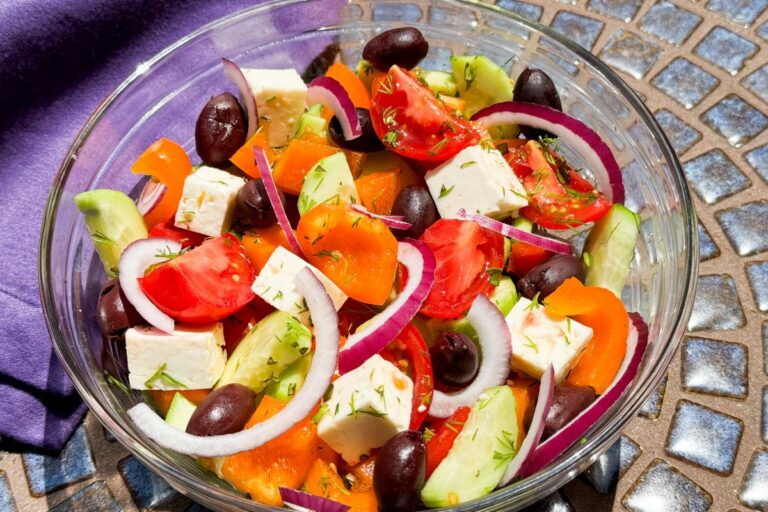
Everyone should have a Village Greek Salad recipe in their arsenal of tricks. Greek salad is a classic, and if you can make it and make it well, you’ll be pleasing guests for years to come. I eat a lot of Mediterranean food and Greek food is a favorite. You can eat this salad as a main salad or as a side salad with some of my favorite Greek recipes like my grilled baby lamb chops with rosemary & thyme with roast garlic aioli or my lamb meatball souvlaki.
Greek village salad is easy to make and just bursts with color and flavor. Since I like to cook healthy at least 80% of the time, having a traditional Greek Salad recipe in my recipe box is a must. Wait until you check out the nutritional value is this delicious salad below.
This delicious traditional Greek salad (also known as a horiatiki or horiatiki salata) is easy to make and is also a healthy choice. It is packed with veggies, light feta cheese, healthy olives and olive oil, and plenty of yummy herbs. The salad originated in Plaka, a historic neighborhood in Athens in the 60s. Rumor has it that it was created as a way to charge tourists more for a salad which was regulated by Government pricing. By adding extra ingredients like feta and olives, they could raise their prices. Whatever the origin of Greek salad, it is here to stay.
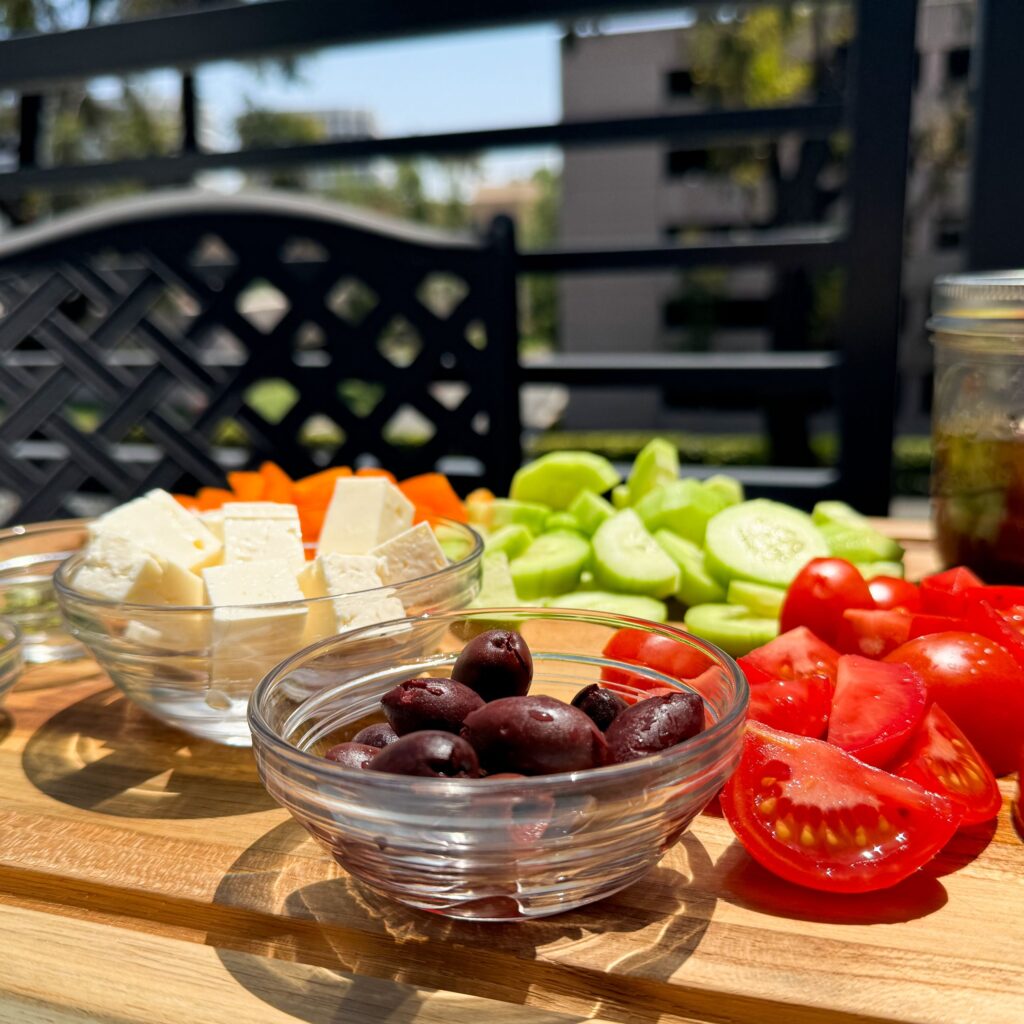
Campari Tomatoes (4, cut in quarters) Sweet and juicy Campari tomatoes are the perfect size for Greek salad, offering concentrated flavor without excess water. Rich in lycopene, a powerful antioxidant that supports heart health and may reduce cancer risk. They also provide vitamin C, potassium, and folate for immune system support and healthy blood pressure. The Mediterranean diet’s emphasis on fresh tomatoes contributes to its proven cardiovascular benefits (Mayo Clinic).
Cucumber (1, peeled and sliced) Crisp cucumbers add refreshing crunch and natural hydration to this Mediterranean classic. With 96% water content, they help maintain hydration while providing vitamin K for bone health and silica for healthy skin. Cucumbers are naturally low in calories and contain antioxidants that may help reduce inflammation. They’re a cornerstone vegetable in the Mediterranean diet pattern associated with longevity (UC Davis Health).
Bell Pepper (1 red, yellow, or orange, seeded and cut in large squares) Colorful bell peppers provide sweet, crisp texture and vibrant color to your salad. They’re exceptionally high in vitamin C—one pepper contains over 100% of your daily needs—plus vitamin A, folate, and potassium. The bright colors indicate high levels of carotenoids and flavonoids, antioxidants that support eye health and immune function. Bell peppers are essential Mediterranean diet vegetables known for their anti-inflammatory properties (Eden Green).
Red Onion (¼, cut into slices and then half moons) Sharp, pungent red onions add bite and depth of flavor while providing quercetin, a powerful antioxidant with anti-inflammatory properties. Onions support heart health, may help regulate blood sugar, and contain prebiotic compounds that promote digestive health. The sulfur compounds that make you cry also provide cardiovascular benefits central to Mediterranean eating patterns.
Feta Cheese (½ cup, crumbled or cubed) Traditional Greek feta cheese brings creamy, tangy richness and authentic Mediterranean flavor. Made from sheep’s and goat’s milk, feta is easier to digest than cow’s milk cheeses and provides high-quality protein, calcium for bone health, and probiotics for gut health. It’s naturally lower in calories and saturated fat compared to many other cheeses (WebMD), making it an ideal choice for the heart-healthy Mediterranean diet.
Kalamata Olives (12, pitted) These distinctive purple-black Greek olives are rich in monounsaturated fats, vitamin E, and antioxidants that support heart health and reduce inflammation. Olives are a cornerstone of Mediterranean eating, providing healthy fats that help absorb fat-soluble vitamins from the vegetables in your salad. They also contain compounds that may help protect against oxidative stress and support brain health.
Fresh Dill (1 tsp, chopped) Aromatic fresh dill adds a bright, distinctive flavor that’s essential to authentic Greek cuisine. Dill contains antioxidants, may help regulate blood sugar levels, and has been traditionally used to support digestive health. Fresh herbs like dill are encouraged in the Mediterranean diet pattern for their flavor-enhancing properties that reduce the need for excess salt.
Fresh Oregano (1 tsp, chopped) Fresh oregano provides the authentic Greek flavor profile with potent antioxidant and antimicrobial properties. Oregano contains compounds like carvacrol and thymol that have anti-inflammatory and antibacterial effects (WebMD, Healthline). Using fresh herbs over salt aligns with Mediterranean diet principles for heart health.
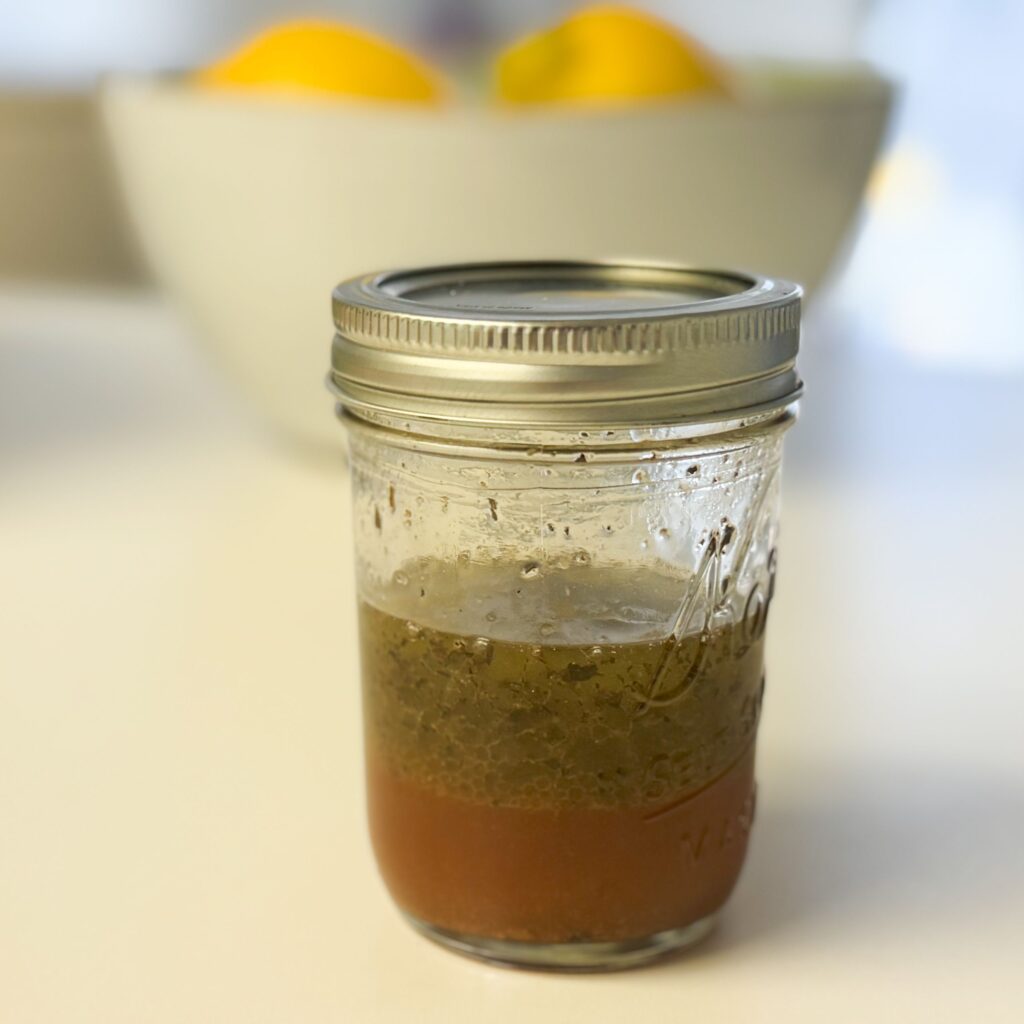
Olive Oil (¼ cup) Extra virgin olive oil is the foundation of Mediterranean cooking and provides heart-healthy monounsaturated fats, vitamin E, and powerful antioxidants. Research shows olive oil supports cardiovascular health, may help reduce inflammation, and provides protective compounds called polyphenols (Healthline). The healthy fats in olive oil also help your body absorb fat-soluble vitamins from the vegetables.
Red Wine Vinegar (¼ cup) Tangy red wine vinegar adds bright acidity that balances the rich olive oil while providing potential blood sugar benefits. Vinegar may help improve insulin sensitivity and provide antimicrobial properties. The acetic acid in vinegar also enhances the absorption of minerals from the vegetables.
Granulated Garlic (⅛ tsp) Garlic provides allicin and other sulfur compounds that support cardiovascular health, immune function, and may help regulate blood pressure. Garlic is a staple in Mediterranean cooking known for its anti-inflammatory properties and potential cancer-protective effects.
Dried Oregano (½ tsp) Concentrated dried oregano intensifies the Greek flavor while providing concentrated antioxidants and antimicrobial compounds. The compounds in oregano have anti-inflammatory and antibacterial effects (Medical News Today).
Dijon Mustard (¼ tsp) Dijon mustard acts as a natural emulsifier to bind the dressing while adding tangy complexity. Mustard seeds contain selenium and omega-3 fatty acids that support anti-inflammatory processes.
Kosher Salt (¼ tsp) A small amount of kosher salt enhances all the flavors in the salad. The Mediterranean diet emphasizes herbs and spices over excess sodium, making this minimal salt approach ideal for heart health.
Fresh Black Pepper (5 grinds) Freshly ground black pepper adds warmth and contains piperine, which may enhance the absorption of other nutrients and provides antioxidant properties.
Tomato Alternatives:
Cucumber Substitutes:
Bell Pepper Options:
Red Onion Alternatives:
Feta Cheese Substitutes:
Olive Alternatives:
Olive Oil Options:
Vinegar Alternatives:
Herb Substitutions:
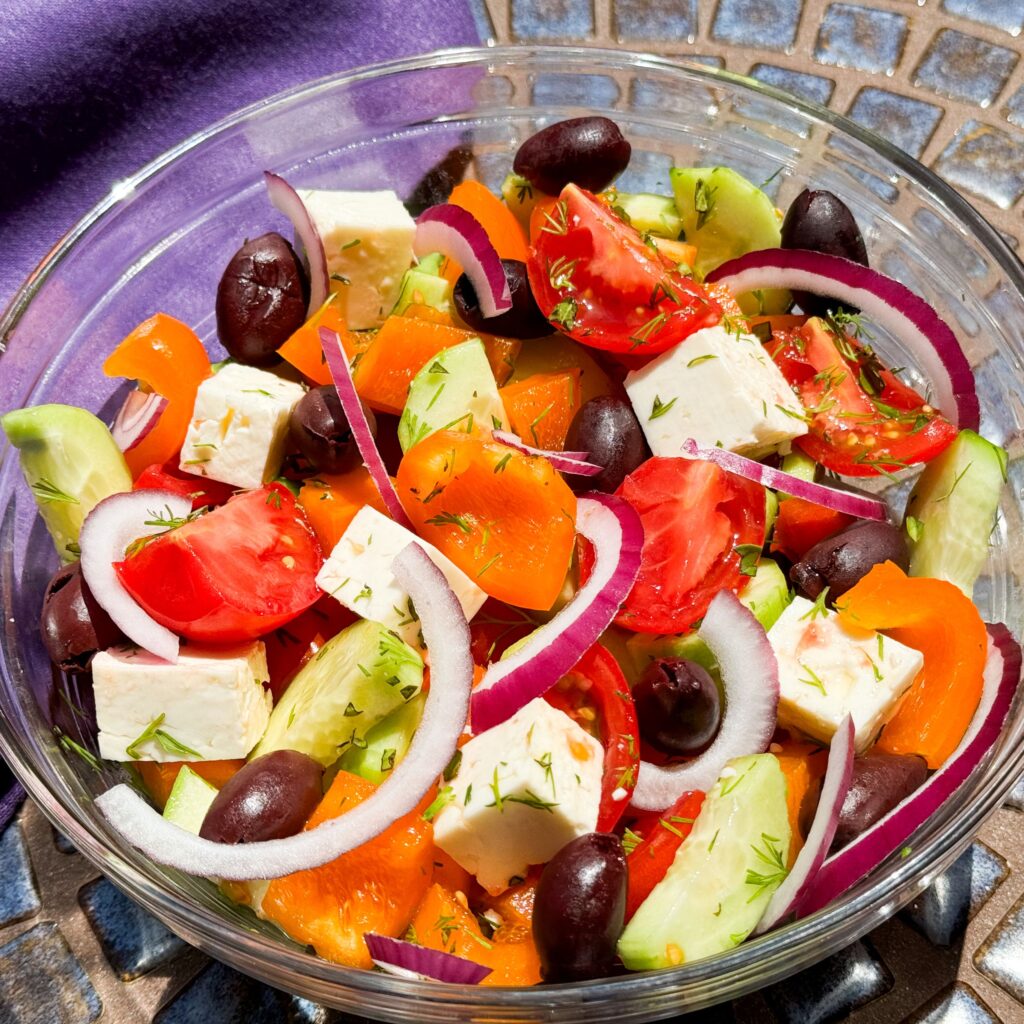
Traditional Greek village salad (horiatiki) does not contain lettuce. Authentic versions focus on tomatoes, cucumbers, onions, peppers, olives, and feta cheese. American-style Greek salads often add lettuce. Try my Greek Lettuce Cups for an hand-held version. This is a fun twist.
Authentic feta should be made from sheep’s milk or a combination of sheep’s and goat’s milk, have PDO (Protected Designation of Origin) status from Greece, and be aged in brine for its characteristic tangy, salty flavor.
While you can substitute, Kalamata olives provide the authentic flavor profile with their wine-like taste and meaty texture. Regular black olives are milder and less complex in flavor.
Yes, Greek salad is naturally keto-friendly with approximately 8-10g net carbs per serving, primarily from vegetables. The high fat content from olive oil and feta makes it ideal for ketogenic diets.
A typical serving contains approximately 250-300 calories, with most calories coming from heart-healthy olive oil and feta cheese. It’s nutrient-dense with high fiber, healthy fats, and quality protein.
Yes, Greek salad supports weight loss through high fiber content that promotes satiety, healthy monounsaturated fats that support metabolism, and low refined carbohydrates. The Mediterranean diet pattern is associated with sustainable weight management. And for all my WW friends, nothing beats a hearty salad filled with veggies and healthy fats to fill you up.
Undressed Salad Components If you haven’t added the dressing yet, store each component separately in airtight containers in the refrigerator:
Already Dressed Salad
Preventing Sogginess
Reviving Day-Old Salad
Make-Ahead Strategy For meal prep, prepare ingredients up to 3 days in advance:
If you like this recipe, please leave a comment below. Looking for other salad recipes? Try some of my favorites.
Healthy Creamy Chicken Caeser Salad for Two
Raspberry and Lemon Salad with Crispy Chicken Croutons
Nutritional information is only an estimate. The accuracy of the nutritional information for any recipe on this site is not guaranteed.

Recipe Developer
With over 10 years of restaurant experience, Diane has been cooking and developing recipes for over five years, focusing on real-food meals for two that are Weight Watchers-friendly and high in protein. A longtime WW member herself, she brings firsthand experience to every recipe — not just culinary technique, but the practical knowledge of someone who has navigated points, portions, and satisfaction for years. Her recipe for Lollipop Lamb Chops with Pistachio Pesto was selected as a KitchenAid contest winner and published in Taste of Home's "Innovate Your Plate" bookazine. She has developed recipes and created content for brands including Eggland's Best, Sprouts Market, ZenB Pasta, Flannery Beef, The Honey Jar and Marukan Vinegar. She has been cooking for two for 10 years and her recipes focus on well balanced meals that are healthy, protein-focused meals perfectly proportioned for two servings. Based in Southern California she loves fresh, seasonal produce and proteins that nourish the body and soul.
Hi! I’m Diane. I started this site as a passion project. I love to cook, entertain, travel and laugh. (Who doesn’t love a good laugh?) Of course, being from New York, sarcasm rules!
More About Diane
mycuratedtastes@gmail.com