Add Us As A Trusted Google Source
 WW-Friendly Chicken Recipes for Two — 12 Recipes That Actually Taste Like You Are Not on a Diet
»

The complete meal planning system for two people — not a list of recipes, but an actual repeatable framework for how a two-person household plans, shops, and cooks every week without waste, decision fatigue, or the same dinner three times in a row. Here is what makes this post different from every other meal planning guide:
Every meal planning guide on the internet was written for a family of four. The templates serve four to six. The shopping lists buy in bulk. The tips are about batch cooking and freezer meals and getting the most out of a large slow cooker. All of it assumes you are feeding multiple people with different preferences, different schedules, and a need for volume.
None of that applies to two people. And the strategies that work beautifully for a family of four actively fail for a household of two — leading to produce that rots before you use it, leftovers that pile up faster than you can eat them, and recipes designed for six that taste fine reheated once but are depressing by the third time.
I have been meal planning for two in Southern California for over a decade. Not as an exercise in efficiency — I genuinely love good food and good meals — but because a little planning on Sunday is the single thing that most reliably determines whether the week is a joy or a grind. The system I am sharing here is not theoretical. It is what I actually do, refined over years of cooking for exactly two people and never wanting to eat the same thing three days in a row. Hey, I’m a foodie and like variety!
For the complete technical framework for cooking at two-person scale — pan sizes, scaling math, equipment — see the Complete Guide to Cooking for Two. For the WW-friendly meal planning system that integrates seamlessly with this weekly template, see the WW-Friendly Meal Plan for Two — 7 Days. And for the full WW-for-couples approach, see Cooking for Two on Weight Watchers.
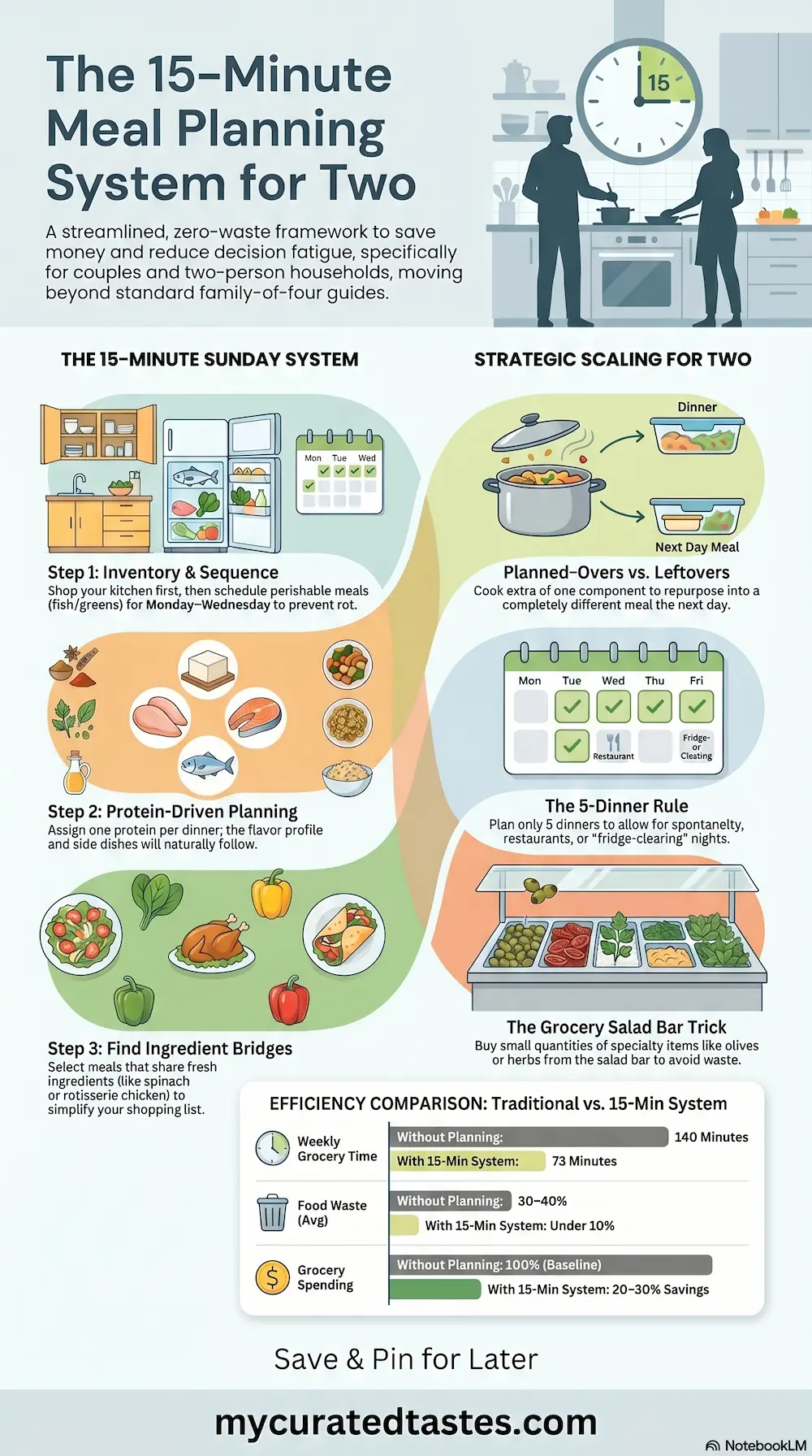
Before the system, the motivation. These are real numbers, not optimistic projections:
| What Changes | Without a Plan | With a Plan |
|---|---|---|
| Weekly grocery spend (2-person household avg.) | $175–250 | $120–170 |
| Weekly food waste ($/week thrown away) | $30–60 | $5–12 |
| Weeknight takeout/delivery | 2–3 nights/week | 0–1 nights/week |
| Daily ‘what’s for dinner?’ decisions | 7 stressful ones | 1 easy Sunday session |
| Produce that goes bad before use | 30–40% of purchase | Under 10% |
| Variety across the week | 3–4 different meals | 6–7 different meals |
Sources: USDA food waste estimates; FoodsPlans.com two-person household grocery data; Plan to Eat 2024 user survey (n=2,568) showing average planning/shopping time reduced from 140 to 73 minutes/week.
The grocery savings alone are significant — couples who meal plan consistently spend 20–30% less on food. For a two-person household spending $200 per week, that is $40–60 per week, or over $2,000 per year, recovered from waste and impulse purchases with no reduction in the quality of what you eat. Yes, this was a major factor for dedicating a little time each week on mapping out my meals. That $2000 represents a mini-vacay where I can experience local cuisine…sign me up!
Principle 1: Plan for Variety, Not Volume
Family meal planning optimizes for quantity — making enough food to feed multiple people multiple times. Two-person meal planning optimizes for variety. When you are cooking for two, you can have something completely different every night without the burden of batch cooking. A piece of salmon for two takes 12 minutes. A chicken dish for two takes 25 minutes. Plan for 5–6 different dinners per week rather than 2–3 large batches that you rotate through. The smaller the household, the more variety you can afford — and the more variety you will actually eat.
Principle 2: Perishables First, Pantry Last
The single most common source of food waste for two-person households is produce bought for a specific recipe that does not get used in time. The solution is simple but requires discipline: plan meals that use perishable ingredients early in the week, and save pantry- and freezer-based meals for Thursday and Friday. Monday’s dinner uses the fresh fish bought Sunday. Tuesday uses the spinach that might wilt. Wednesday uses fresh herbs. Thursday is the sheet pan dinner built on pantry staples. Friday is something from the freezer or a quick pasta. This sequencing alone eliminates most produce waste.
Principle 3: The Ingredient Bridge Strategy
Plan meals that share core ingredients across different preparations. Example: buy one bunch of fresh spinach — it goes into Monday’s frittata, Tuesday’s pasta sauce, and Wednesday’s salad. Buy one rotisserie chicken — it becomes Sunday dinner, Monday’s salad topping, and Thursday’s chicken soup. Buy one can of chickpeas — they go into Wednesday’s grain bowl and Friday’s soup. This is not eating the same thing three times. It is using the same ingredient in three completely different meals. The result is zero waste and maximum variety from a minimal grocery list.
Principle 4: Leave Two Nights Unplanned
The meal plan that accounts for every single night of the week fails because life does not cooperate with perfection. Plan five dinners. Leave two nights intentionally open for: a restaurant or takeout you genuinely choose (not default to because the plan fell apart), a spontaneous dinner with friends, using up whatever is left in the fridge on Thursday, or cooking something you saw and wanted to try that week. The open nights make the planned nights sustainable. Rigidity is what causes meal planning to collapse — flexibility built into the system is what makes it last. Trust me, there are nights where I look up and it is 9pm, I haven’t eaten and I’m going for a Lean Cuisine because I’m too tired to even call DoorDash. It happens. I like that I won’t waste food because I’ve planned for two spontaneous days AND I had something in the freezer “just in case”.
Every week I sit down on Sunday, after my WW meeting — usually with a cup of coffee and the weekend’s quiet — and spend exactly 15 minutes on the following sequence. This one habit, done consistently, eliminates every weeknight meal decision, most food waste, and the entire category of ‘we should have planned better’ regret.
The 15-Minute Sunday Scheduling Tip
Put the 15-minute planning session in your calendar as a recurring weekly appointment — Sunday morning, with coffee, before the day gets busy. The biggest reason meal planning fails is not that people do not know how to do it. It is that it gets pushed to Sunday evening when everyone is tired, or abandoned entirely in favor of ‘we’ll figure it out this week.’ The calendar appointment creates the habit. The habit creates the system. The system creates the results.
This is the structural template I use every week. The specific recipes change — the structure stays the same. Use this as your weekly planning scaffold.
MONDAY — Perishables Priority
BREAKFAST High-Protein Overnight Oats — — made Sunday night, zero morning effort. 30g+ protein.
LUNCH — Salad using fresh greens + leftover or rotisserie chicken. Zero-point base, add what you have.
DINNER High-Protein Waffles Made with Chicken — — 45–50g protein, flour-free, 15 minutes. Use rotisserie chicken stripped Sunday.
SNACK — Apple + hard-boiled eggs (prepped Sunday). Zero points.
TEMPLATE RULE — Monday always uses the most perishable protein or produce from Sunday’s shop.
TUESDAY — Quick & Varied
BREAKFAST Whipped Greek Yogurt with Honey — — 5 minutes, 20g+ protein.
LUNCH Healthy Creamy Chicken Caesar Salad for Two — — creamy lightened-up Caesar dressing, grilled chicken, crisp romaine.
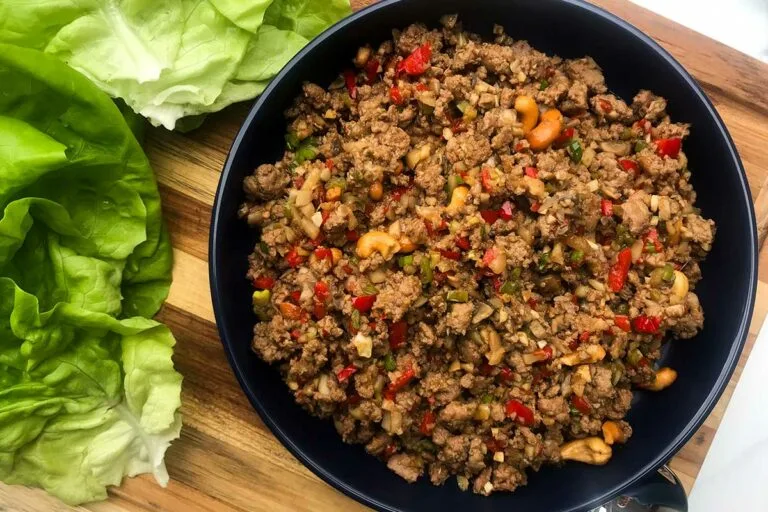
DINNER Turkey Lettuce Wraps — — 20 minutes. Uses ground turkey (second protein of the week).
SNACK — Baby carrots + hummus. Zero to 2 points.
TEMPLATE RULE — Tuesday is the ‘try something new’ or ‘adventurous flavor’ night — you now have 4 more nights this week to be safe.
WEDNESDAY — Midweek Comfort
BREAKFAST Cottage Cheese Pancakes — — 24g protein, low points. A midweek treat.
LUNCH Greek Turkey Zucchini Canoes — — planned-over from a double batch of the turkey filling.
DINNER Boursin Pasta with Shrimp — — 50g+ protein, genuinely indulgent. Uses shrimp while fresh.
SNACK — Cucumber slices with everything bagel seasoning. Zero points.
TEMPLATE RULE — Wednesday is pasta/grain night — satisfying midweek comfort without heavy effort.
THURSDAY — Produce Sweep & Pantry
BREAKFAST High-Protein Overnight Oats — — second jar from Sunday’s prep. Different flavor than Monday.
LUNCH Skinny Everything Bagel Egg & Cheese Sandwich — — 10 minutes if bagels were made Sunday.
DINNER Sheet Pan Chicken Thighs with Pomegranate and Walnuts — — one pan, mostly hands-off. Uses pantry staples.
SNACK — Edamame with flaky salt. Zero points.
TEMPLATE RULE — Thursday sweeps remaining produce into a salad or stir-fry side, and relies on a sheet pan or oven dinner with minimal active time.
FRIDAY — Planned Indulgence
BREAKFAST — Eggs scrambled with spinach and tomatoes. Zero to 2 points. Fast, high-protein.
LUNCH Chicken & Rice Soup for Two — — comforting, perfectly portioned, uses planned-over chicken.
DINNER Lollipop Lamb Chops with Pistachio Pesto — — OR any recipe from the Date Night Dinners for Two guide. Friday is the reward dinner.
DESSERT Honey Nut Cluster Cookies — — made ahead, naturally sweetened, satisfying treat.
TEMPLATE RULE — Friday is the planned indulgence. The WW points bank built Monday–Thursday funds this night completely.
SATURDAY — Weekend Cook
BRUNCH Eggs Benedict with Blender Hollandaise & Waffles — — OR any recipe from the High-Protein Breakfasts for Two guide. Saturday brunch is a meal in itself.
DINNER Panko Crusted Stuffed Chicken Thighs with Hot Honey — — the weekend showstopper. Assemble in advance, bake when ready.
DESSERT Chocolate Nice Cream — — made ahead and frozen, rich chocolatey indulgence with no guilt.
TEMPLATE RULE — Saturday is the date night or showstopper cook. Brunch replaces breakfast + lunch. One big dinner. A proper dessert.
SUNDAY — Plan & Prep Day
MORNING — The 15-Minute Sunday System (see above). Plan the week, write the list, go to the store.
PREP SESSION — 45 minutes: Make overnight oats (2 jars). Hard-boil 6 eggs. Strip rotisserie chicken. Wash and cut produce. Make soup if using.
BREAKFAST (4–6 pts) Almond Flour Pancakes — gluten-free, high-protein, weekend-worthy. A different pancake experience from Wednesday’s cottage cheese version.
LUNCH (4–6 pts) Cannellini Bean and Sausage Soup — a hearty, chunky soup that is practically a stew. Turkey sausage, white beans, tons of vegetables. Freezes beautifully — make a double batch.
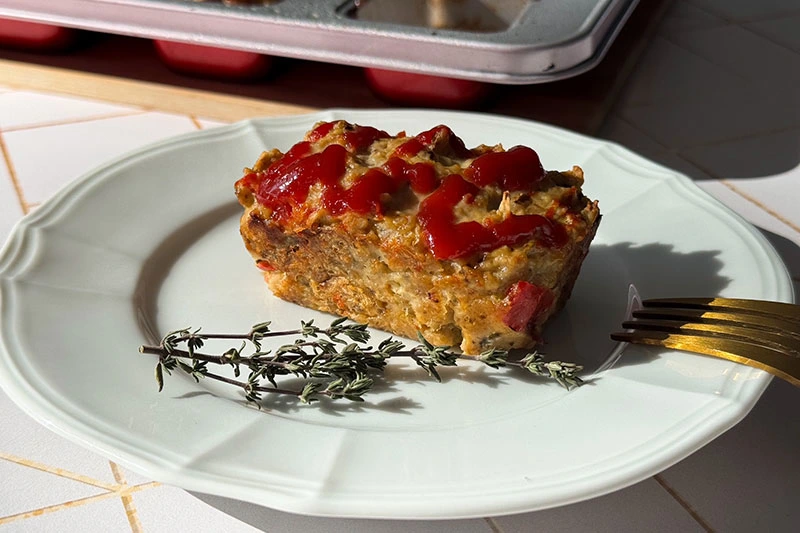
DINNER Mini Turkey Meat Loaf — — OR Greek Turkey Zucchini Canoes — — a proper Sunday dinner that doubles as Monday lunch prep.
TEMPLATE RULE — Sunday is infrastructure day — planning, shopping, and 45 minutes of prep that makes Monday–Thursday effortless.
There is a meaningful difference between leftovers — eating the same meal again — and planned-overs — intentionally cooking slightly more of a component to repurpose it into a completely different meal the next day. Leftovers are boring. Planned-overs are efficient and still exciting.
| What You Cook | How It Becomes a Different Meal |
|---|---|
| Rotisserie chicken (Sunday) | → Monday salad topping → Wednesday quesadilla filling → Thursday chicken soup base |
| Greek Turkey Zucchini Canoe filling (double batch) | → Tuesday dinner in canoes → Wednesday lunch in lettuce wraps |
| Chicken & Rice Soup for Two (double batch) | → Thursday lunch reheated → Saturday starter in small cups with crusty bread |
| Hard-boiled eggs (6 on Sunday) | → Monday snack → Tuesday breakfast → Thursday salad protein |
| Overnight oats (2 jars Sunday) | → Monday breakfast → Thursday breakfast (different flavor) |
| Roasted vegetables (sheet pan) | → Thursday dinner → Friday morning frittata → Friday lunch grain bowl topping |
| Salmon fillet (cook 2 extra oz) | → Monday dinner → Tuesday salmon salad over greens |
The key rule of planned-overs: the base ingredient is the same; the preparation and context are completely different. Shredded chicken in a salad does not feel like eating Monday’s dinner again. It feels like a fresh Tuesday lunch that happened to require no additional shopping or cooking time. TIME SAVING TIP: Buy pre-shredded rotisserie chicken in the deli department. I buy that and have it all week for salads, soups and quesadillas. Fast, easy and saves me another 10 minutes!
The most common grocery shopping mistake for two-person households: going to the store without a list and buying whatever looks good, then discovering on Wednesday that you have four zucchinis, no protein, and nothing that goes together. The framework below organizes shopping for exactly two people — small quantities, high variety, zero-waste sequencing.
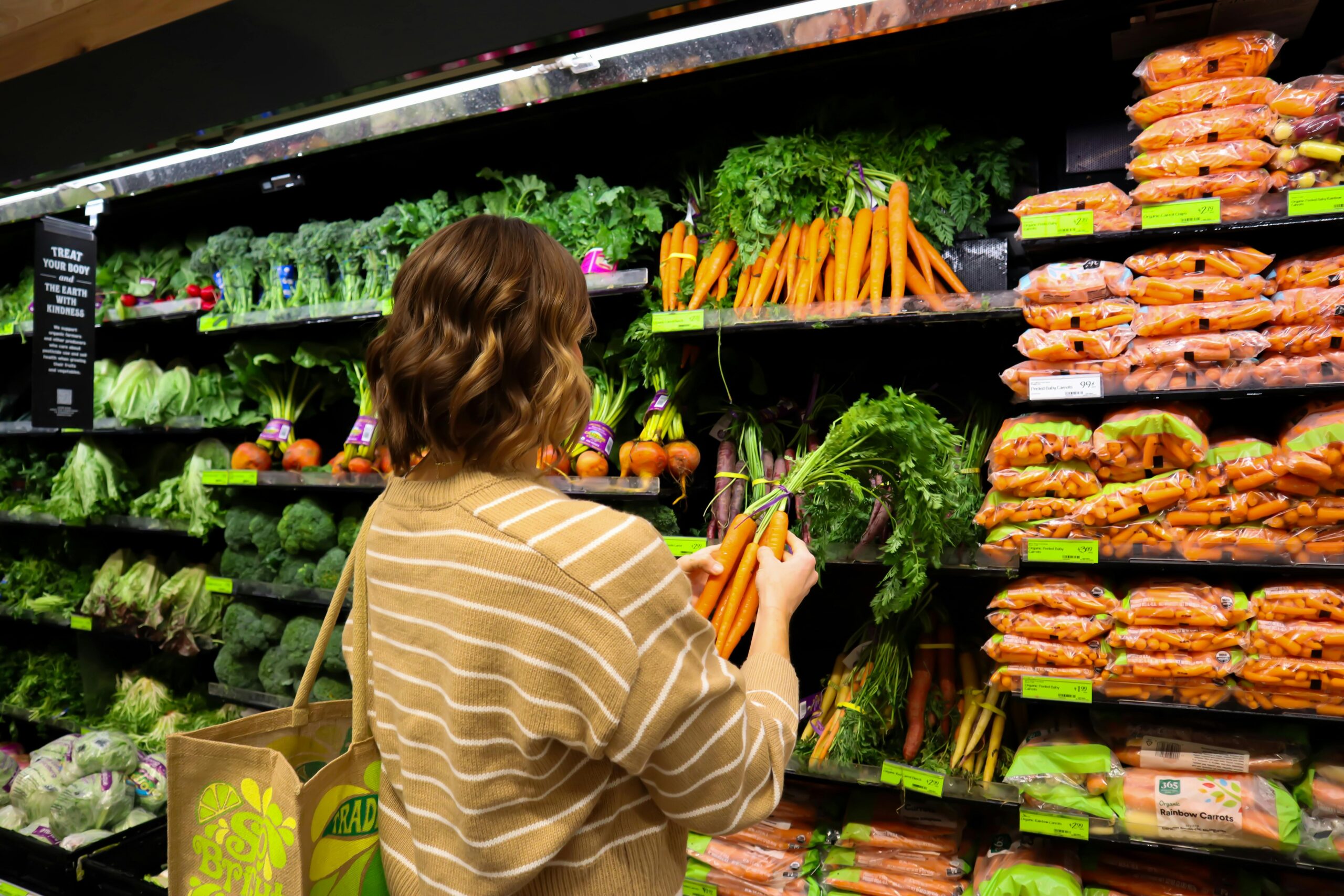
These are the items I always have on hand. With these in the pantry and fridge, a genuinely good dinner is always 20 minutes away regardless of what else was or was not planned:
| Category | Always Stock | Why It Matters |
|---|---|---|
| Dairy | Fat-free Greek yogurt (FAGE), fat-free cottage cheese, eggs, reduced-fat cheese | Zero-point protein anchors for every meal |
| Canned/Jarred | Chickpeas, white beans, whole tomatoes, diced tomatoes, sun-dried tomatoes, low-sodium broth | Zero-point meal starters, no waste |
| Grains/Pasta | Chickpea pasta, lentil pasta, quinoa, oats, brown rice | High-protein base for any meal in 10 minutes |
| Condiments | Dijon mustard, soy sauce, hoisin, Sriracha, sugar-free maple syrup, vinegars (red wine, apple cider, balsamic) | The flavor toolkit — zero to minimal points |
| Frozen | Edamame, peas, shrimp, broccoli, spinach, corn | No waste, use exactly what you need |
| Fats/Oils | Olive oil, cooking spray, light butter | Use sparingly — a tablespoon goes a long way for two |
| Spices | Smoked paprika, cumin, garlic powder, Italian seasoning, everything bagel seasoning, chili flakes | The difference between dull and delicious |
| Fresh flavor boosters | Lemons, limes, fresh garlic, shallots, fresh herbs (herb plant on the windowsill) | Replace sauces and fats as the primary flavor driver |
If you are following WW, the weekly meal template above maps naturally onto the WW points bank strategy. Here is the integration:
The key insight: the weekly meal plan is not in conflict with WW. The structure of the plan is the WW points bank strategy, made concrete and operational. Plan the clean days, plan the indulgent days, execute both without guilt. For the complete 7-day WW meal plan with specific point estimates for every meal, see the WW-Friendly Meal Plan for Two — 7 Days.
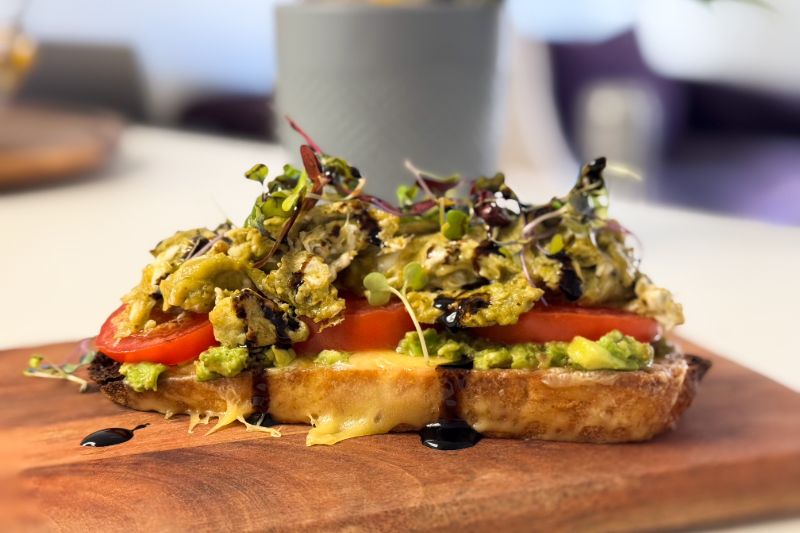
Below is a sample week drawn entirely from recipes on this site. Every link is a recipe sized for two people. Use this as a starting point and swap freely — the template structure is what matters, not the specific recipes.


The most effective starting point is the 15-Minute Sunday System: sit down once a week with your coffee, check what you already have in the fridge and pantry, assign a protein to each of your 5 planned dinner nights, sequence the week so perishables come early and pantry meals come later, find your ingredient overlaps, and write a shopping list organized by store section. Do not try to plan every meal of every day on your first attempt — start with just dinners. Once dinner planning becomes automatic (usually 3–4 weeks), add lunches. Once that is automatic, add breakfasts. The system builds incrementally. The complete planning template is in this post, and the full recipe collection for every slot is at My Curated Tastes.
Plan 5 dinners per week, not 7. Leave two nights intentionally open for a restaurant, spontaneous plans, or using up whatever is left in the fridge. For lunches, plan 3–4 and rely on planned-overs (strategic use of dinner components) for the remaining days. For breakfasts, rotate 2–3 options that can be prepped in advance rather than planning a different breakfast every day. The goal is enough structure to eliminate daily decision fatigue, with enough flexibility that the plan does not feel like a restriction. A rigid 7-day, 21-meal plan is the fastest way to abandon meal planning entirely.
Three concrete strategies: First, the Perishables-First rule — use fresh fish, tender greens, and delicate herbs Monday and Tuesday; save pantry and freezer meals for Thursday and Friday. Second, the Ingredient Bridge Strategy — plan meals that share core ingredients in different preparations. One bunch of spinach becomes Monday’s salad, Tuesday’s pasta sauce, and Wednesday’s egg scramble. One rotisserie chicken becomes Sunday dinner, Monday’s salad protein, and Thursday’s soup base. Third, the Planned-Overs System — intentionally make slightly more of a component (the turkey filling, the roasted vegetables, the grain base) and repurpose it into a completely different meal the next day. The USDA estimates 30–40% of the food supply is wasted; for a two-person household, Ingredient Bridging alone reduces that to under 10%.
Build every dinner around a shared zero-point base protein and vegetable, then serve all additions — sauces, spice levels, higher-point accompaniments — in separate bowls that each person adds to their own plate. The dinner is identical for both people; the customization happens at the table. This approach is described in detail in the Cooking for Two on Weight Watchers guide, but it applies equally to any two-person household where preferences differ. The second strategy is to alternate whose preference drives the dinner choice — Monday is one person’s choice, Tuesday is the other’s. Both people eat what they planned; neither feels like they are always compromising.
The two-person grocery list is organized around five principles: (1) Shop the fridge and pantry first — list only what you do not already have. (2) Buy proteins in two-serving quantities from the counter rather than family packs. (3) Apply the Ingredient Bridge — if two recipes use spinach, add spinach once. (4) Use the salad bar for specialty items you need in small quantities (olives, roasted peppers, fresh herbs). (5) Stock frozen vegetables freely — they provide zero-waste, always-available produce that never goes bad. The full organized grocery list framework by store section is in this post, structured so you complete the store in a single pass.
It is arguably more worth it for two people than for a family. Two-person households waste a higher percentage of their food than larger ones because portions do not scale neatly and ‘just in case’ buying is proportionally more wasteful. Couples who meal plan consistently report 20–30% lower grocery bills, dramatically less food waste, and significantly fewer weeknight takeout meals. Beyond the financial savings, the elimination of the daily ‘what’s for dinner?’ decision — which Plan to Eat data shows takes an average of 67 minutes of accumulated daily time per week — is itself worth the 15 minutes of Sunday planning. For a two-person household, the ROI on meal planning is higher, not lower, than for families.
The mismatched schedule is one of the most common meal planning challenges for couples and has a straightforward structural solution: plan for the commuter’s arrival time, not the work-from-home person’s hunger. The work-from-home partner handles Sunday prep and makes any advance-prep components during the day — marinating proteins, prepping vegetables, making sauces or grain bases. When the commuter arrives, the active cooking time is 15–20 minutes maximum. This means choosing recipes with a clear separation between prep (which happens during the day) and finishing (which happens together). Sheet pan dinners, slow-cooker meals started before 5pm, and recipes with make-ahead components all work well. The complete sheet pan dinner collection for two is at My Curated Tastes.
One week at a time is the right cadence for a two-person household — long enough to create a meaningful structure, short enough to stay flexible and eat seasonally. Monthly meal planning, which some larger families use, does not work well for two people because: produce availability changes week to week, your preferences evolve, and a rigid month-long plan becomes oppressive rather than helpful when you hit week three. The exception: keep a ‘rotation list’ of 15–20 dinners you both love that you can cycle through without planning from scratch. Pull from this list on weeks when you do not want to think creatively. When you find a new recipe you both love, add it to the rotation list immediately. Over time, the rotation list is your most valuable planning asset — a pre-curated library of proven dinners that requires no decision-making.
Every meal plan falls apart occasionally. The solution is not a perfect plan — it is building recovery strategies directly into the system. Keep three things always available for plan-failure nights: (1) frozen shrimp, which thaws in five minutes and cooks in three — a full protein-forward dinner in under 15 minutes with whatever vegetables are in the fridge, (2) chickpea pasta, which cooks in 8 minutes and becomes a complete meal with olive oil, garlic, parmesan, and whatever is in the pantry, and (3) eggs — always, always eggs. A frittata using leftover vegetables and whatever cheese you have is an excellent dinner in 20 minutes that uses up produce that might otherwise go bad. Pair these recovery protocols with the ‘open nights’ built into the template — if the plan falls apart on Tuesday, Tuesday was already a candidate for the restaurant you were going to anyway. Most ‘plan failures’ are actually plan flexibility in action.
Do not try to implement everything in this guide at once. Here is the simplest possible starting point:
Within three weeks, the system becomes automatic. Within a month, the weekly planning session feels like the most productive 15 minutes of your week. The food gets better, the waste disappears, and the ‘what’s for dinner?’ conversation becomes a pleasant choice between things you both want rather than a daily negotiation under pressure.
For the complete two-person cooking framework that pairs with this meal plan, visit the Complete Guide to Cooking for Two. For the WW-specific 7-day plan with point estimates, see the WW-Friendly Meal Plan for Two — 7 Days. For the high-protein dinner collection that populates the Friday and Saturday slots, see the 30 Grams of Protein Dinners for Two.

Hi! I’m Diane. I started this site as a passion project. I love to cook, entertain, travel and laugh. (Who doesn’t love a good laugh?) Of course, being from New York, sarcasm rules!
More About Diane
mycuratedtastes@gmail.com