Add Us As A Trusted Google Source
 Date Night Dinners for Two at Home: 10 Restaurant-Quality Recipes (Plus Complete Menus)
»

Twelve dinner recipes delivering 30+ grams of protein per serving, each sized for exactly two people. Here is what makes this post different from every other 30g protein dinner roundup:
I came to high-protein eating the way most people do: not from a fitness magazine or a doctor’s prescription, but from noticing what happened to my evenings depending on what I had eaten for dinner. The nights I ended with a protein-forward meal — salmon, chicken, shrimp, a proper protein pasta — I was satisfied and calm. The nights dinner was mostly carbohydrates, the snacking started within an hour of clearing the plates and did not stop until I went to bed.
It took paying consistent attention over several months to recognize the pattern. (OK, I admit it, probably several years!) And once I recognized it, I started building every dinner around a 30-gram protein anchor as a non-negotiable starting point. Let me save you time (years), and get you focused on protein now!
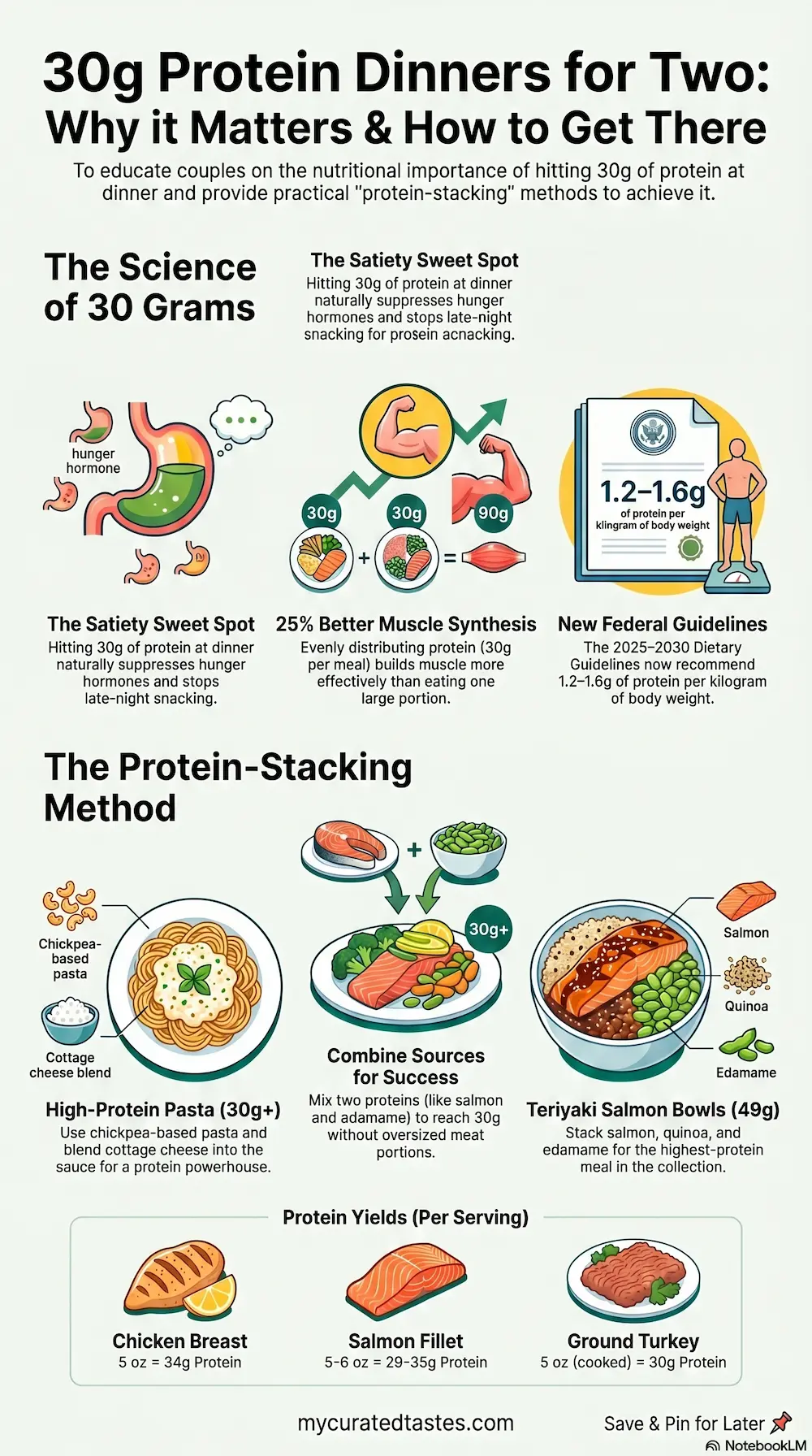
The science now confirms what I was experiencing in practice. The 2025–2030 Dietary Guidelines for Americans — described by the Department of Health and Human Services as ‘the most significant reset of federal nutrition policy in decades’ — updated the daily protein recommendation from 0.8 grams per kilogram of body weight to 1.2–1.6 grams per kilogram. For a 150-pound person, that translates to 82–109 grams of protein daily. At three meals, that means roughly 30 grams per meal as a minimum target. Research from protein specialists consistently shows that distributing protein evenly across meals — about 30g each at breakfast, lunch, and dinner — produces meaningfully better outcomes for satiety, muscle maintenance, and body composition than the typical American pattern of eating most protein at dinner after protein-light earlier meals.
For two-person households, hitting 30g at dinner is genuinely easy once you know which proteins get you there and how to build a meal around them. This collection is the result: twelve dinners I make regularly for two, every one delivering 30+ grams of protein per serving, every one genuinely delicious and restaurant-quality, many of them also aligned with Weight Watchers goals. For the complete high-protein eating philosophy, visit my High-Protein Recipes Guide. For the two-person cooking framework, see the Complete Guide to Cooking for Two.
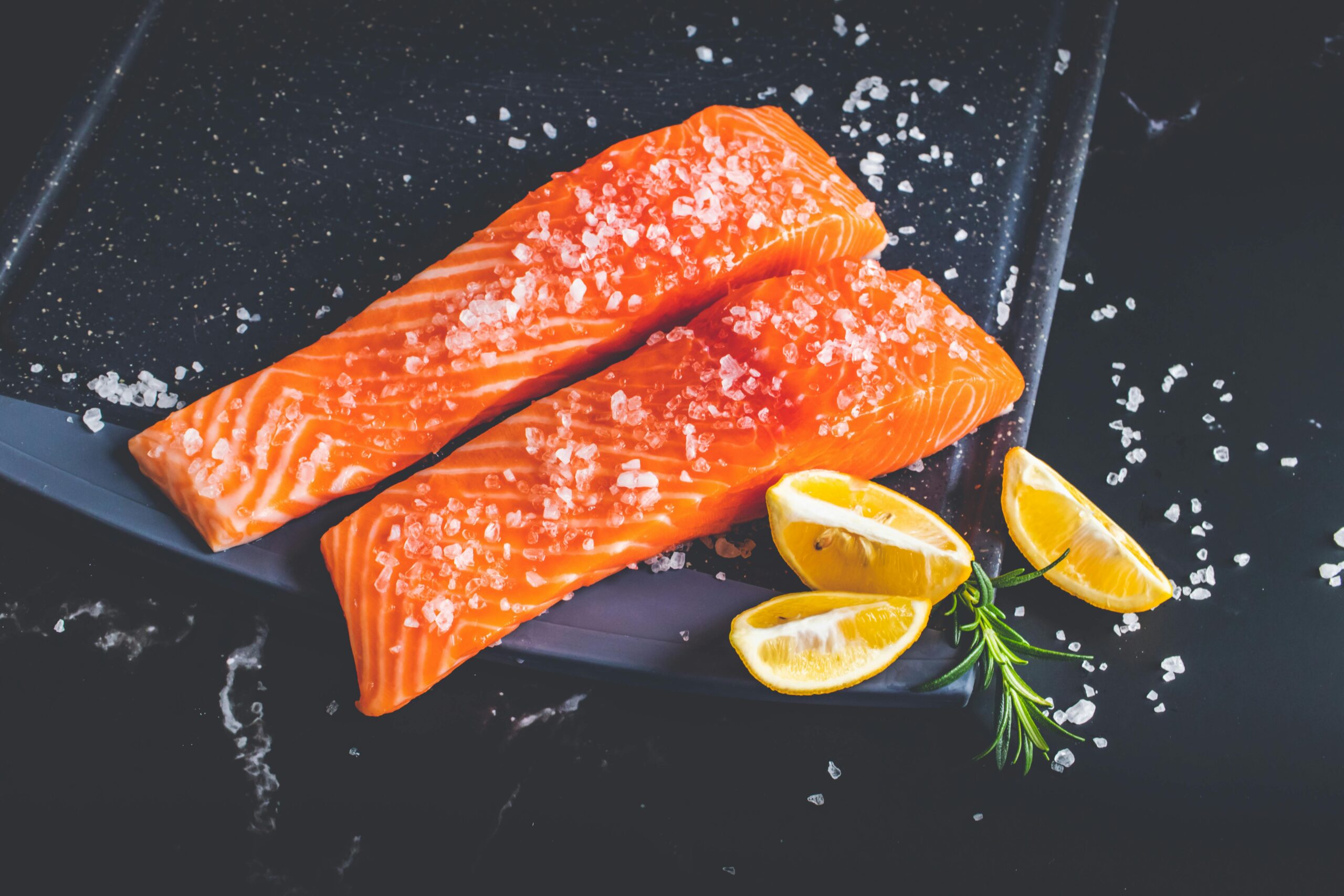
Before the recipes, the numbers. These are the protein counts for the most common dinner proteins at typical two-serving portion sizes. Knowing these makes it easy to build 30g into any meal even before you follow a specific recipe.
| Protein Source | Portion for One Serving | Grams of Protein |
|---|---|---|
| Salmon (skinless fillet) | 5–6 oz | 29–35g |
| Shrimp (large) | 5 oz / about 12 pieces | 28–30g |
| Chicken breast (boneless, skinless) | 5 oz | 34g |
| Chicken thighs (boneless, skinless) | 5 oz (2 medium thighs) | 30g |
| Ground turkey (93% lean) | 5 oz cooked | 30g |
| Lean ground beef (93%) | 5 oz cooked | 30g |
| Scallops (large sea) | 5 oz / 5–6 large | 25g |
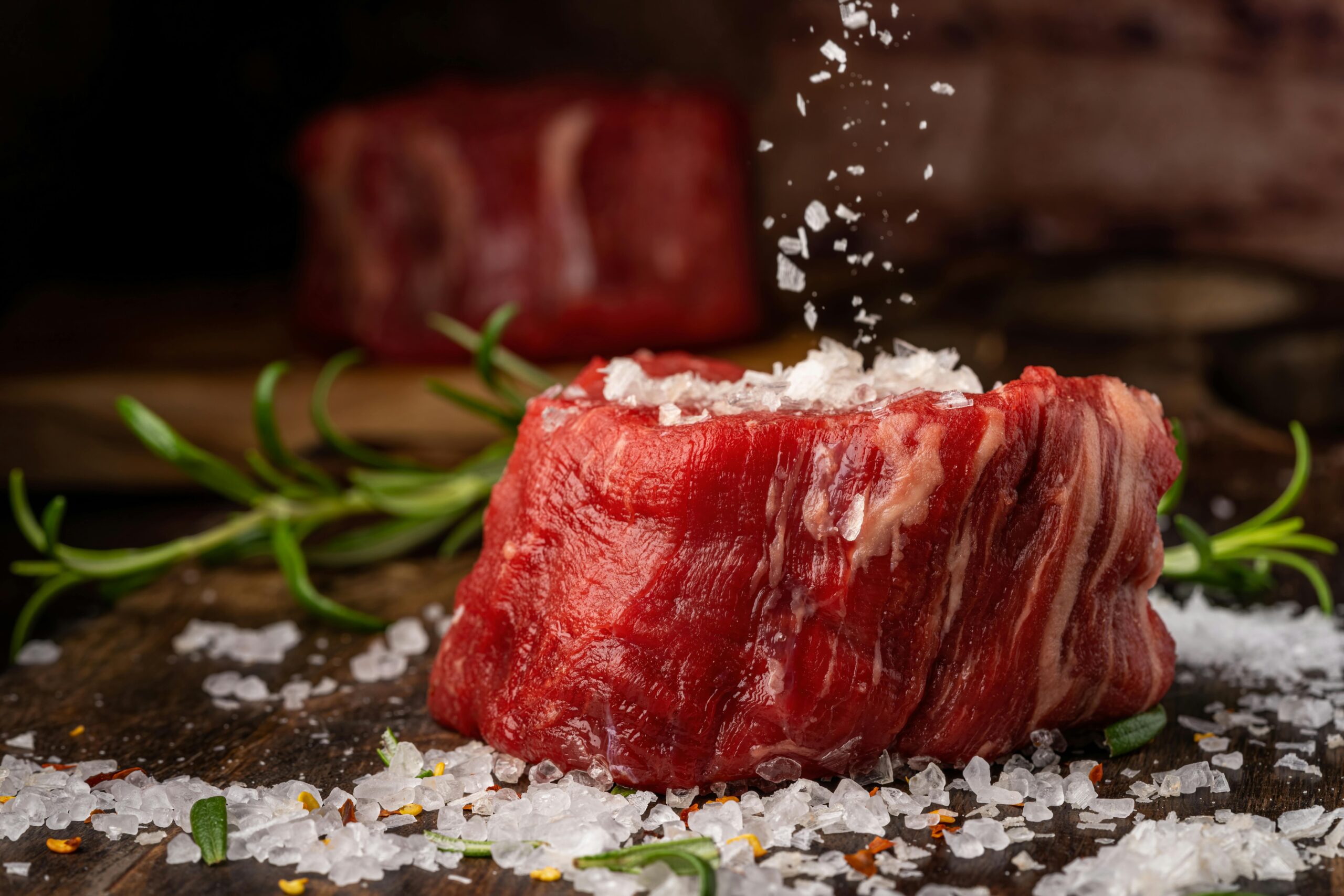
| Lamb loin chops | 5 oz (3 small chops) | 32g |
| Chickpea pasta (dry) | 2 oz dry / 1 cup cooked | 14g |
| Fat-free cottage cheese (added to sauce) | ½ cup | 13g |
| Edamame (as side/topping) | ½ cup shelled | 9g |
| Eggs (for protein stacking) | 2 large eggs | 12g |
Most dinners reach 30+ grams of protein through protein stacking — combining two or more protein-containing ingredients rather than relying on a single enormous portion of one thing. Examples: salmon (25g) plus edamame as a grain bowl topping (9g) = 34g total. Chickpea pasta (14g per serving) plus ground turkey in the sauce (30g) = the basis of my high-protein pasta at 30g+ total. Shrimp (28g) plus a chickpea pasta base (14g) = Boursin Pasta with Shrimp at 50g+ total. This method keeps portions reasonable and variety high. Mixing brown rice with quinoa is another favorite protein stack around here! And let’s not forget adding protein rich seeds (hemp, chia and flax) and nuts to recipes or as a topping on salads, yogurt, cereal, etc.

Seafood is the most time-efficient protein category for weeknight 30g dinners. It cooks faster than any other protein, is naturally high in protein, and pairs beautifully with the flavor toolkit of lemon, herbs, and aromatics that keeps it interesting every night of the week. Shellfish is by far my favorite food group and salmon (as we all know) is a super-food and helps me get in all my omega-3s. I even have a shrimp recipe that serves up a whopping 50 grams of protein per serving (you’re welcome!). Consider this a bonus recipe from me to you: Honey Garlic Shrimp for Two
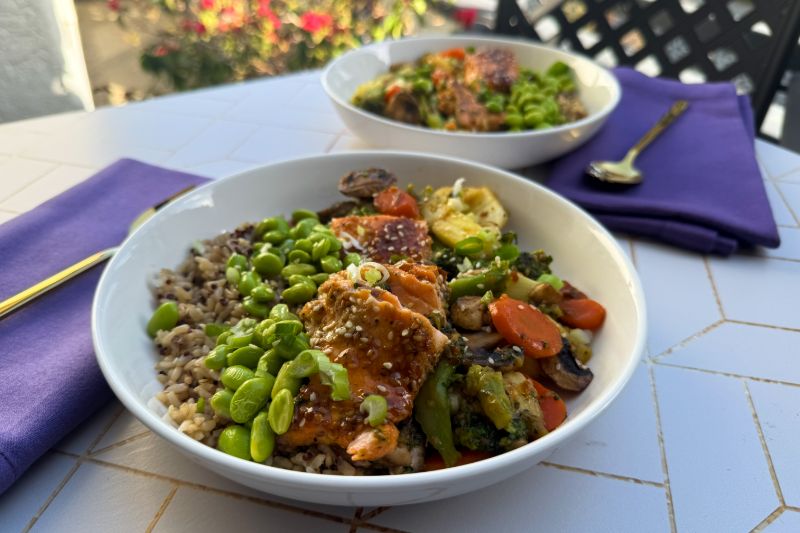
Salmon with Cherry Balsamic Sauce
Restaurant-quality elegance in 25 minutes. A perfectly seared salmon fillet delivers 30+ grams of protein, and the cherry balsamic pan sauce — made from fresh or frozen cherries, balsamic vinegar, and a splash of broth — adds deep, sophisticated flavor at essentially zero points. This is the dinner I cook when I want the meal to feel like a special occasion without spending either time or points. Serve with steamed asparagus or a pile of wilted spinach for a zero-point side, and the whole dinner lands under 5 points while delivering more than 30 grams of protein.

Boursin Pasta with Shrimp
This is the recipe that converts non-believers to the protein-stacking philosophy. Shrimp delivers approximately 28 grams of protein. Chickpea pasta (ZenB or Banza) adds another 14 grams. A small amount of Boursin cheese melted into the pasta sauce creates a cream-sauce experience at a fraction of the usual points. Total result: 50+ grams of protein in a bowl of pasta that tastes genuinely indulgent. Spend this on a Friday night when you want dinner to feel like a treat. Every point is earned.

Marinated Grilled Scallops
Sea scallops are naturally high in protein and low in calories — one of the most nutritionally efficient seafood choices available. Marinated in honey, lemon, garlic, and Italian seasoning, then grilled or seared until golden on the outside and soft in the center, these are a date-night dinner that takes 15 minutes of active cooking. Serve over sautéed spinach with lemon or alongside my Seared Scallops on Corn Puree to push the meal closer to 35g total protein while adding elegant presentation.
Cast Iron Scallops
The simplest path to a restaurant-quality seafood dinner for two. Sea scallops, salt, pepper, fresh dill, and a very hot cast iron pan. That is the entire recipe. The technique is the magic: properly dried scallops in a screaming-hot pan develop a golden-brown crust in three minutes per side without needing oil, butter, or complicated preparation. Serve as a starter before a green salad or over a zero-point grain bowl to build total protein toward 35g per meal.

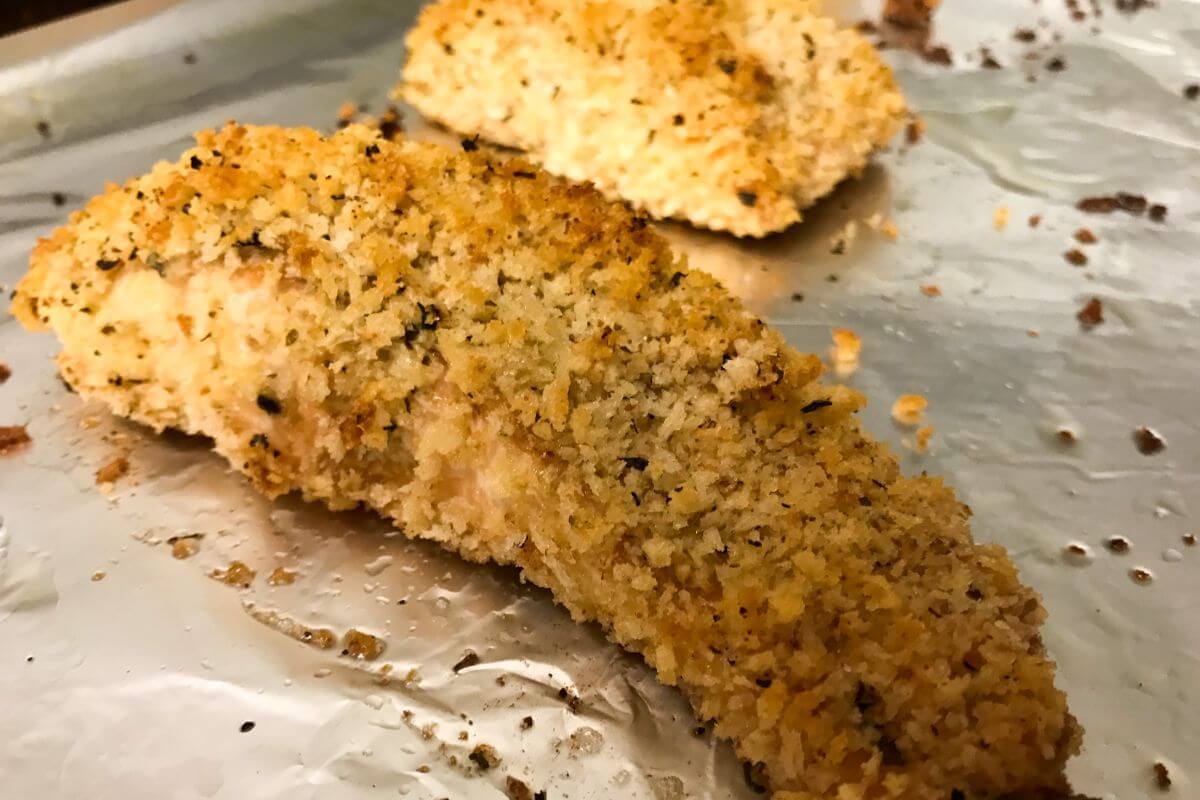
Crispy Baked Salmon
When you want salmon with genuine texture and a proper crust, this is the recipe. A toasted panko coating — seasoned with herbs, garlic powder, and salt — gives the salmon a crackling exterior while the interior stays perfectly moist. At 35+ grams of protein per serving, this is a higher-point spend than plain baked salmon but completely justified by the result. Serve with roasted asparagus and a lemon wedge for a complete dinner.
Chicken breast and ground turkey are the most affordable path to 30 grams of protein at dinner. Five ounces of chicken breast delivers 34 grams of protein. Five ounces of ground turkey delivers approximately 30 grams. The challenge is making them interesting enough to eat three or four times a week without monotony — which is why technique and sauce matter so much in this category.
Hot Honey Chicken Tenders for Two
The most craveable high-protein dinner on this site. Chicken tenders in a double-dredge coating, fried (or air fried) to maximum crispiness, then drizzled with a homemade hot honey sauce. 35+ grams of protein per serving. This is a deliberate points spend — the kind of meal that makes the entire WW framework feel sustainable rather than restrictive. For lower points, use the air fryer and you keep the crunch while dramatically reducing the fat. Serve with my Healthy Coleslaw for a complete dinner.

Honey Chili Chicken
Chicken thighs cooked in a cast iron skillet until golden, then glazed with a honey-chili sauce that caramelizes beautifully around the meat. Twenty-eight grams of protein per serving — just under the 30g threshold, but easy to push over 30g by adding half a cup of edamame or a tablespoon of hemp seeds to whatever side you serve alongside. The honey creates a natural glaze that makes this dinner feel significantly more elaborate than the 30-minute cooking time suggests.

Honey, Ricotta & Cranberry Chicken
Sweet, savory, and genuinely surprising — chicken thighs topped with a honey, ricotta, and cranberry mixture that melts over the hot chicken and creates a sauce. The ricotta adds creaminess and a few extra points but also several additional grams of protein, pushing total protein per serving above 32g. The cranberry adds color and tartness. This is a dinner that looks like it took an hour and takes twenty-five minutes.

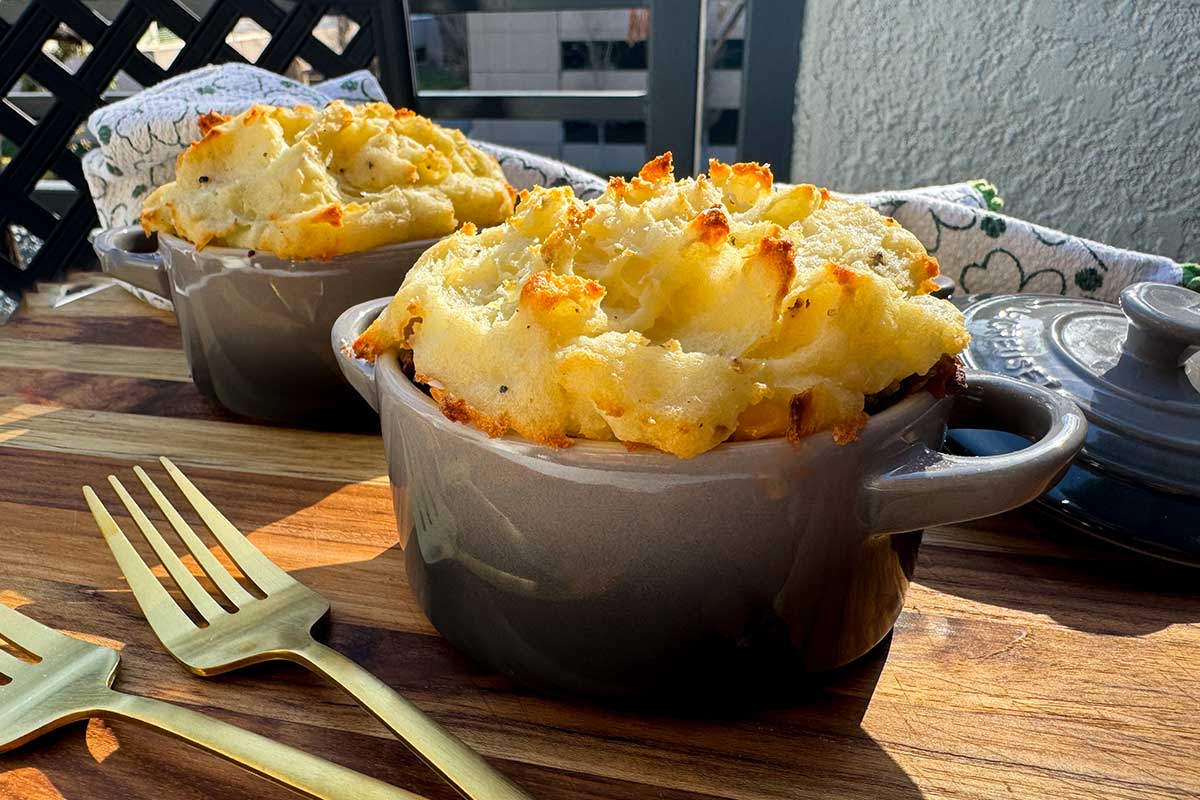
These are the dinners for when you want to eat something genuinely different. Lamb, multiple-protein pasta — these are the meals that make a high-protein week feel abundant rather than repetitive.

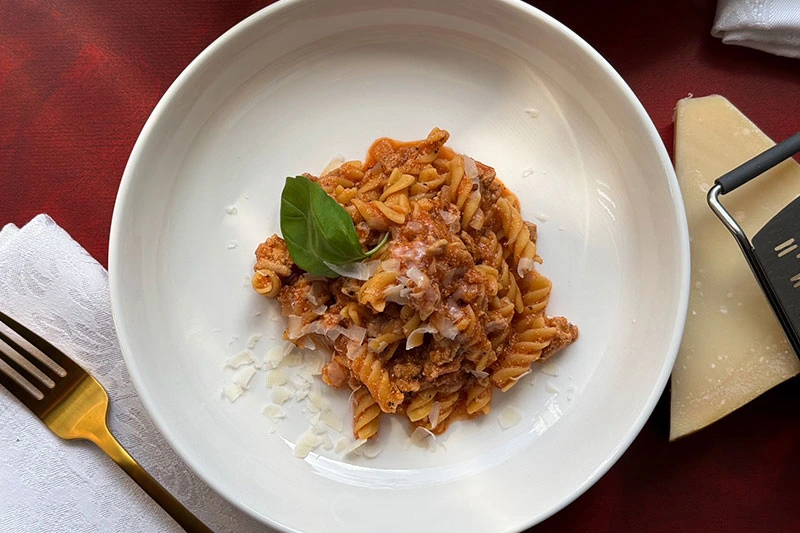
Most people eat the vast majority of their daily protein at dinner — the typical American pattern runs approximately 10 grams at breakfast, 20 at lunch, and 60 at dinner. Nutrition researchers have been studying whether this distribution matters as much as total daily intake, and the finding is clear: it does.
A crossover study in the Journal of Nutrition found that evenly distributing protein (30 grams per meal) across all three meals produced 25% greater 24-hour muscle protein synthesis than the same total daily protein consumed in the typical front-heavy-at-dinner pattern. Your muscles can only utilize a certain amount of protein per meal for synthesis — roughly 25–35 grams for most adults, higher for older adults with anabolic resistance. Eating 60 grams at dinner does not mean your muscles receive twice the benefit of 30 grams. The excess gets used for energy or excreted rather than contributing to muscle maintenance.
The practical implication: 30 grams of protein at dinner is not an arbitrary fitness-culture number. It is the evidence-based threshold for triggering meaningful muscle protein synthesis at the end of the day. Getting there consistently, at a meal that is genuinely satisfying and part of a life you actually want to live, is the goal behind every recipe in this collection.
The 2025–2030 Dietary Guidelines for Americans, released in January 2026 and described as the most significant federal nutrition policy reset in decades, doubled the recommended daily protein intake from the previous 0.8g/kg guideline to 1.2–1.6g/kg of body weight. For a 150-pound person, this means 82–109 grams of protein per day — roughly 27–36 grams per meal across three meals. The 30-gram dinner target is now explicitly supported by federal nutritional guidance, not just fitness culture recommendations.
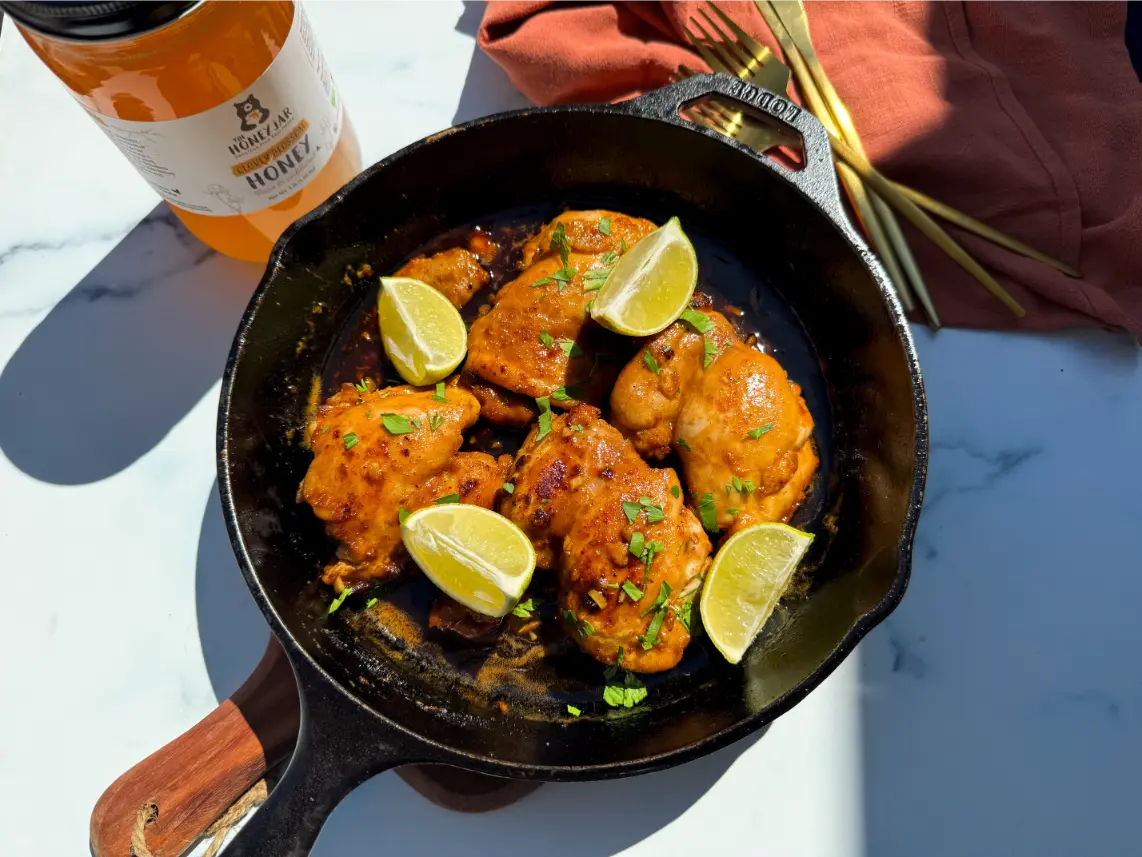
Here is the actual weekly rotation I use. The goal is variety across protein types, no repeated proteins on consecutive nights, and a cooking time range that fits a real schedule:
| Night | Recipe | Protein / Time |
|---|---|---|
| Monday | Teriyaki Salmon Bowls — grain bowl format, easy assembly | 49g / 30 min |
| Tuesday | Honey Chili Chicken — cast iron, one pan | 28g+ / 30 min |
| Wednesday | High-Protein Pasta — comfort mid-week | 30g+ / 45 min |
| Thursday | Marinated Grilled Scallops — light and fast | 25g+ / 15 min + marinate |
| Friday | Hot Honey Chicken Tenders — intentional treat | 35g+ / 30 min |
| Saturday | Lollipop Lamb Chops — date night at home | 32g+ / 20 min |
| Sunday | Ground Turkey Shepherd’s Pie — cozy and filling | 30g+ / 45 min |
Notice that no protein repeats on consecutive nights. Variety is essential for sustainability. If you ate the same protein every night, even the best recipe in the world would feel like a burden by Thursday. Rotating across salmon, chicken, pasta, scallops, and lamb keeps every dinner feeling like a genuine choice rather than a routine.
Every recipe in this collection was chosen in part because protein-forward dinners tend to be naturally lower in points than the calorie-dense, fat-heavy alternatives that the same appetite might otherwise demand. As always, use your WW app to double check points as they change often at Weight Watchers. Only the app will give you the accurate number since it also depends on which plan you are using at WW. But, these will give you a range to help guide you. Here is the point breakdown across the collection:
| Recipe | Estimated Points | Protein Per Serving |
|---|---|---|
| Salmon with Cherry Balsamic Sauce | 3–5 points | 30g+ |
| Cast Iron Scallops | 3–5 points | 25g+ |
| Marinated Grilled Scallops | 3–4 points | 25g+ |
| Honey Chili Chicken | 4–6 points | 28g |
| High-Protein Pasta | 6–8 points | 30g+ |
| Hot Honey Chicken Tenders (air fryer) | 4–6 points | 35g+ |
| Honey Ricotta Cranberry Chicken | 5–7 points | 32g+ |
| Teriyaki Salmon Bowls | 6–8 points | 49g |
| Ground Turkey Shepherd’s Pie | 6–8 points | 30g+ |
| Lollipop Lamb Chops | 6–8 points | 32g+ |
| Crispy Baked Salmon | 5–7 points | 35g+ |
| Boursin Pasta with Shrimp | 8–12 points | 50g+ |
The pattern across this table: most of these dinners land in the 3–8 point range per serving despite delivering 30–50 grams of protein. That is because the protein itself — lean fish, skinless chicken, ground turkey — is zero or near-zero points on WW in 2025/2026. The points come from additions: olive oil, cheese, pasta, sauces. Keeping additions moderate while keeping the protein generous is the entire WW high-protein cooking philosophy in practice. For the complete WW cooking system, see my Cooking for Two on Weight Watchers guide. For the WW-Friendly recipe collection, visit the WW-Friendly Recipes Guide.
Dinners that reliably deliver 30 grams of protein per serving for two people include: grilled or baked salmon (30–35g per 5–6 oz fillet), chicken breast dishes (34g per 5 oz serving), shrimp-based pasta using chickpea pasta for protein stacking (28g shrimp + 14g pasta = 42g total), ground turkey dishes (30g per 5 oz cooked), and lamb chops (32g per 5 oz). The most efficient approach is the protein-stacking method — combining two protein sources in one dish to reach 30g without relying on an enormous single protein portion. See the full collection above for twelve specific two-serving recipes with exact protein counts per serving.
The protein-stacking method is the answer: combine two protein sources in a single meal so that neither portion is unreasonably large. Examples: chickpea pasta plus ground turkey in the sauce (14g + 16g per serving = 30g without a large meat portion), salmon plus edamame in a grain bowl (25g + 9g = 34g), or chicken plus fat-free Greek yogurt in a sauce (28g + 10g = 38g). Plant proteins also contribute meaningfully: half a cup of black beans adds 8g, two tablespoons of hemp seeds add 6g, and a tablespoon of chia seeds adds 2.5g. Scattering these across a meal makes 30g achievable without a palm-sized piece of meat dominating the plate.
The best WW-friendly high-protein dinners for two on this site are the Salmon with Cherry Balsamic Sauce (3–5 points, 30g protein) and Honey Chili Chicken (4–6 points, 28g protein). Both use zero-point lean proteins as their base, with moderate-point additions that genuinely elevate the dish. The Teriyaki Salmon Bowls deliver 49 grams of protein at 6–8 points — the best protein-per-point value in the collection. For the complete WW and high-protein overlap strategy, see the Cooking for Two on Weight Watchers guide.
No. Thirty grams of protein at dinner is the evidence-based minimum target for triggering meaningful muscle protein synthesis, not a ceiling. Research consistently shows that most adults can effectively utilize 25–35 grams of protein per meal for muscle maintenance and repair — with older adults and people with anabolic resistance benefiting from the higher end of this range or above it. The 2025–2030 Dietary Guidelines for Americans support 1.2–1.6 grams of protein per kilogram of body weight daily, which for most adults translates to 27–36 grams per meal across three meals. Thirty grams at dinner is the goal, not the upper limit.
The portion size needed to reach 30 grams depends on the protein source. For chicken breast: approximately 4–5 ounces cooked (roughly the size of your palm). For salmon: approximately 5–6 ounces. For shrimp: approximately 5 ounces (about 12 large shrimp). For ground turkey (93% lean): approximately 5 ounces cooked. For lean ground beef: approximately 5 ounces cooked. These are all moderate, realistic portion sizes — not enormous quantities. At these serving sizes, each protein source delivers close to or above 30 grams without requiring an excessive amount of meat. Adding a high-protein side (edamame, chickpea pasta, Greek yogurt in a sauce) provides a protein-stacking boost that makes 30g achievable even with a slightly smaller primary protein portion.
The fastest high-protein dinners for two in this collection are Cast Iron Scallops (15 minutes active cooking, 25g protein — push to 30g+ by adding edamame or hemp seeds) and the assembly version of Teriyaki Salmon Bowls when using pre-cooked grains from Sunday prep (15 minutes assembly, 49g protein). Grilled shrimp on a bed of chickpea pasta with olive oil and garlic takes under 20 minutes and delivers 40g+ of protein. For genuinely fast weeknight 30g dinners, always keep frozen shrimp in the freezer (thaws in five minutes in cold water), pre-cooked chickpea pasta in the fridge, and a bag of frozen edamame on hand — these three ingredients alone can build a 30g dinner in under 15 minutes.
Yes — and they work together naturally. The zero-point WW foods include lean proteins that happen to be the highest-protein ingredients available: skinless chicken, all fish and shellfish, eggs, lean ground turkey and beef, fat-free Greek yogurt, fat-free cottage cheese. Building dinner around these zero-point proteins makes hitting 30g of protein and keeping points low the same action, not a trade-off. The Salmon with Cherry Balsamic Sauce at 3–5 points and 30g protein, and the Honey Chili Chicken at 4–6 points and 28g protein, are both perfect examples of this overlap. See the WW-Friendly Recipes Guide for the full collection.
Traditional pasta is not a significant protein source — two ounces of dry white pasta delivers only 7 grams of protein, primarily from gluten. But pasta dinners can absolutely be high-protein through two strategies: switching to a protein-enhanced pasta base and building a protein-rich sauce. Chickpea pasta (Banza, ZenB) or lentil pasta delivers 14 grams of protein per two-ounce dry serving — double the protein of regular pasta. Add a sauce built on ground turkey or shrimp and blended cottage cheese (as in my High-Protein Pasta recipe) and the total protein per serving exceeds 30 grams in a bowl of pasta that tastes exactly like a proper Italian dinner. Boursin Pasta with Shrimp pushes this to 50+ grams through the protein-stacking of shrimp plus chickpea pasta. The ingredients change; the experience of pasta for dinner does not.
The key is a protein rotation system rather than a recipe list. Divide the week’s proteins into categories: seafood nights, poultry nights, and red meat or pasta nights. A five-night weekday rotation might look like: Monday seafood, Tuesday poultry, Wednesday pasta (with protein stacking), Thursday seafood, Friday poultry or red meat. Saturday and Sunday can be more elaborate — a lamb dish, a shrimp pasta, something date-night appropriate. Within each category, vary the flavor profile: if Monday is salmon, make it teriyaki-glazed. If Thursday is also salmon, make it cherry balsamic. Same protein category, completely different meal experience. The weekly dinner rotation table above shows exactly how I structure this. No protein repeats on consecutive nights; no boredom; no nutritional compromise.
The two-person advantage for high-protein cooking is that you control both servings independently. Cook the base recipe identically for both people — the protein, the sauce, the vegetables. The portion adjustment happens at the plate, not the pan. For a lighter eater: a smaller protein portion (4 oz instead of 5–6 oz), same sauce, same side. For the person hitting a 30g target: the full 5–6 oz protein portion. Both plates come from the same recipe; both people are satisfied. The meals in this collection that work especially well for mixed appetites are bowl-format dinners — Teriyaki Salmon Bowls, High-Protein Pasta — where each person self-assembles their bowl from shared components. The light eater takes a smaller bowl; the higher-protein eater takes a larger one. No separate cooking, no compromise on the recipe, no negotiation about what’s for dinner.
After years of building dinner around 30+ grams of protein consistently, I can tell you what changes: the evening snacking stops. Almost completely. The ‘I’m full but still want something’ feeling that drives most after-dinner grazing disappears when dinner itself is genuinely satisfying — protein-rich enough to keep hunger hormones suppressed, varied enough to be interesting, and delicious enough that finishing the plate feels like pleasure rather than discipline.
That is what every recipe in this collection is designed to produce. Not just 30 grams of protein, but 30 grams of protein in food worth eating.
For the complete high-protein eating philosophy and more recipes across breakfast, lunch, and dinner, visit the High-Protein Recipes Guide. For the complete two-person cooking framework, see the Complete Guide to Cooking for Two. And for the WW-specific approach to high-protein cooking, see Cooking for Two on Weight Watchers.

Hi! I’m Diane. I started this site as a passion project. I love to cook, entertain, travel and laugh. (Who doesn’t love a good laugh?) Of course, being from New York, sarcasm rules!
More About Diane
mycuratedtastes@gmail.com