Add Us As A Trusted Google Source
 30 Grams of Protein Dinners for Two: 12 Recipes That Actually Satisfy
»

This is the guide I wish had existed when I first tried to combine my WW membership with my reality of cooking for two. Nobody had written this post — not WW itself, not the major WW bloggers, not Simple Nourished Living or Skinnytaste. This is the intersection nobody owns. Here is everything inside:
I have been a Weight Watchers member for more years than I care to count. I have attended meetings in five states — New York, the Midwest, and here in Southern California. I have lived through every version of the program: Original Points, PointsPlus, SmartPoints, Freestyle, PersonalPoints, and the current 2025/2026 plan with its expanded zero-point food list. Through every rebrand, every new zero-point food, every app overhaul, I have stayed.
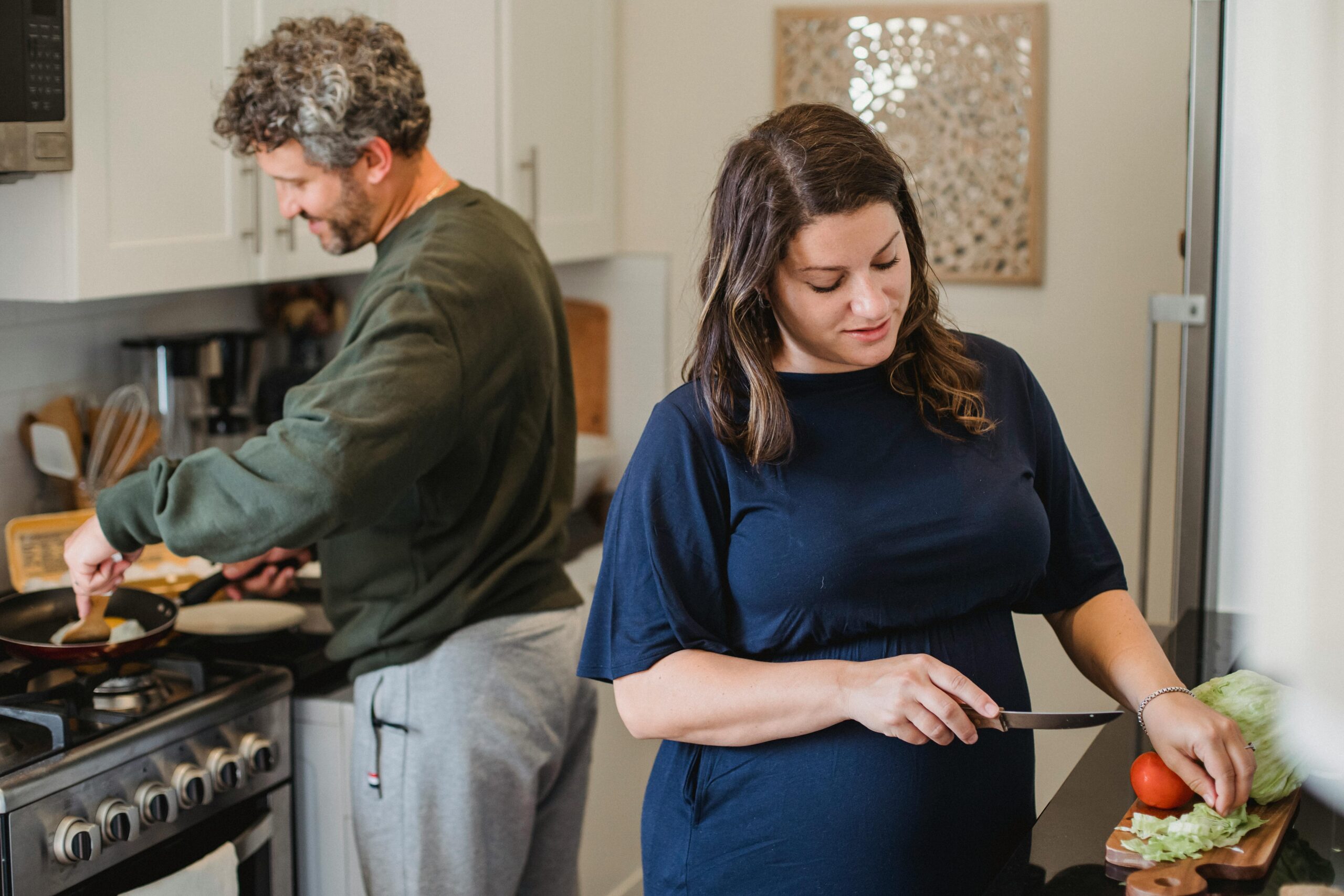
And through all of it, I have been doing something that the WW program itself, and most WW bloggers, have never specifically addressed: cooking for two people. Not a family. Not a meal prep batch of six. Two adults, two different point budgets sometimes, two palates to satisfy, two people who do not want to eat the same leftovers three days in a row.
Here is what I know after more than a decade of doing exactly this: cooking for two on WW is not a limitation. It is an advantage. And once you understand why — and once you have the system — the whole program becomes easier, more sustainable, and frankly more enjoyable than cooking WW meals for a larger household ever could be.
This post is the complete guide to that system. For the full picture of my WW cooking philosophy, visit the WW-Friendly Recipes Guide. For the complete guide to cooking for two in general, see the Complete Guide to Cooking for Two. This post sits at the intersection of both.
Every major WW blog is written primarily for families or individuals. The recipes serve four to six. The meal plans assume you have multiple people with different needs. The shopping guides are about buying in bulk and managing leftovers for days.
When you cook for two, none of those assumptions apply. And that turns out to be enormously beneficial for your WW journey.
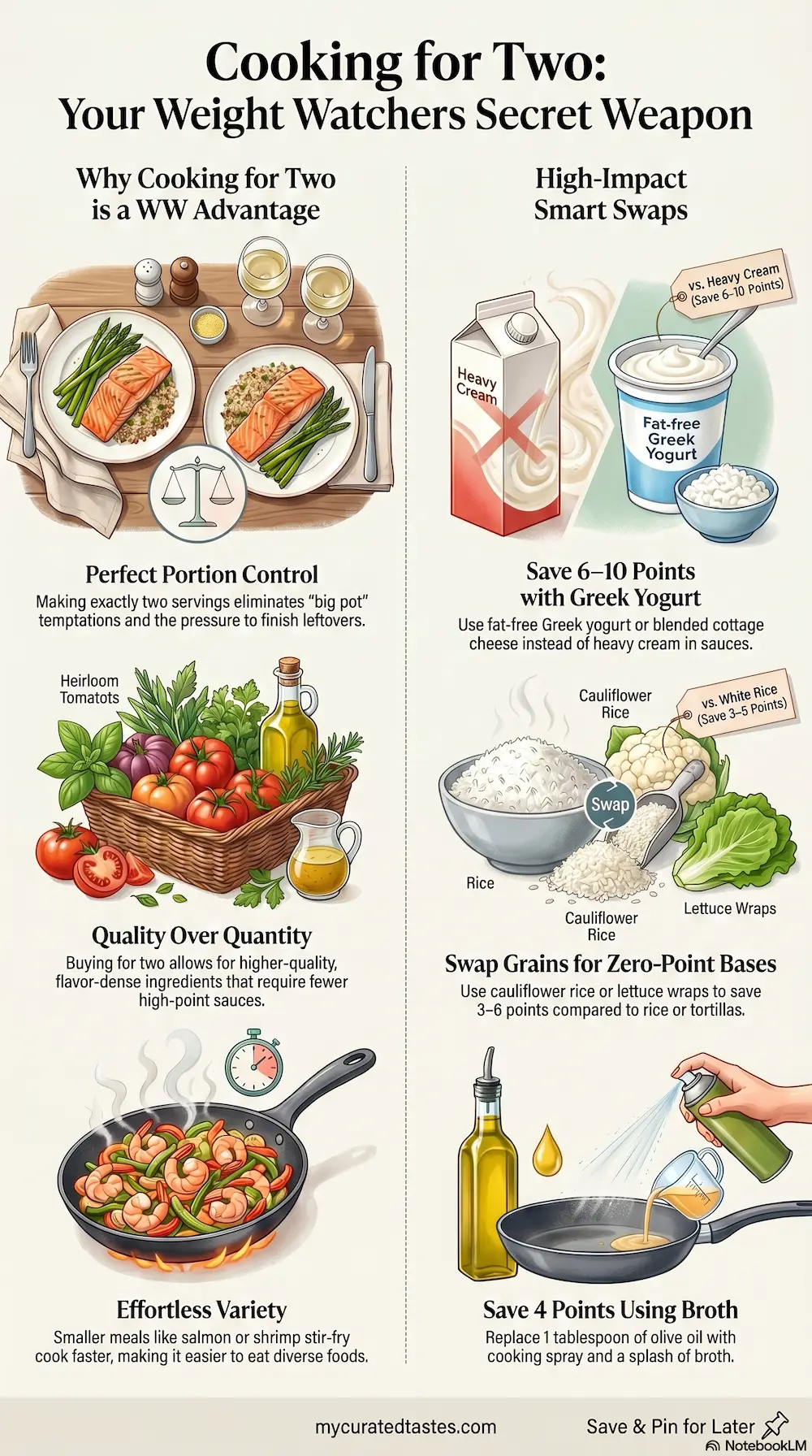
When you cook for a family, there is almost always pressure — social, practical, or psychological — to finish what you made. A pot of chili for six means eating chili five more times, or wasting it, or feeding it to people who did not sign up for your WW plan. When you cook for two, you make two portions. You eat two portions. Dinner is over. No second helpings from a big pot sitting on the stove. No grazing. No mental arithmetic about whether having a third serving is really a third serving or just a generous second.
Cooking for two means you can make something completely different every night without the burden of large-batch cooking. A piece of salmon for two takes 12 minutes. A chicken dish for two takes 25 minutes. A shrimp stir-fry for two takes 10 minutes. None of these require the planning, prep time, or psychological commitment of a family-sized batch. This makes it genuinely easy to follow the WW principle of eating a variety of foods rather than defaulting to the same three or four familiar meals because they are easy to batch cook.
When you are buying for two instead of six, you can afford better ingredients at the same total cost. Better quality ingredients — a real piece of wild salmon, fresh herbs rather than dried, a proper cut of lean beef — require less embellishment to taste excellent. Which means you need fewer high-point additions (sauces, fats, heavy toppings) to make the food satisfying. Better ingredients are naturally more point-efficient. This is by far the greatest selling point on cooking for two – the freshness and quality of ingredients becomes everything. I can’t buy a bag of apples. Instead, I select two perfect apples, two amazing oranges, etc. I go to the butcher to slice two perfect filet mignon. Shopping becomes a joy!
One of the most underappreciated drivers of overeating on WW is the presence of extra food. When you batch cook for a family, leftovers become a constant temptation. When you cook for two, the correct portions are on the plate and there is nothing left to tempt you later. This is not about willpower — it is about environment. The two-person kitchen is a naturally lower-temptation environment.
One of the most common questions I hear from couples starting WW together: ‘Do we share a point budget?’ The answer is no — and understanding this correctly is essential for making the program work for both of you.
Each WW member receives their own personalized daily point budget based on their individual factors — height, weight, age, and goals. These are completely separate. Your partner’s budget is not your budget. You do not share points and you do not split them. This matters for cooking because: when you make a meal for two, the points PER SERVING are what each person tracks — not the total points for the whole dish. A dinner that totals 16 points for the whole recipe is 8 points per person, and each person logs 8 points against their own individual budget.
This is the reality for most couples: one person has a higher daily budget than the other based on their individual factors. This is completely normal and does not mean you cannot cook the same meals together. Here is how to navigate it:
Here is a counterintuitive truth: cooking for exactly two people often saves more points than trying to adapt a recipe for one person. Why? Because many low-point cooking techniques — dry sautéing, steaming, poaching — require a minimum volume of food to work well. A single chicken breast in a pan is often overcooked before it finishes. Two chicken breasts in the same pan, cooked properly, come out better. The technique that produces the best result for two servings happens to be the most point-efficient technique. Cooking for two and cooking well on WW are, in practice, the same thing.
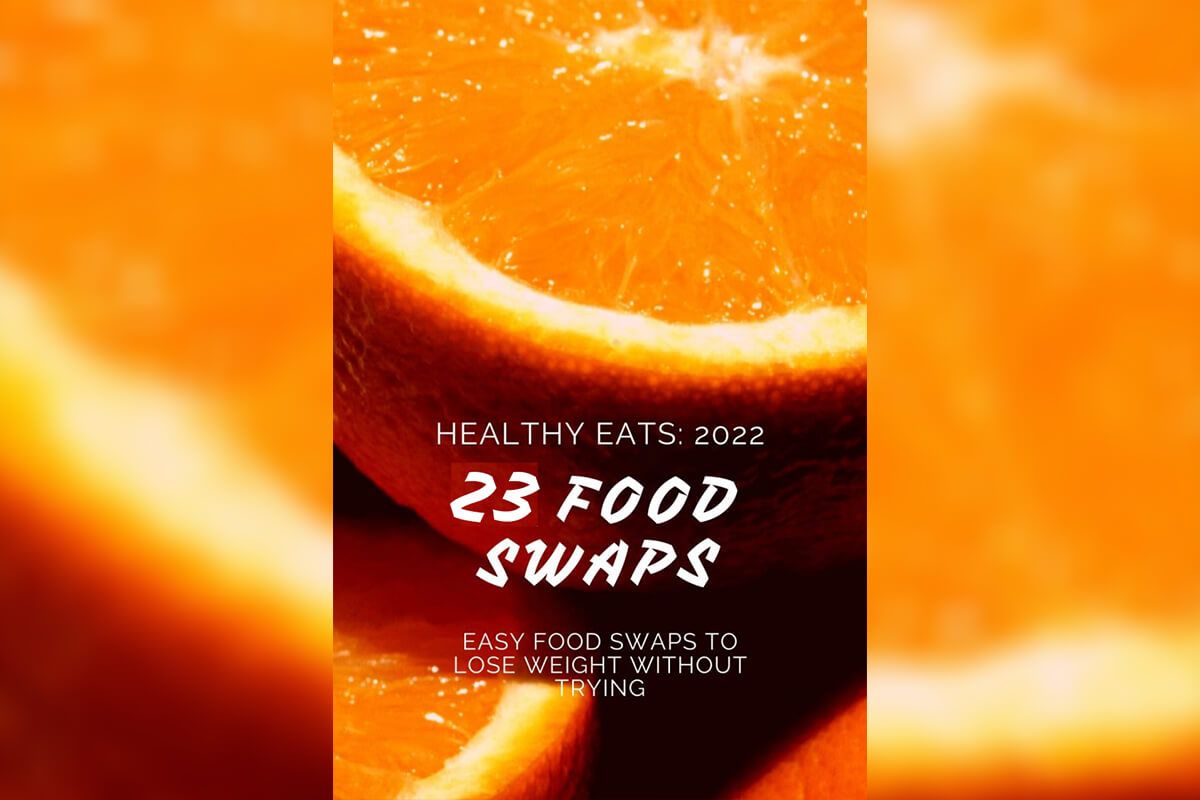
After years of WW cooking, I have built a mental library of ingredient swaps that save significant points without sacrificing the satisfaction of the final dish. These are not sad substitutions — they are legitimate cooking techniques used by professional chefs who happen to align with WW’s nutritional goals. You can also refer to my 23 food swaps to make weight loss painless guide. These are my daily, go-tos…use them all the time, at every meal, etc. A reminder again regarding the points noted below. They are estimates based on years of experience but for accurate numbers, always use your WW app. That is the tool that is constantly updated with current information and should be your go-to for tracking points.
| Instead of… | Use… | Points Saved Per Serving |
|---|---|---|
| Heavy cream in sauces | Fat-free Greek yogurt or blended fat-free cottage cheese | 6–10 points |
| Full-fat cheese (¼ cup) | Reduced-fat cheese, same amount | 2–3 points |
| Regular pasta (1 cup cooked) | Chickpea or lentil pasta (same amount) | 1–2 points + more protein |
| Olive oil for sautéing (1 tbsp) | Cooking spray + broth or water | 4 points |
| Butter on vegetables (1 tbsp) | Lemon juice + fresh herbs | 4 points |
| Sour cream as topping | Fat-free plain Greek yogurt | 3–4 points |
| Mayonnaise in salads | Fat-free Greek yogurt + Dijon mustard | 4–6 points |
| Breadcrumbs for coating | Crushed oat-based cereal or oat flour | 2–3 points |
| White rice (1 cup cooked) | Cauliflower rice or half cauliflower/half rice | 3–5 points |
| Flour tortilla (10-inch) | Lettuce wraps or low-calorie tortilla | 4–6 points |
| Cream cheese (2 tbsp) | Fat-free cream cheese (same amount) | 3 points |
| Regular ground beef | 93–97% lean ground beef or turkey | 3–5 points |
| Bottled salad dressing (2 tbsp) | Red wine vinegar + Dijon + herbs | 2–5 points |
| Regular pasta sauce (½ cup) | Homemade tomato sauce (canned tomatoes + garlic) | 1–3 points |
The most powerful swap on this list — by far — is the fat-free Greek yogurt or blended cottage cheese in place of heavy cream. I use this in pasta sauces, soups, salad dressings, and dips constantly. It adds protein, delivers genuine creaminess, and saves 6–10 points per serving. My High-Protein Pasta is built entirely on this swap — cottage cheese blended into a creamy tomato sauce with ground turkey, delivering 30+ grams of protein per serving at a fraction of the points of a traditional cream pasta.
The single biggest obstacle to staying on track with WW is the evening moment when you are tired, hungry, and nothing is prepped. For a two-person household, this is solvable with a well-stocked pantry and a few refrigerator staples. Here is what I keep on hand:
The decision fatigue of ‘what’s for dinner tonight?’ is one of the main reasons WW plans fall apart. When you are tired at 6pm and there is no plan, the path of least resistance — ordering in, grabbing something easy and high-point — wins. The solution is a simple weekly framework that eliminates the daily decision without requiring elaborate meal prep.
WW gives every member a daily points budget AND a weekly points bank — a reserve of extra points you can spend across the week on higher-point meals, a glass of wine, or a proper dessert. For two-person households, I recommend this approach:
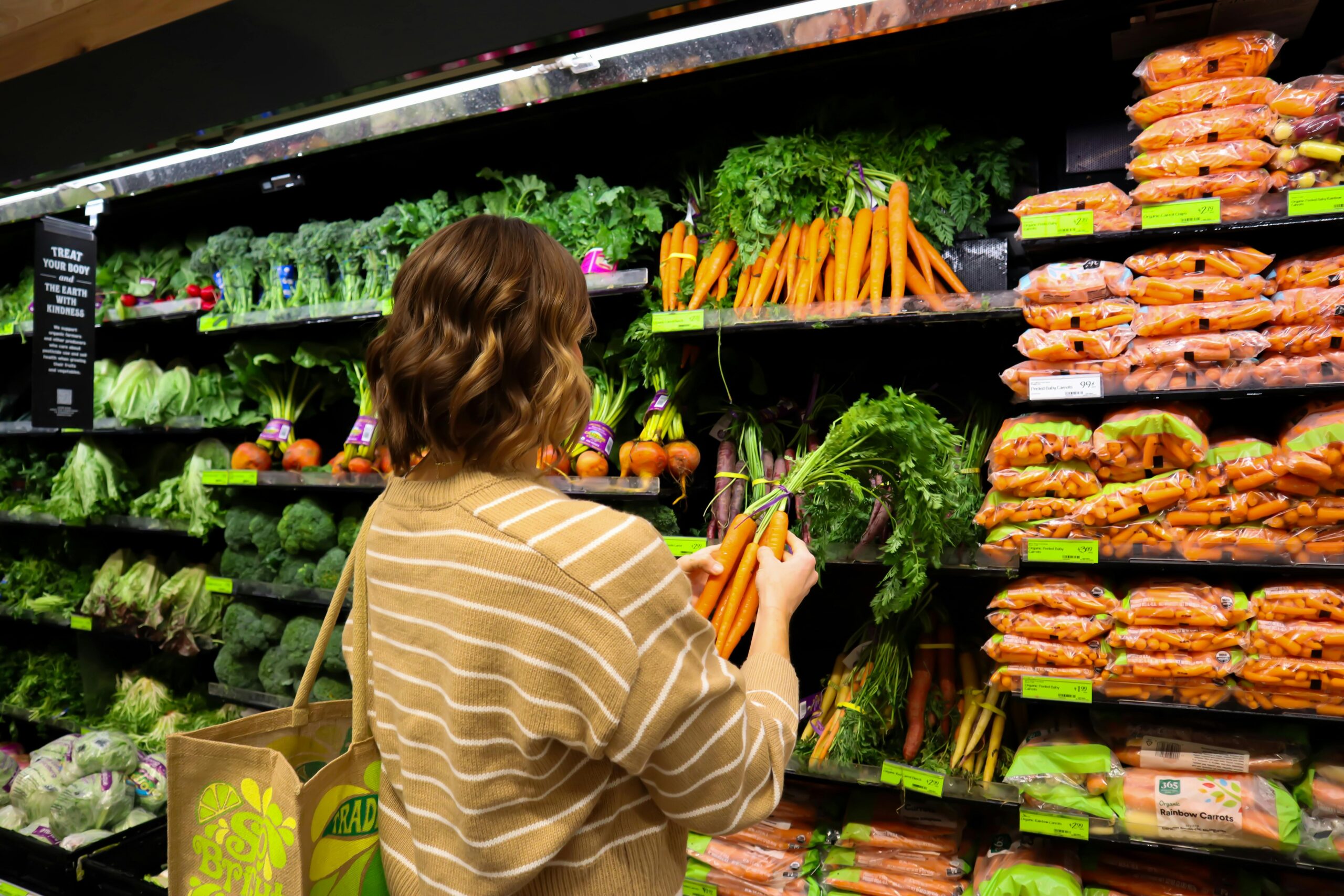
Over-buying is one of the biggest WW saboteurs in a two-person household. You buy a family-sized package of chicken because it is a better value per pound, then feel obligated to eat chicken every day for a week. Or you buy fresh herbs in a full bunch, use two tablespoons, and watch the rest go limp and unusable. Here is how I shop for two on WW:
The WW app lets you scan barcodes to check points values. For a two-person shopping trip, I run a quick label scan on any packaged item before it goes in the cart. The things I specifically check:
These are the recipes from this site that I rely on most for WW cooking for two. I have included estimated point ranges — these are approximate because point values depend on the exact products and portions used. Always calculate your specific values in the WW app using the recipe builder. Important note: Many days, and at many meals, I may eat very “clean” and have simply prepared protein with steamed veggies for zero point meals. But not every day, and certainly not at every meal. The following recipes add variety and excitement to my meals. Remember, everything is allowed on Weight Watchers and in life. You are just making choices and as a food blogger, I choose great tasting food that is also good for me.


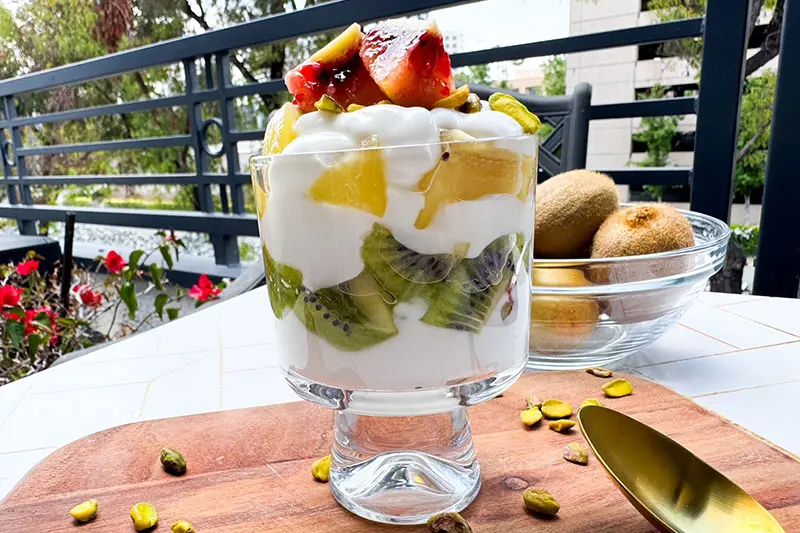
Being on WW does not mean you cannot enjoy meals at other people’s tables or host dinner parties without making it awkward. Here is how I navigate this after many years of practice:
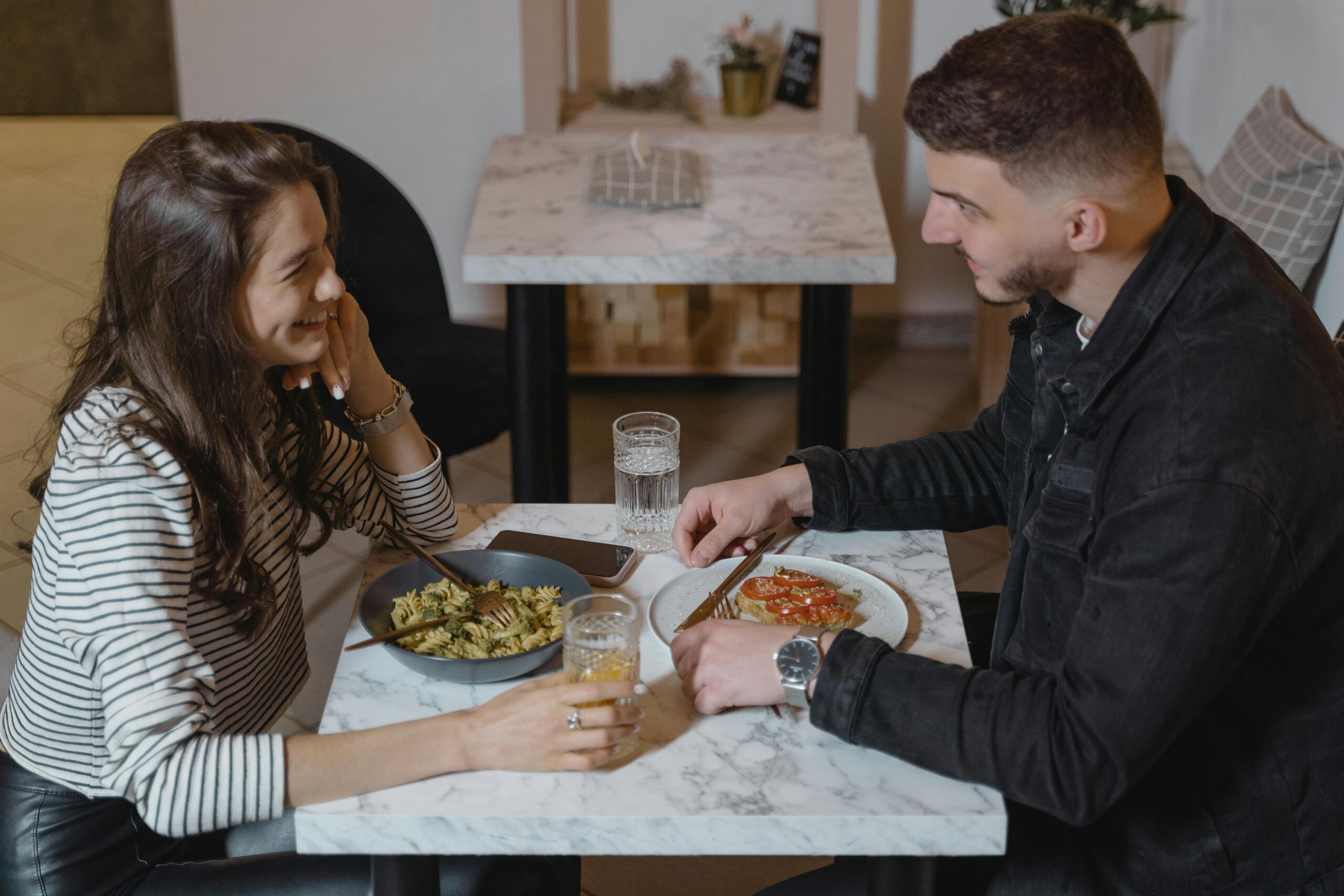
WW’s own 49-tip dining guide offers solid general advice. Here is the distilled version for two-person households:
Cooking for two on Weight Watchers involves the same principles as any WW cooking — building meals around zero-point foods (lean proteins, vegetables, fruit, whole grains), using smart ingredient swaps to reduce points without sacrificing flavor, and spending your remaining daily points on additions that bring genuine satisfaction. The two-person advantage is that you make exactly two servings, eliminating the oversize-pot temptation and leftover pressure that causes many WW members to overeat. Key strategies: keep a well-stocked WW pantry, do a simple Sunday protein prep, follow a loose weekly structure that includes both low-point and intentional higher-point meals, and use the weekly points bank for Friday or Saturday dining.
Yes, absolutely. Couples with different WW point budgets can easily cook and eat the same meals together. The approach is to cook a shared zero-point base — lean protein + vegetables prepared with the flavor toolkit — and let each person add their own higher-point components (oil, sauce, extra grains, cheese) according to their individual budget. Keep high-point additions in separate serving vessels rather than incorporating them into the shared dish. This way both people eat the same delicious meal; one person just adds more to theirs. Two people cooking WW together is one of the most powerful accountability structures in the program — decades of WW research confirm that people who have a supportive partner succeed at higher rates.
Most recipes on My Curated Tastes were developed specifically for two servings — this is the primary focus of the site. Recipes already perfectly sized for two include: Hot Honey Chicken Tenders for Two, Teriyaki Salmon Bowls, Salmon with Cherry Balsamic Sauce, Honey Chili Chicken, Boursin Pasta with Shrimp, Cottage Cheese Pancakes, Whipped Greek Yogurt with Honey, and the complete collection of Cooking for Two recipes linked in the Cooking for Two Guide. Beyond this site, look for recipes that explicitly state a two-serving yield rather than scaling down four-serving recipes, which requires adjusting cooking times and pan sizes.
To calculate WW points for a two-serving recipe, enter all ingredients and their quantities into the WW Recipe Builder in the app, set the serving count to 2, and the app calculates points per serving automatically. For recipes from blogs or cookbooks that do not include WW points, the Recipe Builder allows you to import recipes by URL or enter ingredients manually. Always use the Recipe Builder rather than estimating — individual ingredient brands and products can affect point values significantly. The point value you log is the per-serving value, which you track against your individual daily budget.
The best WW-friendly dinners for two combine a zero-point lean protein with zero-point vegetables and a flavor toolkit of herbs, spices, and acids — keeping the base of the meal at zero points and spending points only on additions that genuinely elevate the dish. Top recipes for two on this site include: Honey Chili Chicken (4–6 points, 28g protein), Teriyaki Salmon Bowls (6–8 points, 49g protein), Salmon with Cherry Balsamic Sauce (3–5 points), and High-Protein Pasta (6–8 points, 30g+ protein). For the full collection, see the WW-Friendly Recipes Guide.
Meal prep for two people on WW is more targeted than family meal prep — you do not need large batches of everything. The most effective two-person WW meal prep is a Sunday 30-minute session: batch-cook two to three portions of a lean protein (roast two chicken breasts, hard-boil six eggs, cook a small batch of ground turkey), prep overnight oats in two individual jars, wash and store salad greens, and bake a zero-point treat if desired. These components form the building blocks for quick assembly throughout the week — salads, soups, grain bowls, and sandwiches — without requiring daily cooking from scratch. For a complete meal prep system for two, see the Meal Planning for Two guide (coming soon).
Yes — WW and empty nester cooking are an excellent combination. The transition from cooking for a family to cooking for two is exactly when many people rediscover their relationship with food, including re-evaluating portion sizes and meal structure. WW provides a framework that works naturally at the two-person scale: smaller portions, better quality ingredients, variety over volume. Empty nesters who start WW when their household shrinks often find it easier than they expected precisely because the two-person kitchen is a naturally lower-temptation environment. For the complete guide to the empty nester cooking transition, see the Complete Guide to Cooking for Two.
The best WW meals for two-person households where only one person is tracking are those that taste genuinely delicious on their own merits — not ‘healthy versions’ of things, but actually good food that happens to be low in points. The recipes on this site were designed with exactly this in mind: a non-WW partner eating Honey Chili Chicken or Teriyaki Salmon Bowls or Boursin Pasta with Shrimp is eating an excellent meal, not a diet meal. The key is building flavor through technique and ingredients rather than through fat and sugar — which means the food tastes better, not worse, than the standard version. The non-WW person can always add more to their plate: extra olive oil, a larger portion of pasta, a piece of bread, additional cheese. The WW member customizes their portion at the table. Both eat the same base meal and are satisfied.
Special occasion and date night dinners are exactly what the WW weekly points bank was designed for. The approach: eat lightly and cleanly for three to four days before the special dinner, letting unused daily points accumulate in your weekly bank. By the night of your special meal, you have a meaningful points reserve to spend without any guilt or compromise. For a date night dinner for two at home, recipes like Lollipop Lamb Chops with Pistachio Pesto, Salmon with Cherry Balsamic Sauce, or a proper pasta dish with shrimp all work beautifully as a planned points spend. The food is genuinely excellent; you enjoy it completely; and you are back on clean daily eating the next morning. This is exactly how WW is designed to work — sustainable pleasure, not restriction. For date night dinner ideas, see the Date Night Dinners for Two collection (coming soon).
The WW app’s most useful features for two-person cooking are: the Recipe Builder (enter ingredients and servings, get automatic per-serving points — set servings to 2 and it calculates your portion correctly), Barcode Scanner (scan packaged ingredients while shopping to compare point values before you buy), Restaurant Finder (check chain restaurant point values before you arrive), and Activity Tracker (log movement to earn extra points for your daily budget). For two-person households specifically, the Recipe Builder with the URL import feature is the most practical tool — paste in any recipe from any website and it automatically calculates points. Use this when you want to adapt a family-sized recipe from another site for two servings: enter the URL, reduce the serving count to 2, and it calculates the per-serving points for your adjusted portions.
I have been combining WW membership with two-person cooking for over a decade. What I know now that I did not know at the beginning: these two things work together far better than they work apart. The program is better for a two-person household because the built-in portion control, the natural variety, and the lack of leftover pressure all support staying on track. And cooking for two is better with WW because the point framework provides a structure that turns what could be an overwhelming sea of choices into a navigable, satisfying, genuinely pleasurable approach to eating.
The two-person WW kitchen is the place where the program actually works as intended — no oversized batches, no family pressure, no eating something you do not want because it needs to be finished. Just two people, two portions, real food cooked well, and a framework that makes healthy eating feel like abundance rather than restriction.
For the complete collection of WW-friendly recipes on this site, visit the WW-Friendly Recipes Guide. For the complete guide to cooking for two, see the Complete Guide to Cooking for Two. And for the zero-point meal formula that makes WW cooking simple, see the Zero-Point Recipes for Two post.

Hi! I’m Diane. I started this site as a passion project. I love to cook, entertain, travel and laugh. (Who doesn’t love a good laugh?) Of course, being from New York, sarcasm rules!
More About Diane
mycuratedtastes@gmail.com