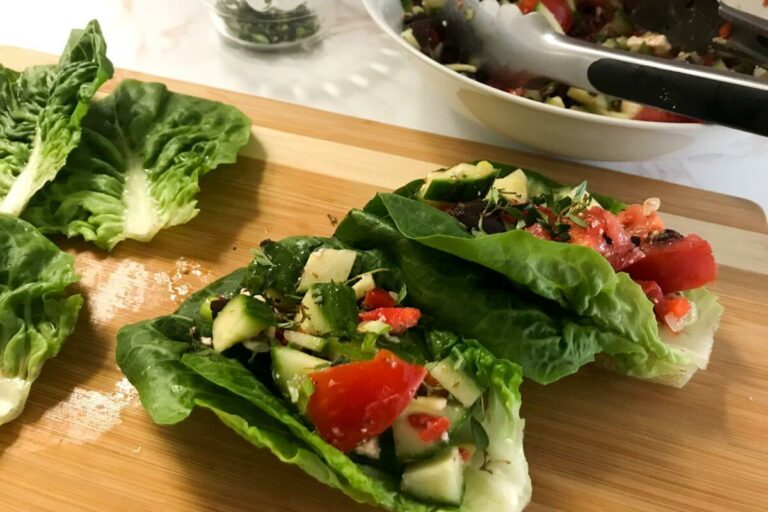
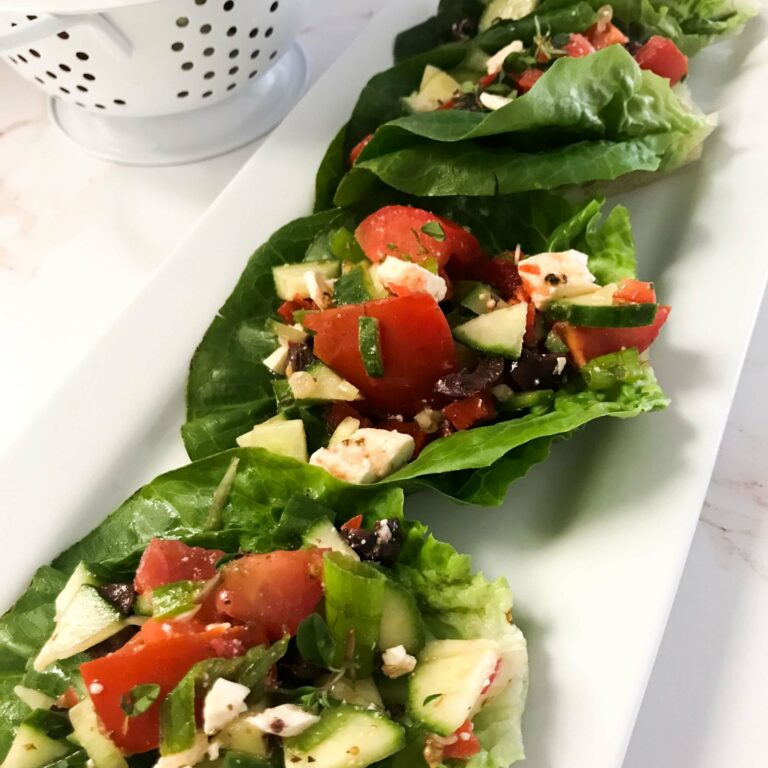
Greek Lettuce Cups on a serving board.

My Curated Tastes is reader-supported. When you buy through links on our site, we may earn an affiliate commission at no extra cost to you. As an Amazon Associate I earn from qualifying purchases.

How to make Classic Greek Salad Lettuce Cups

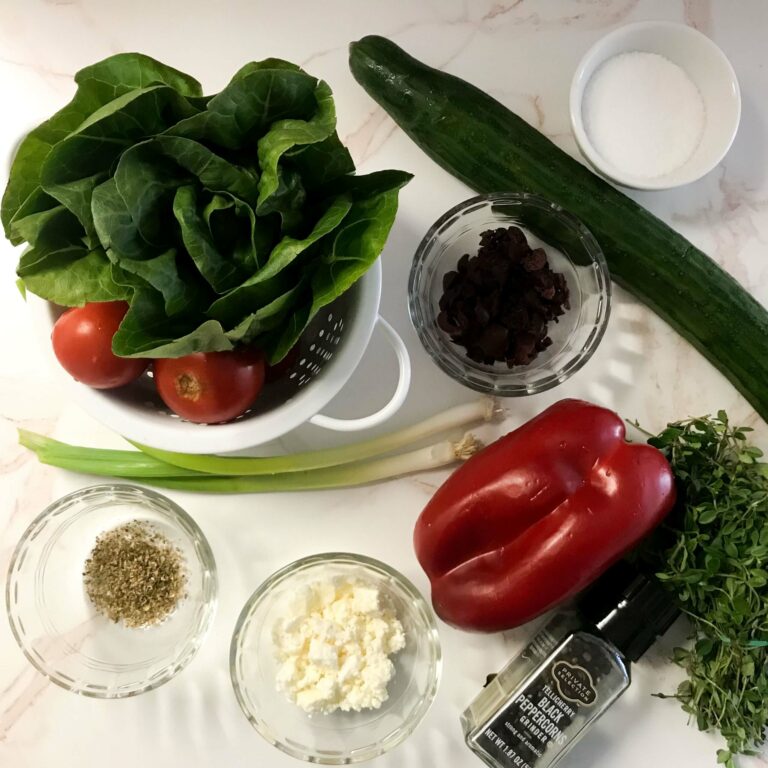
  • To get started with this recipe, gather all your ingredients together.
ingredients for Greek lettuce cups.
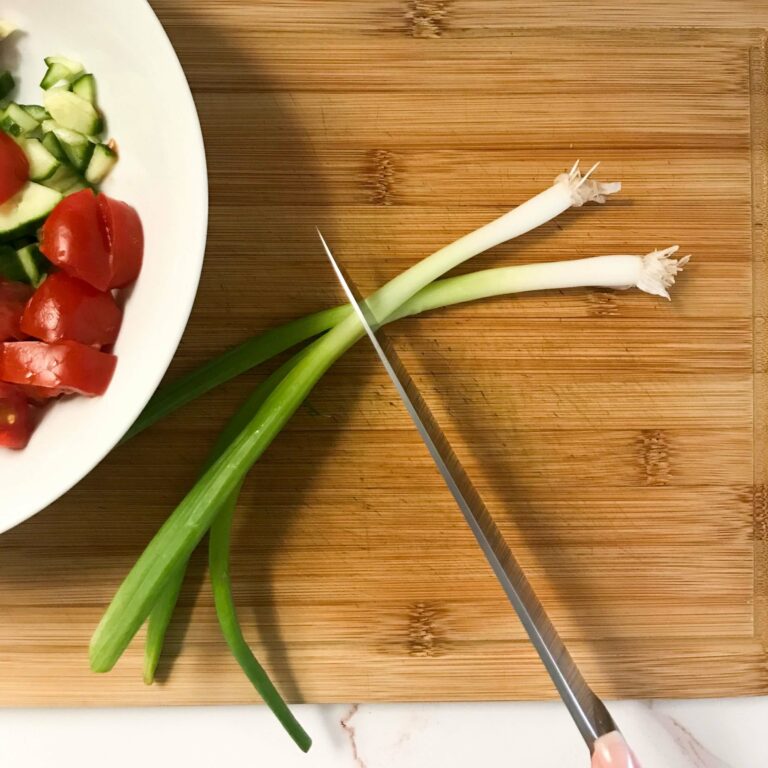
  • Prep all your vegetables by washing, drying and chopping where necessary.  Chop your cucumber, tomatoes, green onions, bell pepper and Kalamata olives.  Put to the side and make your dressing.
green onions being sliced.
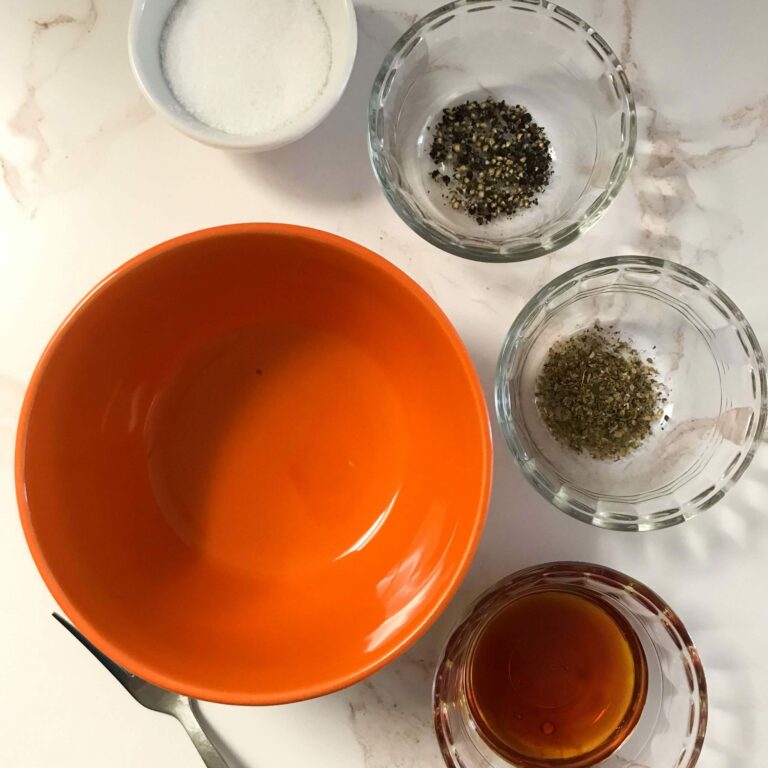
ingredients for dressing.
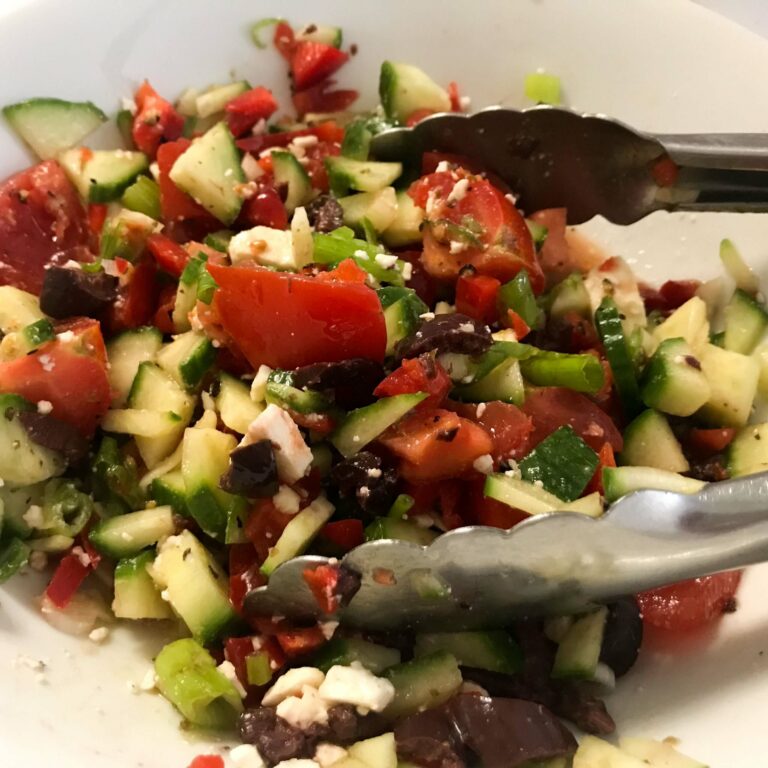
  • Place all the vegetables and olives in a bowl and toss to mix. Add the dressing and gently toss to coat.
  • Add the feta and mix into the salad. Taste. Adjust seasoning by adding more salt or pepper if needed.  This is a salad that gets better as it sits so feel free to make it earlier in the day, refrigerate and then assemble when ready to serve.
mixed Greek salad in a bowl.
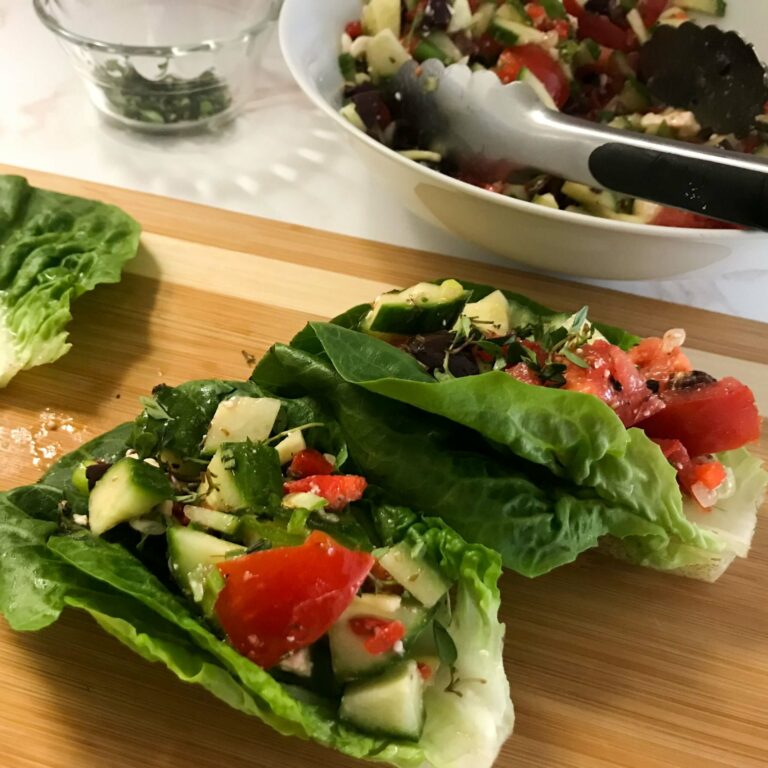
  • Place two lettuce leaves on top of each other and top with a couple of heaping tablespoons of the mixed salad. Serve on a platter with fresh oregano sprinkled on top.  This is a great addition to a game day spread.  I find people are more likely to grab some salad if it is in a “taco” shape!!!  Who knew?  Kids love the presentation to and because they can eat with their hands, don’t even acknowledge they are eating veggies.  Interesting, right?
Greek Lettuce Cups on a serving board.

Frequently Asked Questions – Greek Lettuce Cups

Yes, you can prep Greek lettuce cups ahead of time, but it’s best to assemble them within 2-3 hours of serving. Store the prepared Greek salad mixture in the refrigerator for up to 24 hours, and keep washed, dried lettuce leaves in a separate container. Assemble just before serving to prevent the lettuce from becoming soggy.
Gem lettuce, butter lettuce, or iceberg lettuce work best for Greek lettuce cups. Choose lettuce with sturdy, cup-shaped leaves that can hold the filling without tearing. Gem lettuce is ideal because of its perfect cup shape and crisp texture.
To prevent soggy lettuce cups, thoroughly dry the lettuce leaves after washing and pat the chopped vegetables dry with paper towels. Add the dressing to the vegetables just before serving, and consider using a slotted spoon to fill the lettuce cups, leaving excess liquid behind.
Yes, Greek lettuce cups are very adaptable. You can substitute cherry tomatoes for campari tomatoes, yellow bell pepper for red, or use black olives instead of Kalamata olives. For the cheese, try goat cheese or ricotta salata instead of feta. You can also add protein like grilled chicken or chickpeas.
This recipe makes 4 Greek lettuce cups, serving 2-4 people as an appetizer or light lunch. Each serving uses 2 lettuce leaves stacked together for extra sturdiness.

Yes, Greek lettuce cups are very healthy. They’re low in calories (gem lettuce contains only 7-10 calories per cup) and provide 36-82% of your daily vitamin A needs depending on the lettuce variety, according to WebMD’s nutrition data. The olive oil provides heart-healthy monounsaturated fats (about 75% by volume) that help lower “bad” LDL cholesterol, as noted by Harvard Health. Lettuce also helps with hydration since water makes up over 95% of raw lettuce. They’re also gluten-free and vegetarian, making them suitable for various dietary needs.

Greek lettuce cups work great as a light main dish for lunch or dinner. To make them more substantial, add protein like grilled chicken, shrimp, or chickpeas. Serve 2-3 cups per person for a main course.
Assembled Greek lettuce cups should be eaten immediately for best texture. However, the Greek salad mixture (without the lettuce) can be stored in the refrigerator for up to 2 days. Store lettuce leaves separately and assemble when ready to serve.
Greek lettuce cups pair well with pita bread, hummus, tzatziki sauce, dolmas, or grilled meats. They’re perfect as part of a Mediterranean mezze platter or as a fresh appetizer before a heavier main course.
Yes, you can make Greek lettuce cups without feta cheese for a dairy-free version. The salad will still be delicious with the olive oil and red wine vinegar dressing. For added richness, try adding avocado or a sprinkle of nutritional yeast.
Greek Lettuce Cups on a serving platter.
Greek Lettuce Cups on a serving board.

Greek Lettuce Cups

Turn your traditional Greek salad into individual serve lettuce cups in this fun take on a salad or appetizer course.
5 from 1 vote
Prep Time 15 minutes
Cook Time 0 minutes
Total Time 15 minutes
Course Soups & Salads
Cuisine General
Servings 4 Served

Nutritional information is only an estimate. The accuracy of the nutritional information for any recipe on this site is not guaranteed.

Ingredients


  • 8 Gem Lettuce leaves, washed and dried
  • 1/2 English Cucumber, finely chopped
  • 3 Campari Tomatoes, chopped
  • 2 Green Onions, chopped
  • 1/2 Red bell pepper, finely chopped
  • 3 Tbsp. Kalamata Olives, chopped
  • 1/4 Cup Crumbled Feta cheese
  • 3 Tbsp. Olive oil
  • 2 Tbsp. Red Wine vinegar
  • Kosher salt and freshly ground black pepper to taste
  • 1/2 Tsp. Dried oregano
  • 1 Tbsp. Fresh oregano leaves

Instructions
 

  • Make the dressing in a small bowl or measuring cup. Mix the oil, vinegar, a pinch of salt, a pinch of pepper and dried oregano until well mixed. Taste. Adjust seasoning to your liking.
  • Place all the vegetables and olives in a bowl and toss to mix. Add the dressing and gently toss to coat.
  • Add the feta and mix into the salad. Taste. Adjust seasoning by adding more salt or pepper if needed.
  • Place two lettuce leaves on top of each other and top with a couple of heaping tablespoons of the mixed salad. Serve on a platter with fresh oregano sprinkled on top. Enjoy.
Keyword appetizer, salad, starter
Tried this recipe?Let us know how it was!