Cabbage and Carrots
Crusted Corned Beef
Updated: March 8, 2026
Published: March 16, 2021
My Curated Tastes is reader-supported. When you buy through links on our site, we may earn an affiliate commission at no extra cost to you. As an Amazon Associate I earn from qualifying purchases.
Once I started making crusted corned beef, there was no turning back to the bland corned beef of my childhood. For years, whether we had it at home or I had it at a friend’s home or restaurant, corned beef and cabbage was always a boiled piece of meat with bland cabbage on the side. It was never a favorite and I rarely ate it.
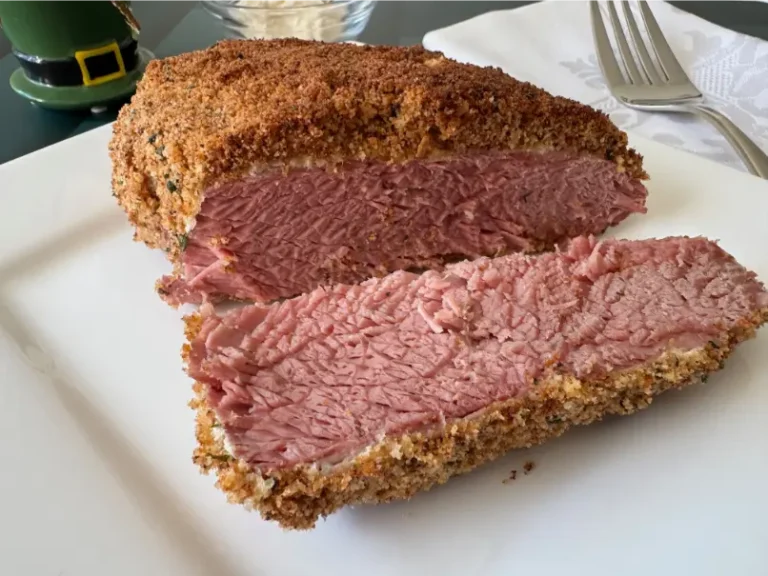
This crusted corned beef is completely different and is packed with flavor from a coating of horseradish and yogurt cream sauce, and a crispy breadcrumb mixture that covers the outside.
This is a great take on the St. Patty’s Day traditional meal. I serve this with Cabbage & Carrots and my Irish Cheddar Potato casserole for a complete meal.
2026 Updates to recipe
This year a made a couple of updates to this reipe that was originally published in 2021. I think I’ve really enhanced the crust (made it crunchier) and added a little lusciousness to the sauce.
- I added 1/4 cup of panko to the Italian breadcrumbs. I think the new found crunch really works. You don’t have to add the panko, but I recommend you try it.
- I added a tablespoon of light mayonnaise to the original cream sauce that coats the meat and is also served on the side. It makes it a little richer and creamier and I think it really works. See another richer, full fat option for the sauce below.
Be sure you let me know what you think in the comments below.
Why this crusted corned beef recipe works
- It is a simple and easy addition to make to a traditionally boiled piece of meat.
- The creamy and slightly spicy sauce adds so much flavor and works as “glue” for the breadcrumbs.
- The crispy breadcrumbs add much needed texture to the meat.
- The simple additions take this recipe to a whole new level of yummy!
What Is Corned Beef?
Corned beef — often called corned beef brisket — is a cut of beef, typically brisket, that has been cured in a seasoned brine. The word “corned” actually has nothing to do with corn on the cob. It comes from the large rock-salt crystals — historically called “corns” of salt — that were used to cure and preserve the meat before refrigeration. Today, the brisket is typically cured in a brine made with water, salt, sugar, and a blend of pickling spices like peppercorns, bay leaves, mustard seeds, coriander, and allspice, along with a curing agent like sodium nitrite that gives the meat its signature pink color. The result is a deeply seasoned, tender piece of beef with a distinctive savory, slightly briny flavor unlike any other cut. Corned beef brisket has long been a staple of Irish-American cooking — particularly associated with St. Patrick’s Day — though it is delicious any time of year.
Flat Cut vs. Traditional (Point) Cut Corned Beef
When you’re shopping for corned beef, you’ll typically find two cuts at the butcher or grocery store: the flat cut and the point cut (sometimes called the “deckle”). Understanding the difference between the two can make a real difference in how your dish turns out — especially when you’re cooking for guests.
The Point Cut
The point cut is the thicker, more rounded end of the brisket. It has more fat marbled throughout and on top, which gives it a very rich flavor and makes it extremely tender. However, because of its irregular, tapered shape, it can be harder to carve neatly. The slices tend to be uneven and it often pulls apart rather than cutting into clean portions — making it better suited for dishes like corned beef hash, Reuben sandwiches, or any preparation where the beef will be shredded or chopped. This was the cut I always had as a kid and always had at friend’s homes. My guess, is this is the shape you are most familiar with.
The Flat Cut
The flat cut is the leaner, more uniform portion of the brisket. It is flatter, more even in thickness, and significantly easier to slice. For this crusted corned beef recipe, the flat cut is the winner every time. Its even, rectangular shape means the horseradish cream sauce coats it evenly, the breadcrumb crust adheres beautifully across the entire surface, and when it comes time to carve, you get beautiful, consistent sliced corned beef. Whether you’re serving a dinner party or a family St. Patrick’s Day celebration, the flat cut presents like a showstopper on the plate. It looks elegant, carves cleanly, and ensures every guest gets a perfectly proportioned piece with plenty of that gorgeous crust. If you can find it at your grocery store or butcher, always opt for the flat cut when making this recipe.
Testimonial
“Well, your corned beef recipe won hands down in the corned beef cookoff on St. Patty’s Day! So good!” ~ Jamee D.
Ingredients and What They Add to this Recipe
Every ingredient in this crusted corned beef recipe plays an important role in delivering that irresistible combination of tender, juicy meat and a flavorful, crunchy crust. Here’s a look at what each one brings to the dish:
Corned Beef Brisket (flat cut) – The star of the show! The brisket is already brined and seasoned, giving it that classic savory, slightly salty flavor. The flat cut is ideal because it lays evenly, holds the crust beautifully, and carves into neat, uniform slices — perfect for serving guests.
Unsalted Butter – Butter is the base for toasting the breadcrumbs. It adds richness and helps the crumbs develop that gorgeous golden-brown color and deep, toasty flavor that makes the crust so irresistible.
Italian Style Dry Breadcrumbs – These seasoned breadcrumbs form the backbone of the crust, delivering savory herb flavor and a satisfying crunch to the outside of the beef.
Panko Breadcrumbs – The secret to an extra-crunchy crust! Panko breadcrumbs are larger and lighter than traditional breadcrumbs, which means they toast up crispier and stay crunchy longer. This is the 2026 upgrade to the recipe that really takes the crust to the next level.
Fresh Parsley – Parsley adds a fresh, bright, herbaceous note to the breadcrumb mixture, balancing the richness of the butter and giving the crust a little color.
Fat-Free Greek Yogurt – Greek yogurt forms the creamy base of the horseradish sauce. It acts as the “glue” that holds the breadcrumb crust to the beef, and it also lightens up the sauce without sacrificing creaminess.
Light Mayonnaise – Added in the 2026 update, a touch of mayo makes the horseradish cream sauce noticeably richer and silkier. It adds just enough body to make the sauce feel truly indulgent while keeping it on the lighter side.
Jarred Horseradish Sauce – This is the flavor powerhouse of the recipe. Horseradish brings a pungent, pleasantly spicy kick that cuts through the richness of the beef and creates a sauce that is bold, tangy, and absolutely addictive. It’s what transforms a plain piece of boiled corned beef into something truly special.
Want to share this infographic?
How to make crusted corned beef
This is an easy meal to pull together.
- You are going to start by cooking the beef in a large pot of water that has been well seasoned. Cook over medium-high heat for about two – 2 1/2 hours OR follow the instructions on the packaging. You want the meat to be easily pierced with a tip of a knife and you want the internal temperature to be 145 degrees F. Use a meat thermometer. You can use the packet of seasoning that usually comes with the meat or season yourself with salt and peppercorns. (about one tablespoon of salt and one tablespoon of black peppercorns) Simple, right?
- You are going to simmer this meat with the cover on. Growing up, this was it and this is how we ate corned beef and it was served with boiled cabbage and plain boiled potatoes. It was a very simple, humble and bland meal. (Sorry, but this did nothing for me!) So, when I started making corned beef and cabbage for my own St. Patrick’s Day celebration, I was looking for more flavor and more texture and that’s where the crust and horseradish sauce came from.
- While the beef is cooking, make the creamy horseradish sauce. The horseradish sauce is easy to make. Simply mix the yogurt, mayo and prepared horseradish sauce together in a bowl. You will use some of this to coat the cooked beef and then serve the rest on the side.
I make the sauce with fat-free Greek yogurt and light mayo (if using) to keep it lite, but you could certainly make it with richer, full fat ingredients.
- When the meat is done, pat it dry with paper towels, and spread about 3 tablespoons of the sauce all over the the top and sides of the beef.
- To make the breadcrumb mixture, melt the butter in a non-stick skillet and add the breadcrumbs and parsley. Mix until all the crumbs are covered in the butter and cook about five minutes stirring occasionally, until the breadcrumbs are a light golden brown. Put to the side to cool.
- You want to cover the sauce covered beef with the toasted breadcrumbs. Pat the breadcrumb mixture onto the beef so that it sticks to the sauce mixture. Cover the top and sides of the beef so you have this amazing crust.
- Once coated, put the beef on a rack over a parchment paper or foil lined baking sheet. Pop into the preheated 400 degree F. oven for about 10 minutes to crisp up. I like to place the baking sheet under the broiler for a couple of minutes to get browned further.
- Let the meat rest for 10 minutes before slicing and serving with the extra sauce on the side. Talk about elevated corned beef… this is it. I serve the corned beef with my Irish Cheddar Potato Bake, but my Decadent Make-Ahead Mashed Potatoes will also work. No plain boiled potatoes here!
Alternative way to make the creamy horseradish sauce
Mix equal parts of mayonnaise and sour cream if you want a full fat , richer version.
Whether you go with full fat or a lighter version like mine, this is a very simple preparation that does, however, add a ton of flavor to a boiled piece of meat.
Remember, you’ll be using some of this sauce to coat your meat so the breadcrumb crust sticks to the meat and adds some crunchy texture.
How to Store and Reheat Leftover Crusted Corned Beef
Good news — crusted corned beef reheats beautifully, and some would argue it gets even better the next day once the flavors have had a chance to deepen overnight.
Storing Leftovers
Allow the corned beef to cool completely before storing. Wrap the remaining beef tightly in plastic wrap or aluminum foil, or place it in an airtight container. Store in the refrigerator for up to 4 days. If you have leftover horseradish cream sauce, store it separately in a sealed container in the fridge — it will keep for 3 to 4 days as well.
Freezing
Crusted corned beef can be frozen for up to 2 months. For best results, slice the beef first and wrap individual portions tightly before placing in a freezer-safe bag or container. This makes it easy to thaw only what you need. Thaw overnight in the refrigerator before reheating.
Reheating
The goal when reheating is to warm the beef through without drying it out. Here are the best methods:
Oven (best method) – Preheat your oven to 325°F. Place sliced corned beef in an oven-safe dish and add a small splash of beef broth or water to the pan to create a little steam. Cover tightly with foil and heat for about 15 to 20 minutes, until warmed through. If you’d like to re-crisp the crust, uncover for the last 5 minutes or run the beef briefly under the broiler.
Microwave (quickest method) – Place slices on a microwave-safe plate and cover with a damp paper towel to help retain moisture. Heat in 30-second intervals until warmed through. Note that the crust will soften in the microwave, so the oven method is preferred if you have time.
Skillet – Heat a non-stick skillet over medium-low heat with a tiny bit of butter or a splash of broth. Add the slices and cover with a lid to let the steam heat the beef gently, about 3 to 4 minutes per side.
Pro tip:
Leftover corned beef makes an incredible Reuben sandwich the next day, or try chopping it up with potatoes and sautéed onions for a classic corned beef hash for brunch!
Crusted Corned Beef FAQs
Crusted corned beef is a traditional corned beef brisket that is coated with a savory crust—typically made from mustard, herbs, spices, or breadcrumbs—before roasting or baking. The crust adds flavor and texture while sealing in moisture, creating a more elevated and flavorful version of classic corned beef.
Yes. Traditional corned beef is often simmered or boiled, while crusted corned beef is usually roasted in the oven. Roasting allows the crust to brown and form a flavorful exterior, resulting in deeper flavor and a firmer, sliceable texture.
Yes, rinsing corned beef under cold water is recommended. Corned beef is salt-cured, and rinsing removes excess surface salt so the crust doesn’t become overly salty. Pat the meat dry thoroughly before adding mustard or crust ingredients so everything adheres properly.
The best crust balances savory and aromatic flavors without overpowering the beef. A classic crust often includes:
- Dijon or whole-grain mustard
- Brown sugar or honey for balance
- Black pepper, garlic, and herbs
This combination enhances the beef while creating a golden, flavorful crust during roasting.
Yes. Crusted corned beef can be prepared a day ahead and reheated gently. Roast the beef fully, let it cool, then refrigerate. Reheat covered in a low oven with a splash of broth to maintain moisture, uncovering briefly at the end if you want to refresh the crust.
Corned beef should reach an internal temperature of 190–200°F. This ensures the connective tissue has fully broken down, resulting in tender slices. Cooking to a lower temperature will leave the meat tough.
Corned beef becomes tough when it is:
- Undercooked
- Sliced incorrectly
- Cooked too fast at high heat
For tender crusted corned beef, roast low and slow and always slice against the grain after resting.
Yes, cover the corned beef for most of the cooking time to keep it moist. Uncover during the final 20–30 minutes so the crust can brown and set properly without drying out the meat.
Crusted corned beef is typically made using a flat-cut corned beef brisket. The flat cut slices neatly and holds the crust better than the point cut, making it ideal for presentation and serving.
Absolutely. Crusted corned beef is an excellent make-ahead main dish for holidays like St. Patrick’s Day. Prepare it the day before, then reheat gently before serving. This actually improves slicing and allows flavors to deepen.
To keep corned beef moist:
- Roast it covered with foil or a lid
- Add a small amount of liquid (water or broth) to the pan
- Allow it to rest at least 15 minutes before slicing
These steps prevent moisture loss and ensure juicy slices.
Crusted corned beef pairs well with classic and modern sides such as:
- Roasted or mashed potatoes
- Cabbage or Brussels sprouts
- Irish soda bread
- Grainy mustard or horseradish sauce
These sides complement the rich, savory crust.
Yes. Slice the corned beef, wrap it tightly, and freeze for up to 2 months. Thaw overnight in the refrigerator and reheat gently with a little liquid to preserve texture and flavor.
When to Serve Crusted Corned Beef and What to Serve With It
While corned beef is most famously associated with St. Patrick’s Day, this crusted version is honestly too good to limit to just one day a year. It works beautifully for a casual Sunday dinner, a hearty weeknight meal, or any time you want an impressive, crowd-pleasing roast without a lot of fuss.
That said, if you are planning the ultimate St. Patrick’s Day dinner, this is your centerpiece. Check out my St. Patrick’s Day Dinner Menu for a complete, curated menu from starter to dessert that pairs perfectly with this dish. It’s an Irish feast from start to finish and one guests will request year after year.
Here are the dishes from My Curated Tastes that pair beautifully with this crusted corned beef:
Cabbage and Carrots – A sweet and tangy sautéed cabbage and carrot side dish that is the natural companion to corned beef. The slight sweetness of the carrots perfectly balances the savory, spiced beef.
Irish Cheddar Potato Bake – A rich, cheesy potato casserole that elevates the humble potato into something truly special. Far from the plain boiled potatoes of old, this is the ultimate comfort food side.
Decadent Make-Ahead Mashed Potatoes – Silky, buttery mashed potatoes that can be made in advance — a host’s best friend when you’re juggling multiple dishes for a dinner party.
Irish Soda Bread – A rustic, slightly tangy bread that is wonderful for soaking up any extra horseradish cream sauce on your plate. Serve with rich Irish butter for an authentic touch.
Smoked Irish Salmon with Chive Pancakes – An elegant starter that sets the Irish theme beautifully before your main course arrives.
Irish Apple Cake – A warmly spiced, tender apple cake that is a perfect ending to your Irish feast — especially delicious topped with a dollop of whipped cream.
Irish Coffee – Because no St. Patrick’s Day dinner is complete without one. Warm, rich, and just a little boozy — the perfect finish.
Did you like this recipe? If so, please leave a rating and comment below. I’d love to hear from you. Looking for other traditional Irish recipes?

Crusted Corned Beef
Nutritional information is only an estimate. The accuracy of the nutritional information for any recipe on this site is not guaranteed.

Ingredients
- 3 Lbs. Corned beef brisket (flat cut if available for easy cutting and serving)
- 2 Tbsp. Butter, unsalted
- ½ Cup Italian style dry breadcrumbs
- 1/4 Cup Panko breadcrumbs
- 1 Tbsp. Chopped fresh parsley
- ¼ Cup Fat free Fage Greek Yogurt
- 1 Tbsp. Light Mayonnaise
- ¼ Cup Jarred horseradish sauce
Instructions
- In a large pot or dutch oven, place the beef and cover with cool water. Most corned beef comes with a packet of seasoning. Add that to the water. If there is no seasoning pack, add a tablespoon of black peppercorns and a tablespoon of salt to the water. Heat on the stove over high heat until it boils. Skim off the foam and discard. Reduce the heat to low and simmer for approximately 2 hours until the meat is tender. It is done when you can easily pierce the meat with the point of a knife and the internal temperature is 145 degrees F.
- While the meat is cooking, make the horseradish sauce by mixing the yogurt, mayo and horseradish in a small bowl. Keep in refrigerator.
- Melt the butter in a small saucepan. Add the Italian breadcrumbs, panko and parsley and stir until all the breadcrumbs are moist and the mixture looks like sand. Let them cook about five minutes until golden brown. Stir often to prevent burning. Put to the side.
- Preheat your oven to 400 degrees F. When meat is finished cooking, remove from water and pat dry with paper towels. Coat the top and sides of the corned beef with 2-3 tablespoons of the horseradish sauce. Top with the breadcrumb mixture. Use your hands to gently press the breadcrumbs on the top and sides of the roast. Put the beef into a 400 degree F. oven for 10 minutes to crisp up the crust. I like to finish under the broiler for a minute or two to get golden and dark in some spots.
- Let the meat rest about 10 minutes before slicing and serving with the remaining horseradish sauce on the side.
Video
Diane Ringler
Recipe Developer
With over 10 years of restaurant experience, Diane has been cooking and developing recipes for over five years, focusing on real-food meals for two that are Weight Watchers-friendly and high in protein. A longtime WW member herself, she brings firsthand experience to every recipe — not just culinary technique, but the practical knowledge of someone who has navigated points, portions, and satisfaction for years. Her recipe for Lollipop Lamb Chops with Pistachio Pesto was selected as a KitchenAid contest winner and published in Taste of Home's "Innovate Your Plate" bookazine. She has developed recipes and created content for brands including Eggland's Best, Sprouts Market, ZenB Pasta, Flannery Beef, The Honey Jar and Marukan Vinegar. She has been cooking for two for 10 years and her recipes focus on well balanced meals that are healthy, protein-focused meals perfectly proportioned for two servings. Based in Southern California she loves fresh, seasonal produce and proteins that nourish the body and soul.

Meet Diane
Hi! I’m Diane. I started this site as a passion project. I love to cook, entertain, travel and laugh. (Who doesn’t love a good laugh?) Of course, being from New York, sarcasm rules!
More About Diane
mycuratedtastes@gmail.com

Featured Recipe
Add Us As A Trusted Google Source