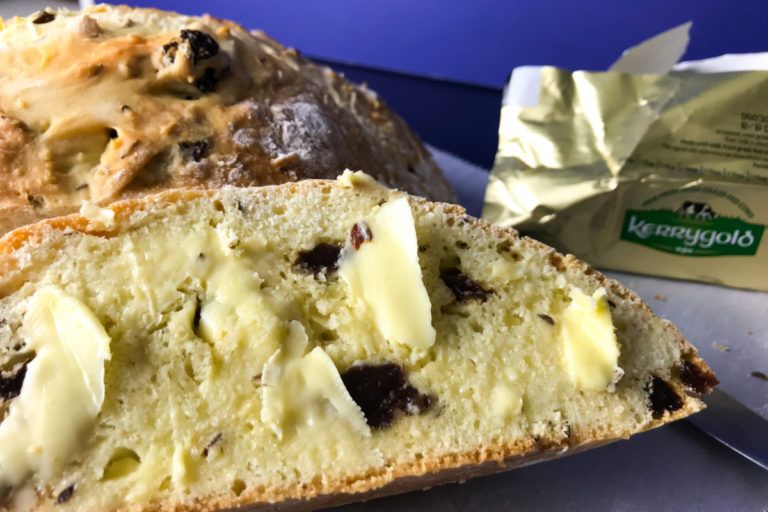
sliced Irish Soda Bread with butter.

My Curated Tastes is reader-supported. When you buy through links on our site, we may earn an affiliate commission at no extra cost to you. As an Amazon Associate I earn from qualifying purchases.

WHY THIS RECIPE WORKS

This Irish soda bread recipe delivers authentic, bakery-quality results every time through a few key techniques. The combination of baking soda and buttermilk creates an immediate chemical reaction that produces carbon dioxide, eliminating the need for yeast and hours of rising time. This means you can have fresh, warm bread on the table in just over an hour from start to finish.

The slightly sticky dough texture is actually what makes this recipe superior to drier versions. By keeping the dough moist and only kneading for a couple of minutes, the bread develops a tender crumb rather than becoming tough and dense. The minimal kneading is crucial because baking soda-leavened breads don’t benefit from gluten development the way yeasted breads do.

The traditional cross cut on top isn’t just decorative—it allows heat to penetrate the center of the loaf more evenly, ensuring the bread bakes through without over-browning the exterior. Baking at a moderate 325°F gives the interior time to cook completely while developing that signature golden crust. The balance of sweet and savory flavors from the sugar, raisins, and caraway seeds creates the perfect harmony that makes this bread delicious plain, toasted, or slathered with butter.

Want to share this infographic?

Download the Image Now or Copy and Paste the code below!

INGREDIENTS IN THIS IRISH SODA BREAD RECIPE

Main Ingredients

All-Purpose Flour (2¾ cups + ¼ cup divided) The backbone of the bread, all-purpose flour provides structure without making the bread too heavy. The divided portions allow you to reserve some for kneading, which helps manage the sticky dough without overworking it.

Sugar (⅓ cup) Adds a subtle sweetness that balances the tanginess of the buttermilk and complements the raisins. This amount keeps the bread in the traditional category rather than turning it into a sweet cake.

Baking Powder (1 teaspoon) Works alongside the baking soda to provide additional lift and ensures a lighter, more tender crumb.

Baking Soda (½ teaspoon) The essential leavening agent that reacts with the acidic buttermilk to create carbon dioxide bubbles, causing the bread to rise. This is what makes it “soda” bread.

Salt (¾ teaspoon) Enhances all the other flavors and strengthens the dough structure, preventing the bread from tasting flat.

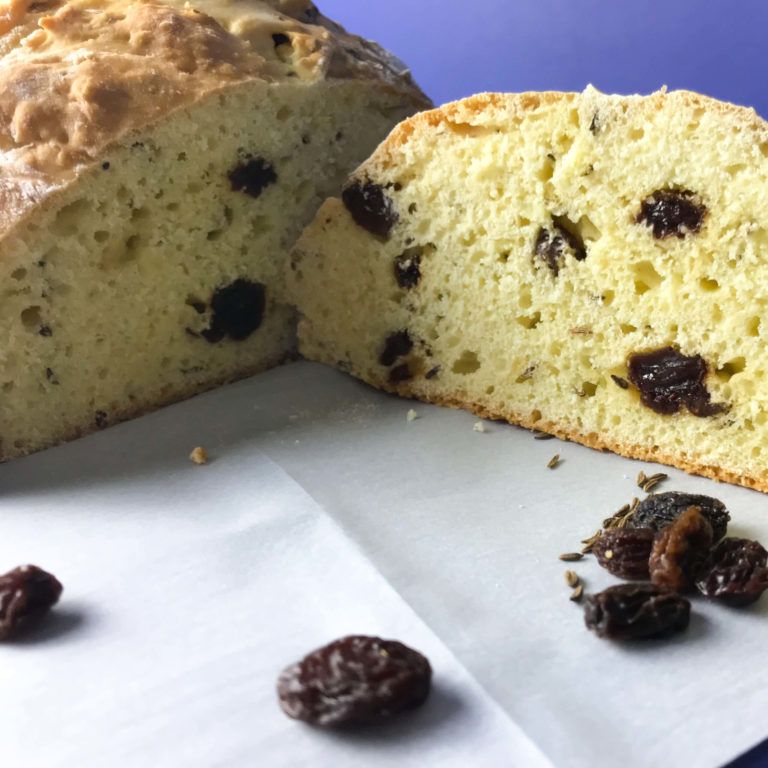
Raisins (⅔ cup) Traditional in Irish soda bread, raisins add pockets of sweetness and moisture throughout the loaf. They also provide texture contrast to the tender crumb.

Caraway Seeds (1 tablespoon) These distinctive seeds add an aromatic, slightly licorice-like flavor that’s characteristic of authentic Irish soda bread. They provide both flavor and visual appeal.

Eggs (2 large) Bind the ingredients together, add richness, and contribute to the bread’s tender texture. They also help create the golden-brown crust.

Buttermilk (1 cup) The acidic component that reacts with the baking soda to leaven the bread. It also adds tangy flavor and keeps the crumb moist and tender.

Cooking Spray Prevents sticking on the baking sheet, ensuring easy removal and cleanup.

Ingredient Substitutes

Buttermilk Substitute: Mix 1 cup of whole milk with 1 tablespoon of lemon juice or white vinegar. Let it sit for 5 minutes before using. You can also use plain yogurt thinned with a little milk to reach pourable consistency.

Raisins Substitute: Dried currants, dried cranberries, chopped dried apricots, or golden raisins all work well. You can also omit the dried fruit entirely for a plain version.

Caraway Seeds Substitute: Fennel seeds provide a similar aromatic quality. For a milder flavor, use 1 teaspoon of anise seeds. You can also omit them if you prefer a more neutral-flavored bread.

All-Purpose Flour Substitute: You can replace up to half the all-purpose flour with whole wheat flour for a heartier, nuttier bread. Use a 1:1 ratio, but the bread will be denser.

Sugar Substitute: Honey or maple syrup (reduce buttermilk by 2 tablespoons if using liquid sweetener). Coconut sugar works as a 1:1 replacement for a deeper, caramel-like flavor.

Eggs Substitute: For each egg, use 3 tablespoons of unsweetened applesauce or ¼ cup of mashed banana. The bread will be slightly denser but still delicious.

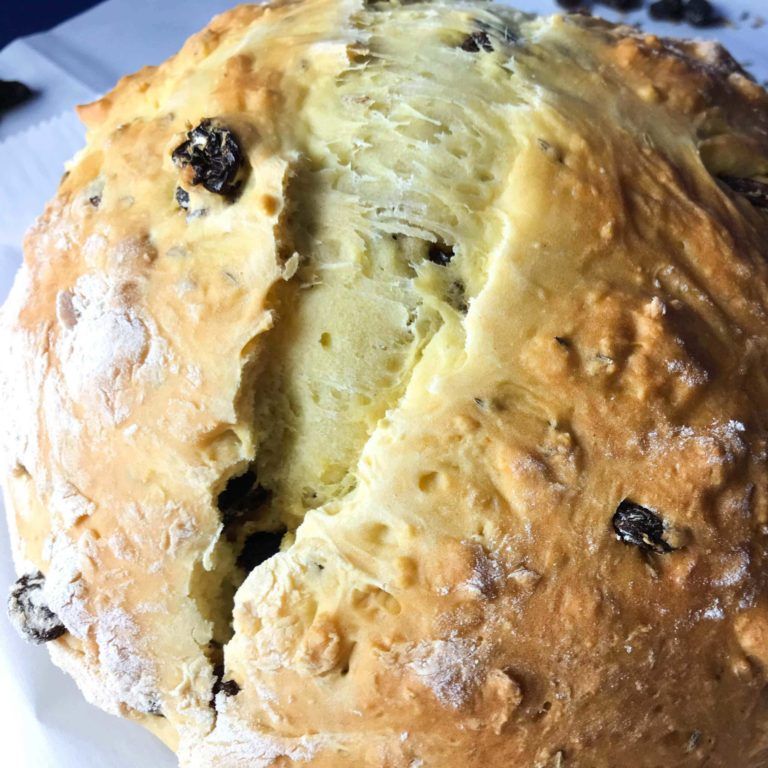
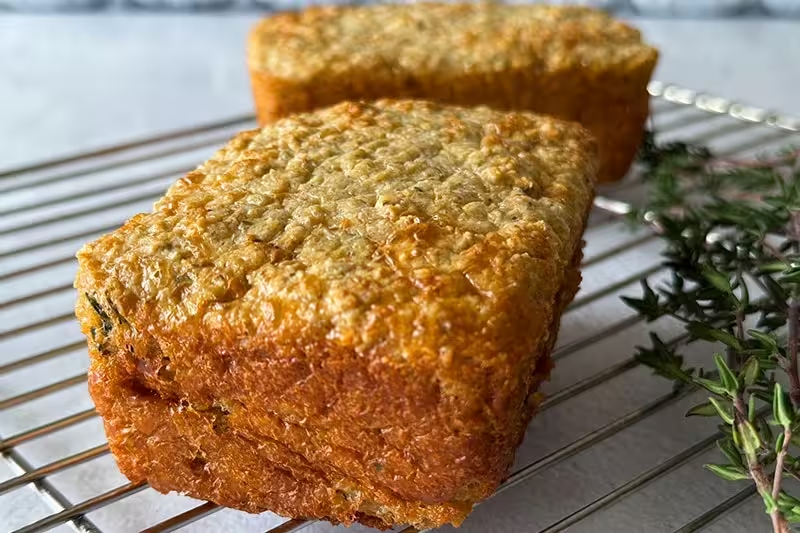
loaf of irish soda bread.

Frequently Asked Questions

The most common cause is over-kneading the dough. Unlike yeasted bread, soda bread should only be kneaded for about 2 minutes—just enough to bring the dough together. Over-mixing develops too much gluten, which makes the bread tough. Also ensure you’re using fresh baking soda; old leavening agents lose potency and won’t create enough rise.
Yes! Make a quick substitute by mixing 1 cup of whole milk with 1 tablespoon of lemon juice or white vinegar. Let it sit for 5 minutes until it curdles slightly. This creates the acidity needed to react with the baking soda. Plain yogurt thinned with milk also works well.
This is completely normal and actually desired for this recipe. The sticky dough creates a more tender, moist bread. Resist the urge to add too much extra flour. Use the reserved ¼ cup of flour for your hands and board when kneading, and work quickly. The dough will become more manageable as you gently incorporate that flour.
Yes, and it serves a practical purpose beyond tradition. The cross cut allows steam to escape and helps heat penetrate to the center of the loaf, ensuring even baking. Cut the cross about ½ inch deep with a sharp knife before baking. According to Irish folklore, the cross also lets the fairies out and wards off evil spirits!

The bread should be golden brown on top and sound hollow when you tap the bottom. Insert a toothpick or skewer into the center—it should come out clean or with just a few dry crumbs. If it’s browning too quickly on top but the center isn’t done, tent it loosely with aluminum foil for the remaining baking time.

Absolutely. While traditional recipes include these ingredients, you can customize your bread. For a plain version, simply omit them. Some people substitute the caraway with different seeds or add nuts. The bread will bake the same way regardless of add-ins.
Irish soda bread uses baking soda as the leavening agent instead of yeast, which means no rising time is required. It also relies on the chemical reaction between baking soda and acidic buttermilk to create lift. The result is a denser, more rustic bread with a unique flavor that’s ready in about an hour total.
Irish soda bread is naturally more crumbly than yeasted breads because it lacks the gluten structure that comes from kneading and rising. Make sure you’re letting the bread cool completely before slicing—cutting into warm bread will make it fall apart. Use a serrated knife and a gentle sawing motion rather than pressing down.
Yes, but it’s best enjoyed the day it’s baked. You can make it up to one day ahead and store it wrapped at room temperature. The texture becomes slightly drier on day two, but toasting the slices brings it back to life beautifully. For longer storage, freeze the cooled bread for up to 3 months.
Caraway seeds have a warm, slightly sweet flavor with hints of licorice and citrus. They add an aromatic, traditional taste that many associate with authentic Irish soda bread. If you’re unsure whether you’ll like them, start with half the amount called for, or substitute with fennel seeds for a milder option.
Traditional Irish soda bread falls somewhere in between—it’s mildly sweet but not dessert-like. This recipe has ⅓ cup of sugar, which adds subtle sweetness that complements the raisins without making it taste like cake. Some commercial versions are much sweeter, but authentic Irish soda bread is meant to be enjoyed with both sweet and savory accompaniments.
Yes, but it’s better to make two separate loaves rather than one giant loaf. A doubled loaf would take much longer to bake through and might burn on the outside before the center is done. Two loaves bake in the same amount of time and you can freeze one for later.
Slice it about ¾ inch thick and serve it warm with salted butter. It’s delicious for breakfast with jam, honey, or marmalade, or alongside soups and stews for dinner. Toasting day-old slices brings out the flavor of the raisins and creates a wonderful texture contrast.
No special equipment is needed. A regular baking sheet lined with parchment paper or foil works perfectly. Some bakers use a cast iron skillet or Dutch oven, which can create a crustier exterior, but it’s not necessary for excellent results.
This usually happens when the dough is too wet or the baking soda is old and has lost its leavening power. Check the expiration date on your baking soda—it should fizz when mixed with vinegar if it’s still active. Also, make sure you’re measuring flour correctly (spoon it into the measuring cup rather than scooping) to avoid adding too much liquid.
slice of irish soda bread.

HOW TO STORE LEFTOVERS

Room Temperature Storage Store the completely cooled Irish soda bread in an airtight container or wrap it tightly in plastic wrap or aluminum foil. It will stay fresh at room temperature for 2-3 days. Because this bread is made without preservatives, it will begin to dry out after the first day, so toasting leftover slices is highly recommended to restore moisture and texture.

Refrigerator Storage While not typically necessary for short-term storage, you can refrigerate Irish soda bread wrapped tightly in plastic wrap for up to 5 days. Note that refrigeration can accelerate staling, so this method is best only if your kitchen is very warm or humid. Always bring refrigerated bread to room temperature or toast it before serving.

Freezer Storage Irish soda bread freezes exceptionally well for up to 3 months. For best results, slice the bread before freezing so you can remove individual portions as needed. Wrap the entire loaf (or individual slices) tightly in plastic wrap, then place in a freezer-safe zip-top bag, pressing out as much air as possible. To thaw, leave wrapped bread at room temperature for 2-3 hours, or toast frozen slices directly from the freezer.

Refreshing Leftover Bread To revive day-old Irish soda bread, lightly spritz it with water and warm it in a 300°F oven for 10 minutes. For individual slices, toasting is the best option—it crisps the exterior while softening the interior, and brings out the sweetness of the raisins.

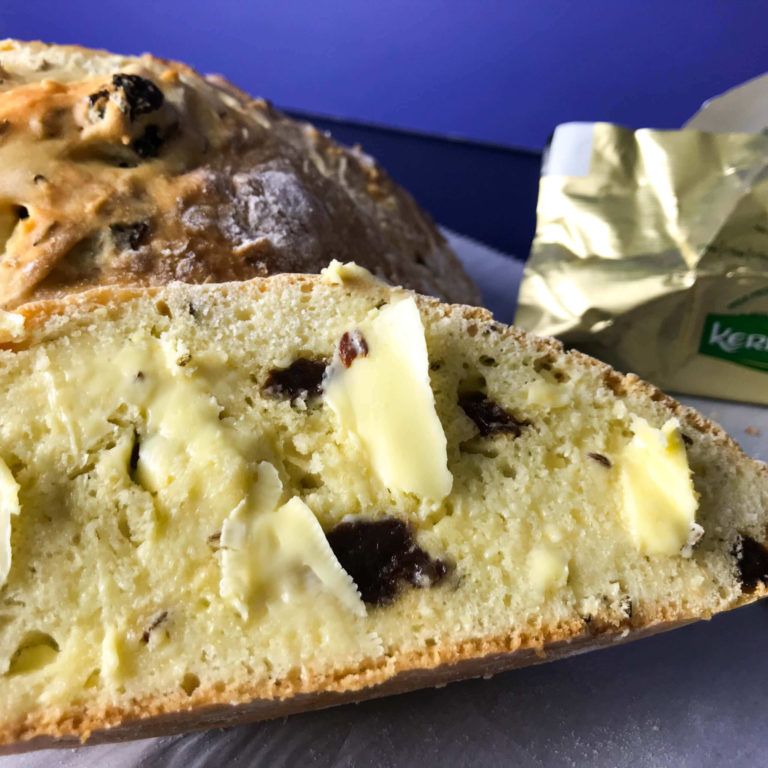
sliced Irish Soda Bread with butter.

Irish Soda Bread

Irish Soda Bread is a favorite on St. Patty's Day and a staple in most Irish homes. This is a classic, family recipe with raisins and caraway. Smeared with butter and jam this is a delicious brunch and breakfast addition.
5 from 2 votes
Prep Time 10 minutes
Cook Time 1 hour
Total Time 1 hour 10 minutes
Course Bread
Cuisine General
Servings 20 Served

Nutritional information is only an estimate. The accuracy of the nutritional information for any recipe on this site is not guaranteed.

Ingredients


  • 2 ¾ Cups All-purpose flour plus an additional ¼ cup of all-purpose flour, divided
  • 1/3 Cup Sugar
  • 1 Tsp. Baking powder
  • ½ Tsp. Baking soda
  • ¾ Tsp. Salt
  • 2/3 Cup Raisins
  • 1 Tbsp. Caraway seeds
  • 2 Large Eggs
  • 1 Cup Buttermilk
  • Cooking Spray

Instructions
 

  • Preheat the oven to 325 degrees with the shelf rack in the middle of the oven. Line a baking sheet with tin foil or parchment paper and spray with cooking spray.
  • In a large bowl, whisk together the 2 ¾ flour, sugar, baking powder, baking soda and salt. Then, stir in the raisins and caraway seeds.
  • In a separate bowl, mix the buttermilk and eggs. Pour into the flour mixture and stir until just combined (don’t over mix). This dough is very, very sticky but that is the way it is supposed to be.
  • Sprinkle the remaining ¼ cup of flour on a board. Put the dough onto the floured board and begin gently kneading the dough and gathering the flour on the board into the dough.
  • Shape the dough into a circle and cut a deep cross into the top of the bread round.
  • Bake the loaf for about one hour. Test the center of the loaf with a toothpick. If it comes out clean, the bread is done. Transfer the bread to a wire rack and allow to cool. Slice the bread and serve with butter and/or jam. I love to serve this with a homemade jam and Kerry Gold butter (just to keep that Irish vibe going).
Keyword Bread, Irish
Tried this recipe?Let us know how it was!