Add Us As A Trusted Google Source
 Halloumi Cheese Salad with Berries
»
We use cookies to give you the best online experience. By agreeing you accept the use of cookies in accordance with our cookie policy.

My Curated Tastes is reader-supported. When you buy through links on our site, we may earn an affiliate commission at no extra cost to you. As an Amazon Associate I earn from qualifying purchases.
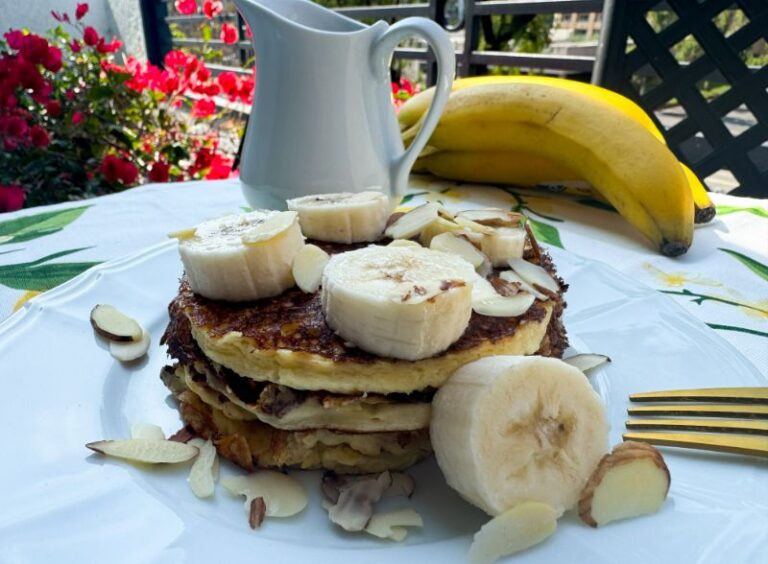
These healthy almond flour pancakes get a major protein boost from the use of eggs, fat-free cottage cheese and almond flour. I top them with sliced bananas, some sliced toasted almonds and a little sugar-free maple syrup for a super start to my day. The protein fills me up and the taste is amazing. I really wanted to start using almond flour in more recipes to increase the nutritional values in my food. It is really a good source of healthy fats, protein, fiber and vitamin E and a 1/4 cup serving only has about 180 calories. Yup, definitely using this more in my baking. Try my healthy cherry, almond & oatmeal cookies for an easy, and healthier cookie.
For all you cottage cheese haters out there, I really don’t think you hate cottage cheese. I’m pretty sure it is the texture you aren’t fond of. By blending the mixture, everything is smooth and that texture problem is eliminated. However, if you’ve decided to dig your heals in, go ahead and substitute no-fat or low-fat ricotta cheese. That works great too.
Cottage cheese is definitely having a “moment” and I’m seeing everyone using it for everything on social media. Once I started playing with it, I realized the masses were right…this is an incredibly versatile ingredient. I’ve used it in both sweet and savory recipes and the protein boost to everything is amazing. While I personally try to increase my protein intake while eliminating saturated fats and calories, I use the fat-free version but please feel free to use low-fat or full fat cottage cheese. It is a great source of protein and I think you are really going to like it when you start playing with it. I recently used it to make a cottage cheese cake that was amazing. Stay tuned, many more to come.
Say goodbye to heavy, wheat-based pancakes and hello to a lighter, more nutritious breakfast option! Almond flour pancakes are the perfect solution for anyone looking to enjoy a delicious morning treat while maintaining a healthier lifestyle. These pancakes are not just a meal – they’re a culinary experience that combines nutrition, flavor, and pure breakfast joy.
Whether you’re following a gluten-free diet, watching your carb intake, or simply looking to switch up your breakfast routine, almond flour pancakes are about to become your new morning obsession.
Almond flour isn’t just a trendy ingredient – it’s a nutritional powerhouse that transforms ordinary pancakes into something extraordinary. Unlike traditional wheat flour, almond flour brings:
These pancakes are more than just a breakfast item – they’re a way to start your day with a nutritious, delicious meal that leaves you feeling satisfied and energized.
Customize your almond flour pancakes with these delicious options:
Almond flour pancakes offer significant nutritional advantages:
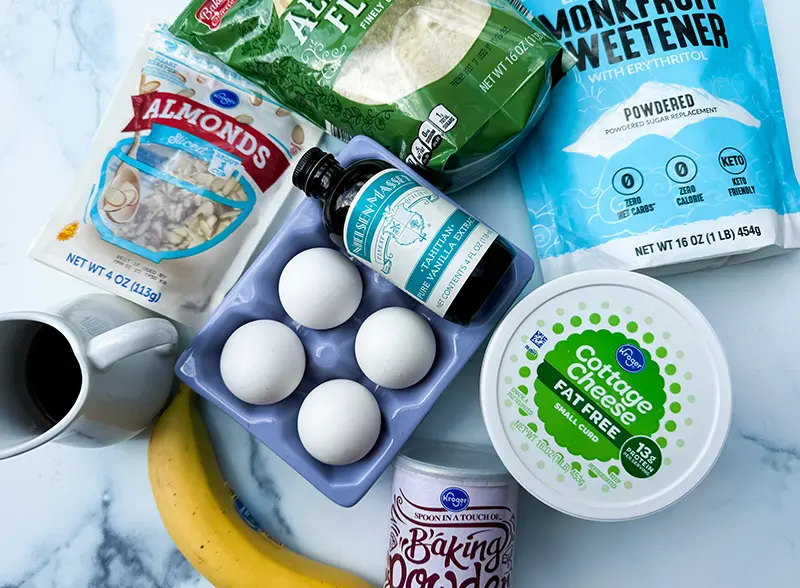
What I love about this recipe is that it is made with almond flour which adds amazing flavor but makes this a gluten free pancake recipe. While I’m not gluten free, I can’t believe how many people are! So having gluten free protein pancakes in my repertoire is really helpful! You are getting additional protein using the almond flour and when combined with the eggs and cottage cheese, you get protein pancakes with no protein powder needed. You are just using all natural protein rich ingredients…I love that.
This is a fast recipe and everything gets blended together to create the pancake batter. Almond flour banana pancakes come together in a flash. Simply add all the ingredients to a blender, hit blend and let it go until the batter is perfectly smooth…about 1 minute.
FYI: You’ve heard the rumors and if you’ve made pancakes, you know it to be true, the first batch, never turns out right. I’ve never figured it out but I have learned to cook just one pancake on the first round. This way, although it isn’t perfect, I haven’t wasted batter AND I have a snack while I cook the rest.
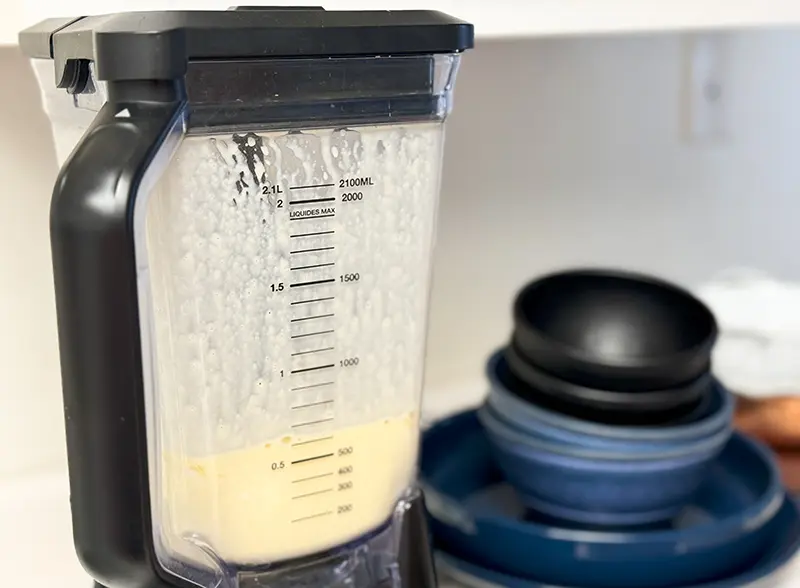
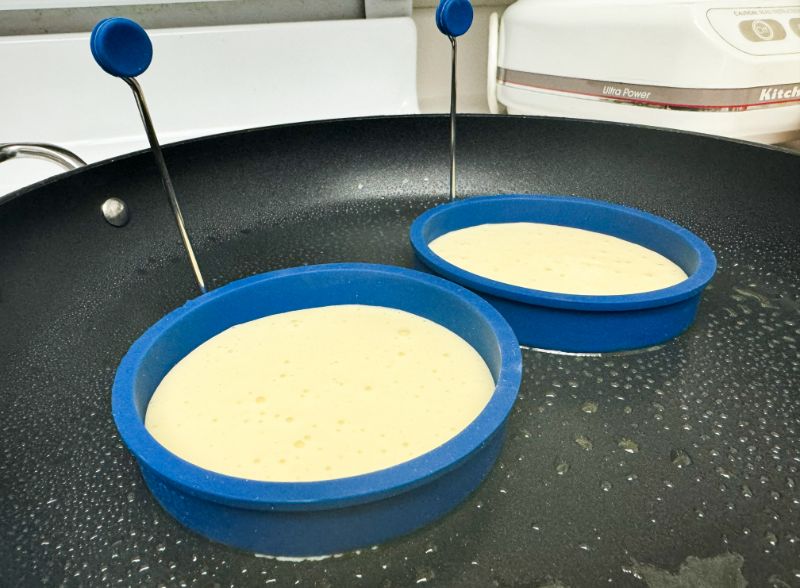
Add a 3rd and/or 4th egg to the batter and the batter gets really thin, and makes the perfect crepe batter. Use in your favorite crepe pan for traditional crepes.
I stack these on individual plates and top with sliced bananas, sliced almonds and sugar-free maple syrup. You can toast the almonds for a couple of minutes in a non-stick skillet over medium heat to bring out that nutty taste. Do that before cooking your pancakes so you can just sprinkle on top when the pancakes are done. Of course, you can use other nuts too. I like chopped, toasted pecans with these as well.
Yes, of course you can use real maple syrup, honey or agave. They all work. (I know you wanted to ask!!!) Don’t like bananas? Try fresh berries.
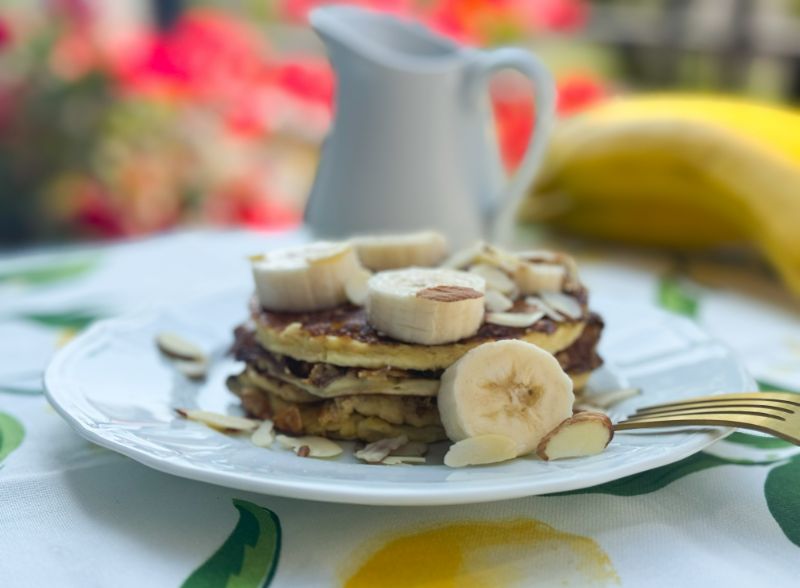
Yes, you can substitute almond flour for regular flour in pancakes, but you’ll need to make adjustments. Use a 1:1 ratio, but add extra eggs or binding agents like xanthan gum since almond flour lacks gluten. The texture will be denser and nuttier than traditional pancakes, and they cook faster and brown more quickly. I used cottage cheese for extra protein extra binding.
For almond flour pancakes, you should use ¼ teaspoon of xanthan gum per cup of almond flour.
A quarter teaspoon of xanthan gum can dramatically improve structure without affecting flavor,
and this is the standard ratio recommended across gluten-free baking recipes.
Here’s how to use it properly:
Mixing Method:
Recipe Scaling:
Important Notes:
If you don’t have xanthan gum, you can substitute with ¼ teaspoon guar gum or 1 tablespoon of psyllium husk powder per cup of almond flour, though xanthan gum typically gives the best results for pancakes.
Use super-fine blanched almond flour for the best results. Avoid almond meal or unblanched almond flour, as these create a grittier texture and less appealing color. Blanched almond flour produces tender, fluffy pancakes with a pleasant appearance.
Almond flour pancakes burn more easily than regular pancakes due to their higher fat content. Cook on medium-low to low heat, and reduce the temperature after each batch as your pan retains heat. They typically need only 1-2 minutes per side and brown faster than wheat flour pancakes.
To make fluffy almond flour pancakes:
Crumbly pancakes usually indicate insufficient binding. Add more eggs to your recipe (almond flour pancakes typically need 2-3 eggs), or incorporate a small amount of xanthan gum, psyllium husk, or flax meal as a binder. Also ensure you’re not flipping them too early.
Almond flour pancakes contain approximately 2-4 grams of net carbs per pancake, compared to 15-20 grams in traditional pancakes. This makes them suitable for keto and low-carb diets. The exact count depends on your recipe and serving size.
Yes, you can prepare almond flour pancakes in advance:
Reheat almond flour pancakes in:
Yes, almond flour pancakes are naturally gluten-free, making them perfect for those with celiac disease or gluten sensitivity. Always check that your other ingredients (like baking powder) are also certified gluten-free.
Popular add-ins include:
The batter should be slightly thicker than regular pancake batter but still pourable. If it’s too thick, add 1-2 tablespoons of milk or water. If too thin, add a bit more almond flour. The consistency should coat a spoon but flow easily.
Yes, almond milk works well in almond flour pancakes and enhances the nutty flavor. You can substitute any milk (dairy or non-dairy) in equal amounts. Adjust the quantity as needed since different milk types may require slight batter adjustments.
An eggy taste usually means too many eggs relative to other ingredients. Try reducing eggs by one, or balance the flavor with vanilla extract, cinnamon, or a small amount of sweetener. The nutty almond flavor should be prominent, not the eggs. I’ve used cottage cheese in this recipe so I don’t experience an “eggy” taste.
Almond flour pancakes offer:
While challenging, you can make egg-free almond flour pancakes using:
As a home cook, few breakfast frustrations compare to watching your carefully prepared almond flour pancakes crumble when you try to flip them. If you’ve experienced this common issue, you’re not alone. Let’s explore why almond flour pancakes tend to fall apart and provide practical solutions to help you achieve perfect, intact pancakes every time.
Almond flour pancakes can be tricky because almond flour behaves very differently from traditional wheat flour. Understanding these differences is the first step to solving the problem:
Unlike wheat flour, almond flour contains no gluten—the protein that provides elasticity and structure to baked goods. Without this natural binding agent, your pancakes lack the structural integrity that helps them hold together during cooking and flipping.
Almond flour has significantly more fat than wheat flour. While this contributes to a rich, tender texture, it also makes pancakes more delicate and prone to breaking apart.
Starch helps bind ingredients together and absorb moisture. Almond flour contains very little starch compared to wheat flour, resulting in a looser batter that doesn’t hold its shape as well.
Beyond the inherent properties of almond flour, several cooking practices might be sabotaging your pancake success:
If your recipe doesn’t include enough eggs or other binding agents, the pancakes won’t have the necessary “glue” to stay together.
A pan that’s not hot enough won’t allow the pancakes to set quickly on the bottom, making them more likely to break when flipped. Conversely, a pan that’s too hot can burn the outside before the inside has time to set.
Patience is key! Flipping too early, before the first side has properly set, almost guarantees broken pancakes.
Using a spatula that’s too thick or not getting it completely under the pancake can tear your delicate creation.
Even with proper technique, pancakes can stick to the cooking surface if it’s not adequately non-stick or properly greased.
Now for the good news—with a few adjustments to your ingredients and technique, you can achieve fluffy, intact almond flour pancakes:
If you’re still having issues after trying these solutions, consider these specific problem-solution pairs:
Problem: Pancakes are sticking to the pan despite using oil. Solution: Your pan might not be hot enough when you add the batter. Try heating the pan first, then adding oil, then the batter.
Problem: The pancakes cook on the outside but remain gooey inside. Solution: Lower your heat and cook for longer on each side, or cover the pan to help the heat penetrate more evenly.
Problem: Pancakes break in half during flipping despite being cooked enough. Solution: Try making them smaller, or add an additional binding agent to your recipe.
Problem: The batter is too thick and doesn’t spread. Solution: Add a tablespoon of milk (or almond milk) at a time until you reach the desired consistency.
Problem: The batter is too runny and spreads too thin. Solution: Add a tablespoon of almond flour or a teaspoon of coconut flour (which is highly absorbent) to thicken the batter.
If you’ve already mixed your batter and it’s not holding together well during cooking, try these emergency fixes:
With these comprehensive solutions, you’ll be well on your way to mastering almond flour pancakes that are both delicious and structurally sound. Remember that working with alternative flours often requires some experimentation, but the nutritional benefits and unique flavors make it well worth the effort!
Did you like this recipe? Please leave a rating and comment below. How did you top your pancakes? Looking for other pancake recipes? Try some of these:
Kodiak Cakes Apple & Walnut Sheet Pan Pancakes
Nutritional information is only an estimate. The accuracy of the nutritional information for any recipe on this site is not guaranteed.

Recipe Developer
With over 10 years of restaurant experience, Diane has been cooking and developing recipes for over five years, focusing on real-food meals for two that are Weight Watchers-friendly and high in protein. A longtime WW member herself, she brings firsthand experience to every recipe — not just culinary technique, but the practical knowledge of someone who has navigated points, portions, and satisfaction for years. Her recipe for Lollipop Lamb Chops with Pistachio Pesto was selected as a KitchenAid contest winner and published in Taste of Home's "Innovate Your Plate" bookazine. She has developed recipes and created content for brands including Eggland's Best, Sprouts Market, ZenB Pasta, Flannery Beef, The Honey Jar and Marukan Vinegar. She has been cooking for two for 10 years and her recipes focus on well balanced meals that are healthy, protein-focused meals perfectly proportioned for two servings. Based in Southern California she loves fresh, seasonal produce and proteins that nourish the body and soul.
Hi! I’m Diane. I started this site as a passion project. I love to cook, entertain, travel and laugh. (Who doesn’t love a good laugh?) Of course, being from New York, sarcasm rules!
More About Diane
mycuratedtastes@gmail.com