Add Us As A Trusted Google Source
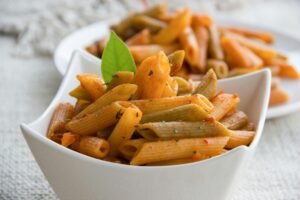
 WW-Friendly Pasta Recipes for Two – 7 Recipes That Prove You Never Have to Give Up Pasta
»

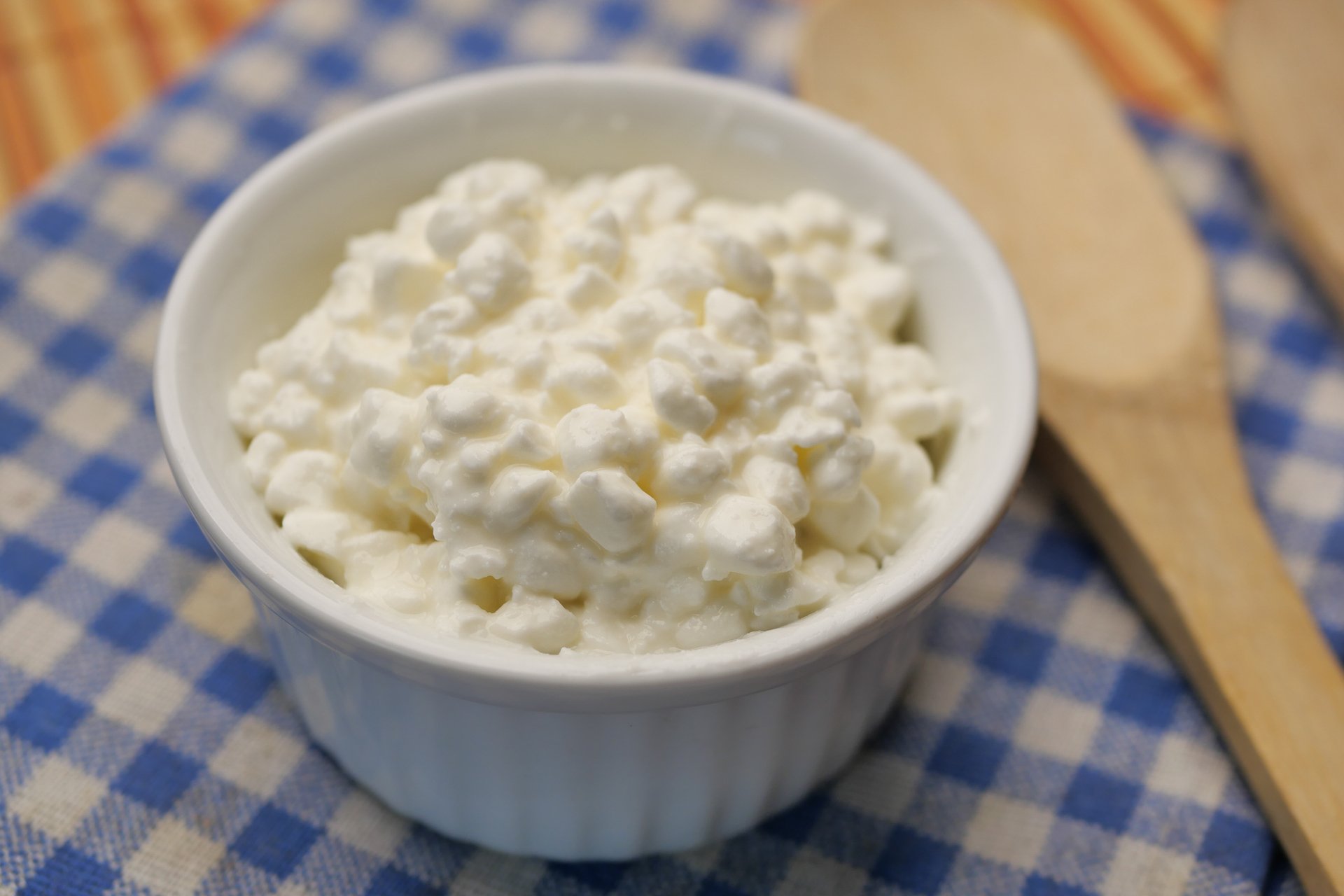
Twelve cottage cheese recipes from this site covering every category — breakfast, bread, snacks, dinner, and dessert — plus everything you need to know to use cottage cheese confidently in your kitchen. Here is what makes this collection different from Skinnytaste’s 14-recipe list and all the other lists online:
I want to be honest about something: I was not always a cottage cheese person. Growing up I steered as far away from it as possible — the texture, the appearance, the general vibe of it on a plate. My mom was a lifetime WW member and she ate it constantly, and I watched her do it with the kind of bewilderment only a child can muster. There was absolutely no version of events in which I was going to eat that. As a matter of fact, her favorite breakfast Pineapple Cottage Cheese Pastry is now a favorite of mine and in regular rotation!
Then 2024 happened. Cottage cheese had its viral moment — flatbreads, pasta sauces, ice cream, pancakes, protein truffles everywhere. And I started experimenting in the kitchen with the same skepticism I brought to everything new, which is: I will try it, but it has to actually taste good. Not ‘pretty good for something healthy.’ Actually good.
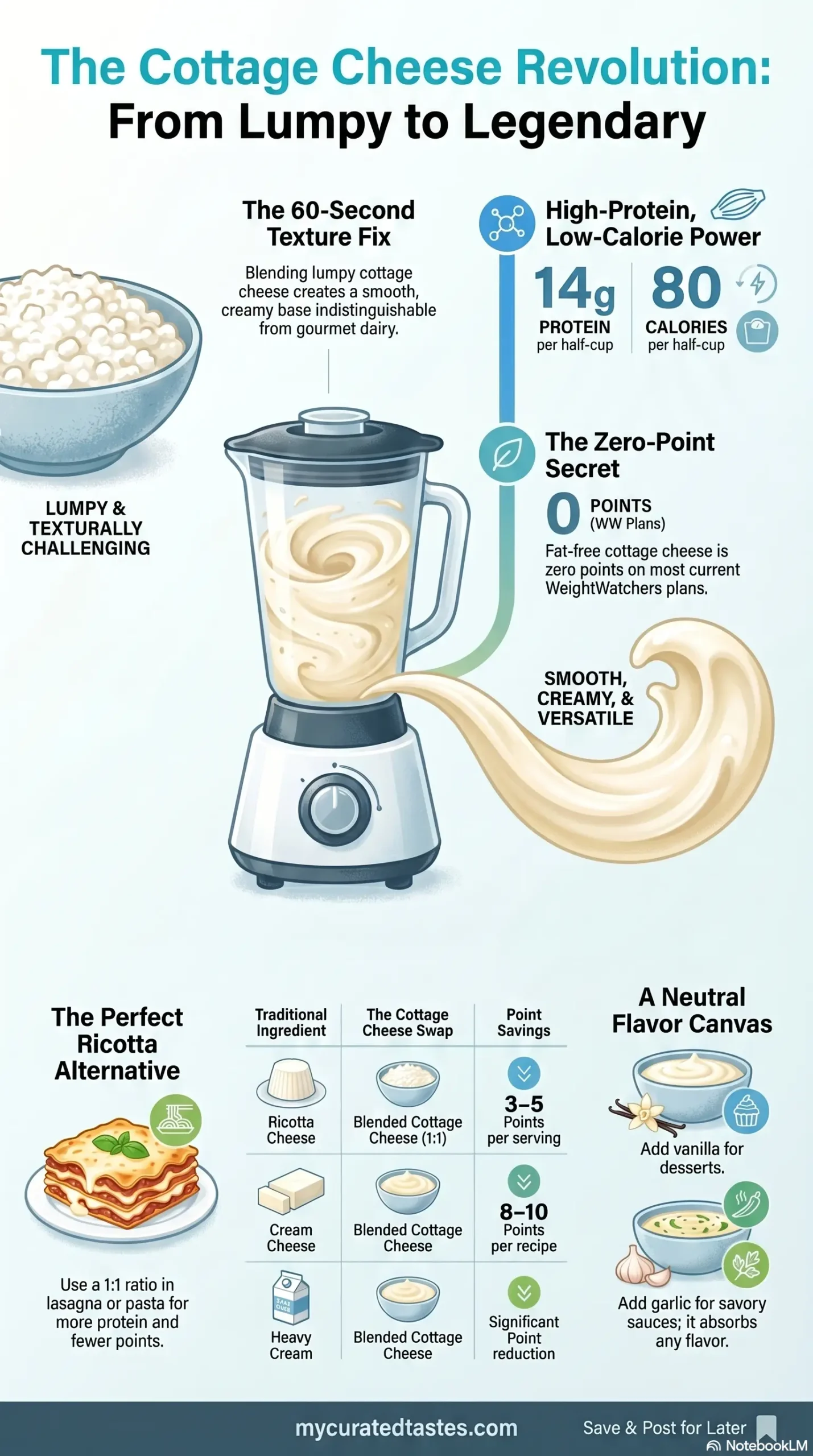
The revelation was this: blended cottage cheese is an entirely different ingredient from unblended cottage cheese. The lumpy, texturally challenging product sitting in the container bears almost no resemblance to the smooth, creamy, protein-rich base that emerges after 60 seconds in a blender. Once I understood that the texture problem was a preparation problem — not an ingredient problem — everything changed. I have now developed over a dozen recipes built around cottage cheese, and I use it multiple times a week. My mom was right. I should have listened sooner. And the fact that I lean into protein rich recipes, made using cottage cheese a no-brainer.
For the complete high-protein recipe collection that these cottage cheese recipes support, visit the High-Protein Recipes Guide. For the WW-friendly approach to all the recipes on this site, see the WW-Friendly Recipes Guide. And for the two-person cooking framework that sizes all of these recipes correctly, see the Complete Guide to Cooking for Two.
Before the recipes, the numbers. Because once you see what cottage cheese actually delivers per serving, you understand why it has become the most versatile ingredient in the high-protein, WW-friendly kitchen. All nutritional values below are sourced from the USDA FoodData Central database.
| Nutrient (per ½ cup fat-free) | Amount | Why It Matters for WW |
|---|---|---|
| Protein | 14g | Zero-point protein source — the most important WW metric |
| Calories | 80 | One of the lowest calorie-to-protein ratios of any food |
| Fat | 0g (fat-free) | Zero saturated fat — no impact on heart health or points |
| Carbohydrates | 6g | Low carb — minimal blood sugar impact |
| Calcium | 15% DV | Supports bone density — critical for women over 50 |
| Sodium | ~300mg | Use low-sodium versions when watching sodium intake |
| WW Points (fat-free) | 0 points | Zero points on most current WW plans |
| WW Points (low-fat 2%) | 1–2 points | Verify in app — varies slightly by plan |
The practical translation: fat-free cottage cheese is zero points, delivers 14 grams of protein per half cup, and can replace cream cheese, ricotta, sour cream, heavy cream, and mayonnaise in recipes — at zero to a fraction of the points those ingredients carry. No other single ingredient in the WW toolkit does this much work.
The single biggest barrier to cottage cheese adoption is texture. The lumps. The watery appearance. The way it looks on a plate. If this is your barrier, I want to address it directly and completely, because once you solve the texture problem, cottage cheese becomes an entirely different ingredient. I personally like it on toast, topped with fresh fruit, but in most applications, blending does the trick.
Add your cottage cheese to a blender or food processor. I have a mini-food processor that I use for this purpose, and it is the perfect size since I’m cooking for two most of the time. Run it for 60 full seconds. Stop. Look at what you have. It is now smooth, creamy, and completely lump-free — a consistency somewhere between Greek yogurt and cream cheese depending on the fat content and brand. The taste is mild and slightly tangy. The protein content is identical to unblended. The texture problem is gone.
This blended cottage cheese is what goes into the pasta sauce, the pancake batter, the truffle base, the overnight oats, the flatbread batter, and the cheesecake. In every single one of these applications, nobody can tell it is cottage cheese. That is not a marketing claim. That is the consistent reaction of every person who has ever eaten anything I have made with it. I’ve converted multiple people and have convinced them to make the swap. For those less open to new things, I just don’t tell them!!! Evil genius, right? LOL
The only recipe in this collection where you do not blend the cottage cheese first: is the Pineapple Cottage Cheese Pastry (where the cottage cheese is eaten as-is, chilled, and the cold temperature mellows the texture significantly). Everything else — blend first.
Not all cottage cheese is created equal, and the brand you choose affects the outcome of your recipe significantly. Here is my honest guide:
| Use Case | Best Choice & Why |
|---|---|
| Everyday cooking — blended into sauces, batters, doughs | Kroger Fat or Knudsen Fat-Free — both blend completely smooth with no graininess |
| Eating plain or in parfaits | Good Culture Low-Fat — cleaner ingredient list, better flavor for eating unblended |
| Baking (bread, pancakes, waffles) | Any fat-free brand — Trader Joe’s or store brand work equally well once blended |
| Desserts and truffles | Fat-free only — full-fat versions make the texture heavier than needed |
| Diane’s everyday go-to | Fat-free cottage cheese — always. Lower saturated fat, zero WW points, and the blended texture is identical to higher-fat versions in cooked applications (I use Kroger) |
| Budget option | Store brand fat-free (Kirkland at Costco, Kroger, Aldi) — functionally identical to name brands once blended, significantly cheaper |
| To avoid | Flavored or fruit-added cottage cheese for cooking — added sugar and flavoring interfere with savory applications |
This is the section that transforms how you cook. Cottage cheese is not just a standalone ingredient — it is a replacement for some of the highest-point ingredients in traditional cooking. Here is the complete swap guide with ratios:
| Replace This | With Cottage Cheese | Points Saved (approx.) |
|---|---|---|
| Ricotta (1 cup) | 1 cup blended fat-free cottage cheese | 3–5 points saved |
| Cream cheese (4 oz) | 4 oz blended fat-free cottage cheese | 8–10 points saved |
| Sour cream (½ cup) | ½ cup blended fat-free cottage cheese | 4–6 points saved |
| Heavy cream in pasta sauce (¼ cup) | ¼ cup blended fat-free cottage cheese + splash pasta water | 6–8 points saved |
| Mayonnaise in dressings (2 tbsp) | 2 tbsp blended fat-free cottage cheese | 4–5 points saved |
| Mascarpone (½ cup) | ½ cup blended low-fat cottage cheese | 10–12 points saved |
| Ice cream (½ cup) | ½ cup frozen blended cottage cheese + cocoa/vanilla | 4–8 points saved |
| Flour in flatbread/waffles | Cottage cheese + egg (no flour needed) | Variable — eliminates refined carbs entirely |
Every recipe below is from this site, tested in my kitchen, and made with fat-free cottage cheese unless noted. Organized from morning to night.

Two pancake options, overnight oats, and a classic WW pastry — cottage cheese makes breakfast the highest-protein meal of the day with minimal effort.
⏱ 15 minutes 🥩 24g per serving ⭐ WW: 2–4 points
The pancake that redefined what a healthy breakfast could be — and the recipe that converted more skeptics to cottage cheese than anything else I have made. Fat-free cottage cheese blended smooth with eggs, a touch of oat flour, vanilla, and a pinch of cinnamon. The batter cooks into pancakes with crispy edges and a melt-in-your-mouth interior that has nothing in common with dry, dense protein pancakes. Twenty-four grams of protein without a scoop of protein powder anywhere in the recipe. Serve with sugar-free maple syrup and fresh berries. This is the Saturday morning that makes you wonder why you ever ordered pancakes at a restaurant.
💡 Cottage Cheese Secret: Blend the cottage cheese completely before adding any other ingredients — the smoother the cottage cheese, the lighter and more tender the finished pancake. Do not skip this step.
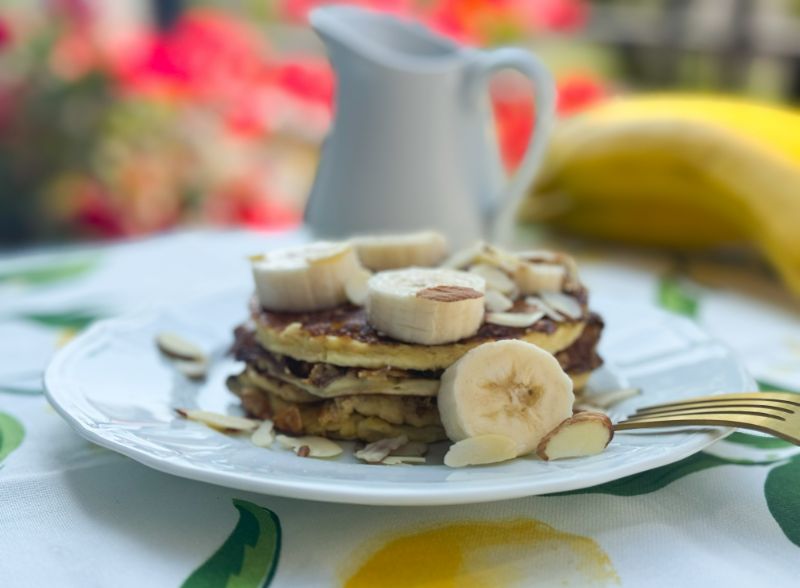
⏱ 20 minutes total 🥩 16g+ per serving ⭐ WW: 3–5 points — a genuinely special weekend pancake
The gluten-free pancake that uses both almond flour and blended cottage cheese for a result that is tender, slightly nutty, and far more substantial than any standard pancake. The cottage cheese adds protein and moisture; the almond flour adds healthy fats, fiber, and a delicate crumb that regular flour cannot replicate. These are the pancakes I make on Sunday when I want something that feels genuinely indulgent while still serving my protein goals. Golden on the outside, soft in the center, and the kind of weekend breakfast that makes the morning feel like an event. Serve with sugar-free maple syrup, fresh berries, and a dusting of powdered monk fruit sweetener for a plate that looks as good as it tastes.
💡 Cottage Cheese Secret: Do not skip blending the cottage cheese smooth before adding to the batter — this is what gives the pancakes their light, tender texture rather than a lumpy, dense one. Let the batter rest for 2 minutes after mixing before pouring onto the griddle for the best results.
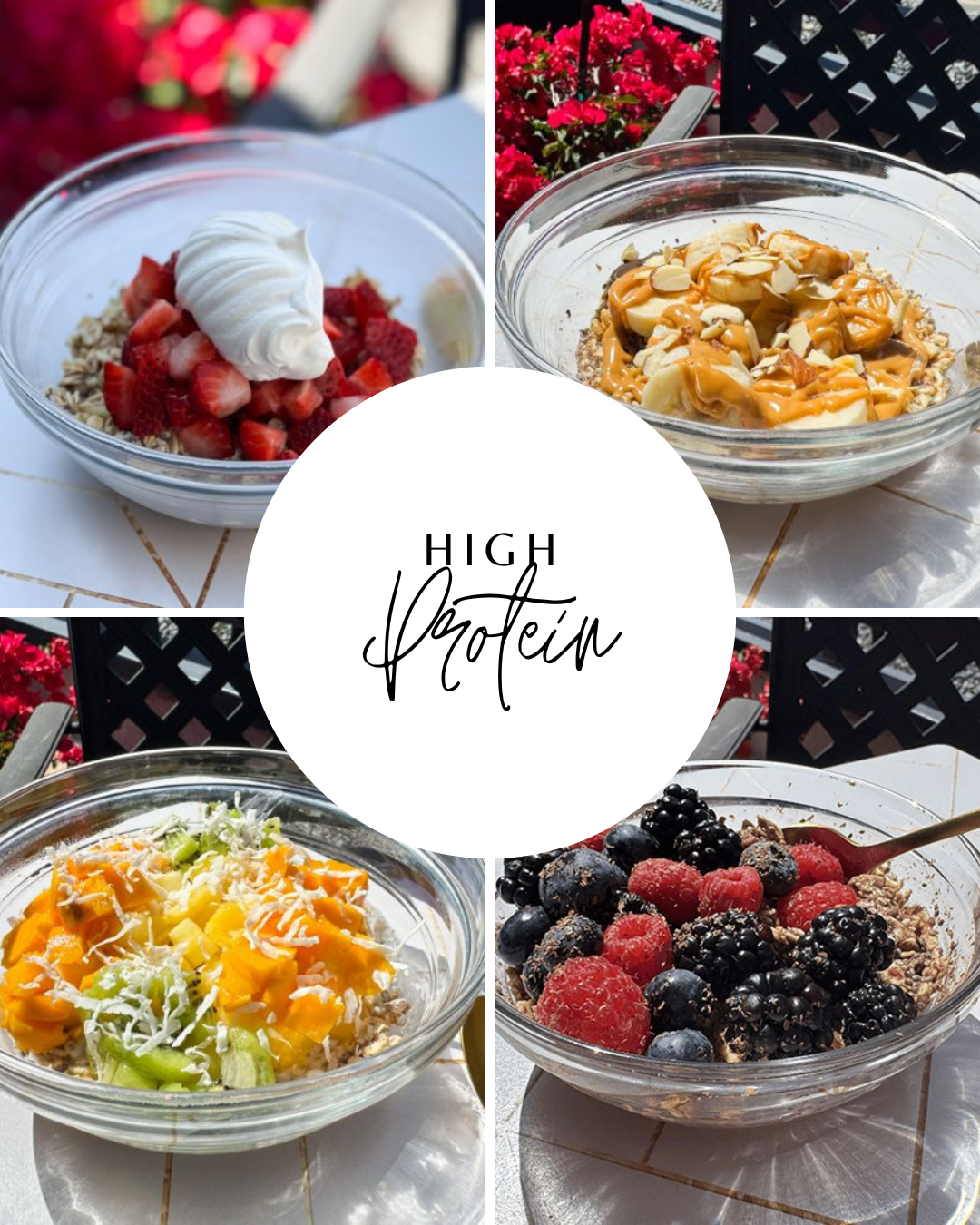
⏱ 5 minutes prep, overnight 🥩 25–35g per serving (depending on additions) ⭐ WW: 2–4 points
The breakfast that builds itself while you sleep — and one of the most flexible cottage cheese applications on this site. Blended fat-free cottage cheese is one of three protein sources in the overnight oats formula (alongside Greek yogurt and optional protein powder), contributing 12–14 grams of protein per half cup while completely disappearing into the oat base. The finished jar tastes like a creamy, rich, satisfying breakfast with no trace of cottage cheese flavor. Ten flavor variations are available — from Peanut Butter Banana to PB&J to Tropical — and the base recipe takes five minutes on Sunday night for a zero-effort Monday through Thursday morning.
💡 Cottage Cheese Secret: Blend the cottage cheese before adding to the jar — even a 30-second blend produces a creamier result. The blended version also distributes more evenly through the oats than unblended.

⏱ 10 minutes 🥩 18g+ per serving ⭐ WW: 1–3 points
The recipe my mom made on WW when I was a child — and the one that started my cottage cheese journey as an adult. Fat-free cottage cheese chilled and topped with crushed pineapple (packed in juice, not syrup) over a single graham cracker sheet. That is essentially it. The cold cottage cheese softens the graham cracker slightly over a few hours, creating a texture that is genuinely pastry-like. The pineapple adds natural sweetness that transforms the mild cottage cheese into something that feels genuinely indulgent. This is the oldest WW cottage cheese recipe in existence and it remains one of the best. My mom was right and I was wrong. I have made peace with this.
💡 Cottage Cheese Secret: Chill the assembled pastry for at least 30 minutes before eating — the texture improves significantly as the graham cracker softens and the flavors meld. Crushed pineapple in juice (not syrup) keeps the point count minimal.
This is where cottage cheese performs its most impressive magic. Bread and bread-adjacent items that deliver real protein while tasting like the real thing.
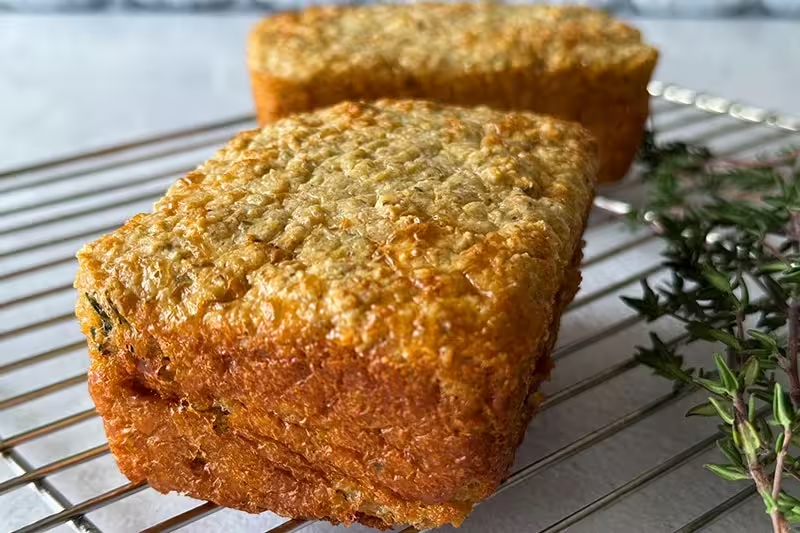
⏱ 45 minutes (mostly hands-off baking) 🥩 15g+ per slice (2-slice serving) ⭐ WW: 2–4 points per 2 slices
The bread that made me realize cottage cheese could do things I had not imagined. Blended fat-free cottage cheese with eggs, rolled oats, oat flour, baking powder, and rosemary — baked in a loaf pan until golden on the outside and moist throughout. No yeast, no rising time, no kneading. The cottage cheese provides both moisture and protein; the oatmeal provides fiber and structure; the eggs bind everything together. The result is a dense, satisfying, genuinely delicious bread that you can slice and use exactly as you would regular bread — toast it, make sandwiches, eat it warm from the oven with nothing on it. Make in a standard loaf pan for slicing, or four mini loaf pans for perfectly portioned individual servings for two.
💡 Cottage Cheese Secret: Blend the cottage cheese and eggs together first until completely smooth before adding any dry ingredients — this is the step that determines the final texture. Over-mixing after adding the dry ingredients makes the bread tough.
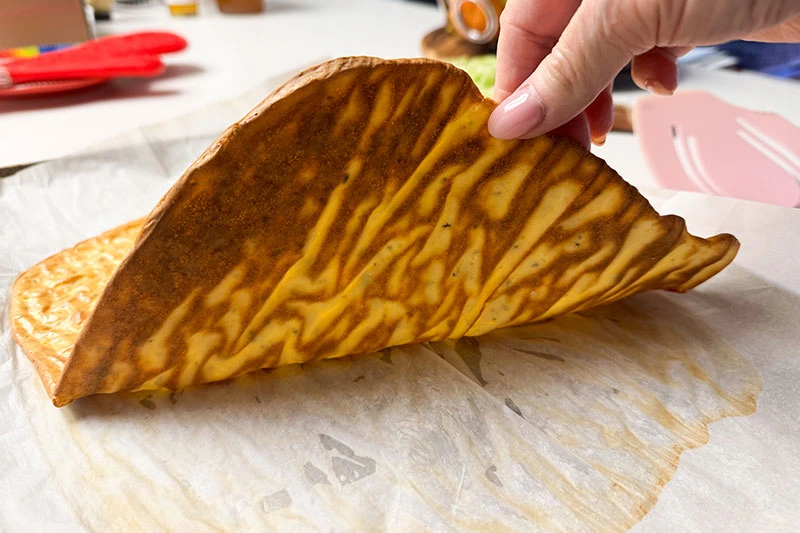
⏱ 30 minutes total 🥩 18g per flatbread ⭐ WW: 0–2 points — one of the most extraordinary zero-point applications on the site
The viral recipe that earned its viral status completely. Two ingredients — cottage cheese and eggs — blended smooth, poured onto a parchment-lined sheet pan, seasoned with Italian herbs and garlic, and baked until set and slightly golden at the edges. The result is a flexible, protein-dense flatbread that holds together for wraps, sandwiches, pizzas, and anything else you would normally put on a piece of bread or a tortilla. Eighteen grams of protein per flatbread. Essentially zero points. No flour, no carbs, no gluten. I was skeptical until I made it once — then I made it every week for three months straight. My addition of Kodiak mix when I want a heartier version changed the recipe for me, and I share that variation in the recipe notes.
💡 Cottage Cheese Secret: The key to a flatbread that peels cleanly from the parchment: bake until the edges are visibly golden and the center feels set when you press it gently. Under-baked flatbread tears. If in doubt, give it two more minutes.
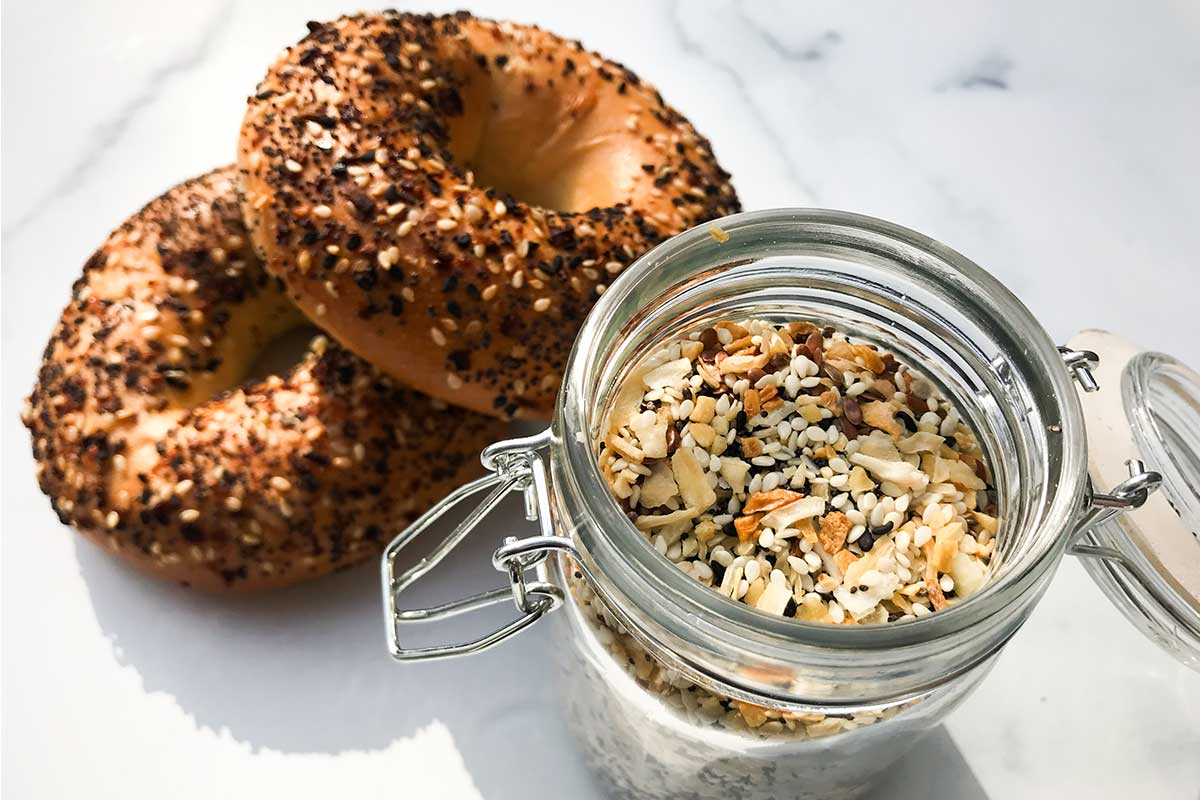
⏱ 30 minutes total 🥩 12g+ per bagel ⭐ WW: 2–3 points per bagel
The WW bagel that actually tastes like a bagel — because the dough is built on the same two-ingredient base (self-rising flour and fat-free Greek yogurt or cottage cheese) that has made this recipe one of the most shared on the site. Dense, chewy, satisfying, and finished with a generous coating of everything bagel seasoning. The cottage cheese version delivers slightly more protein and a marginally creamier crumb than the Greek yogurt version. Make a batch on Sunday and you have bagels for the entire week — slice and toast directly from the fridge, or freeze in individual bags for up to a month. The Skinny Everything Bagel Egg & Cheese Sandwich built on this base is one of the most satisfying high-protein breakfasts on this site.
💡 Cottage Cheese Secret: Self-rising flour is the key — do not substitute all-purpose flour without adding baking powder and salt. The dough should be tacky but workable; if it is too sticky to shape, add flour one tablespoon at a time.
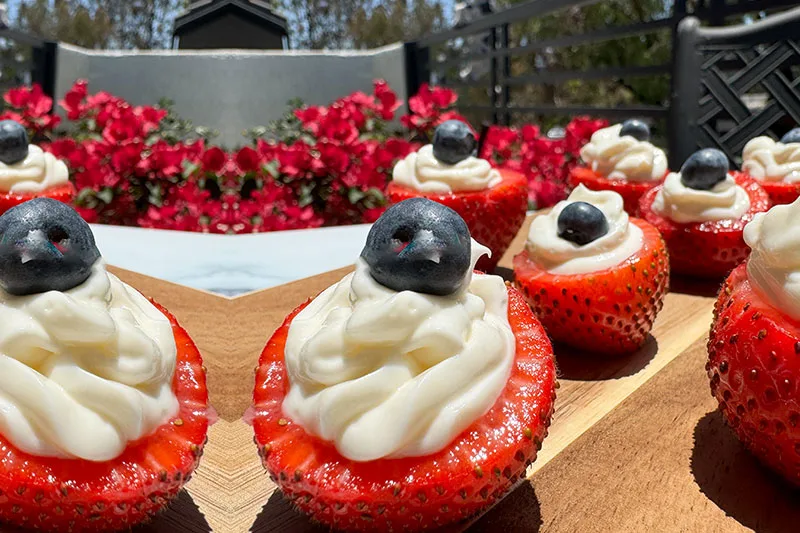
Where cottage cheese performs most surprisingly — sweet snacks that taste like desserts and function like protein meals.
⏱ 10 minutes 🥩 12–15g per serving ⭐ WW: 0–1 point — the perfect zero-point sweet snack
The snack that surprises everyone who tries it. Ripe strawberries hulled from the bottom and filled with sweetened fat-free cottage cheese — flavored with a drop of vanilla and a pinch of monk fruit sweetener — then sprinkled with cinnamon. This is one of the few recipes in this collection where the cottage cheese is not blended — the slightly textured filling provides contrast to the firm strawberry shell, and the cold temperature makes the cottage cheese feel more set and creamy than it would at room temperature. Make a plate on Sunday, keep covered in the fridge, eat all week. They look like a dessert. They taste like a dessert. They cost zero points and deliver 12–15 grams of protein. No other snack on this site achieves that combination.
💡 Cottage Cheese Secret: Hull from the bottom rather than the top — you get a wider, more stable cavity and the strawberry sits more securely on the plate. Use the smallest tip of a paring knife or a melon baller for clean results.

⏱ 15 minutes + chilling 🥩 8g per 2 truffles ⭐ WW: 0–1 point — zero-point chocolate that is genuinely satisfying
The recipe that consistently produces the most disbelief among people who try it. Fat-free cottage cheese blended completely smooth — no lumps, no texture, no trace — combined with cocoa powder, monk fruit sweetener, and vanilla, then rolled into balls and chilled until set. The result is rich, dense, genuinely chocolatey, and indistinguishable from a real chocolate truffle to anyone who does not know the origin. I keep a batch in the fridge at all times. Two truffles deliver 8 grams of protein at essentially zero points. The chocolate craving that derails diets is real; this is the answer that does not derail anything. The key instruction, and I cannot stress this enough: blend the cottage cheese for a full 60 seconds before adding anything else. Any remaining lumpiness will show in the finished truffle.
💡 Cottage Cheese Secret: The smoothness of the blend determines everything. Use a high-powered blender if you have one. Run for 60 full seconds. Stop and check. If any texture remains, run for another 30 seconds. The finished blend should be completely silky.
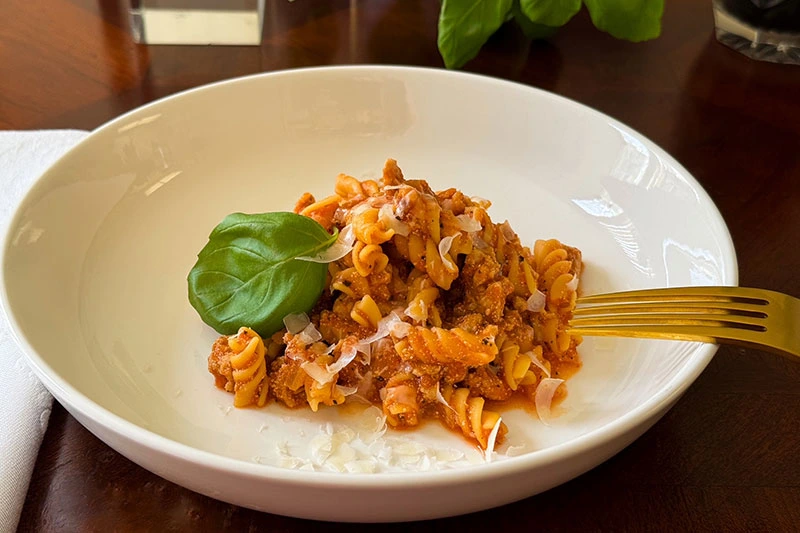
This is where cottage cheese performs its most impressive culinary sleight of hand — becoming the base of pasta sauces that taste richer and more indulgent than any traditional sauce, at a fraction of the points.
⏱ 30 minutes total 🥩 30g+ per serving ⭐ WW: 5–7 points
The pasta recipe that makes everyone wonder why they ever made tomato sauce with cream. Blended fat-free cottage cheese forms the base of a silky, creamy tomato sauce — mixed with canned tomatoes, garlic, Italian seasoning, and a splash of pasta water — that coats chickpea or lentil pasta in something genuinely extraordinary. The cottage cheese provides the creaminess that heavy cream would normally deliver, at a fraction of the points and with a massive protein boost. Ground turkey adds another protein layer. Total protein: 30+ grams per serving. This is the dinner that proves WW-friendly food does not require compromise — it requires creativity.
💡 Cottage Cheese Secret: The pasta water is not optional — add it tablespoon by tablespoon until the sauce reaches the consistency you want. The starch in the pasta water helps the blended cottage cheese sauce cling to the pasta rather than pooling at the bottom of the bowl.
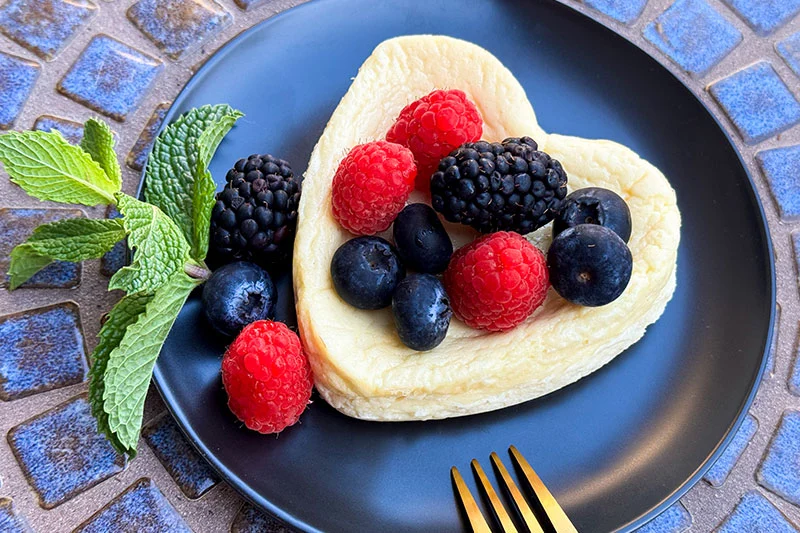
The most unexpected category — and the one that produces the most converted skeptics. These desserts are genuinely delicious, not ‘pretty good for healthy.’
⏱ 30 minutes + chilling 🥩 18g+ per serving ⭐ WW: 2–4 points
The cheesecake that started as a curiosity and became one of the most made recipes on this site. Fat-free cottage cheese blended completely smooth with eggs, almond flour, a touch of sweetener, and vanilla — baked in mini cheesecake pans or ramekins until just set in the center. Crustless, gluten-free, naturally sweetened, and genuinely beautiful with any topping you choose: fresh mixed berries, a homemade pineapple compote (a nod to the Entenmann’s pineapple cheesecake of my New York childhood), whipped cream, or just cinnamon. The almond flour adds protein and a subtle nuttiness that works beautifully with the tang of the cottage cheese. This is the dessert I serve to guests who do not know they are eating something ‘healthy’ — and they never guess.
💡 Cottage Cheese Secret: The jiggle test: the cheesecake is done when the edges are set and the center has just a slight jiggle — like a set Jello rather than liquid. It continues to firm up as it chills. Over-baking makes it dry; trust the jiggle.

⏱ 35 minutes + chilling 🥩 15g per serving ⭐ WW: 3–5 points
The dressed-up version of the Cottage Cheese Cake — built for two people with a proper pistachio crust, a more elaborate Greek yogurt and cottage cheese filling, and a presentation that is genuinely special-occasion worthy. Where the Cottage Cheese Cake is the everyday version (ramekins, minimal fuss), this is the date night version (springform presentation, pistachio crust, the full dessert experience). The cottage cheese and Greek yogurt combine in the filling to create something creamier and richer than either alone. A proper dessert that happens to be made from ingredients that are mostly zero points — and the dessert that signals the evening was special.
💡 Cottage Cheese Secret: The pistachio crust is the detail that elevates this from ‘healthy dessert’ to ‘actual dessert.’ Do not skip it. Pulse pistachios in a food processor with a small amount of butter and sweetener — press firmly into the bottom of the pan and chill for 10 minutes before adding the filling.
Fat-free cottage cheese is zero points on most current WW plans — making it the most versatile zero-point ingredient in the WW kitchen. Here is how to use this collection strategically:
All points are estimates since it depends on which WW program you are on PLUS WW changes point calculations all the time. For accurate point values, always copy my URL for the recipe and add it to your WW app.
The most versatile applications for cottage cheese in cooking: blended into pasta sauces (replaces heavy cream and ricotta at zero points), used as the base for high-protein pancake and waffle batters, mixed into overnight oats for a protein boost, baked into flatbreads and bread loaves, blended into desserts like cheesecakes and protein truffles, and used as a stuffing for fresh fruit for zero-point snacks. The single most important technique: blend the cottage cheese smooth before using it in any cooked application. Blended cottage cheese is a completely different ingredient from unblended — smooth, creamy, and entirely indistinguishable from higher-point dairy products. Every recipe in this collection that calls for cottage cheese specifies whether to blend first.
Yes — cottage cheese is one of the most effective weight-loss foods available because of the combination of high protein, low calories, and zero-point status on WW. A half cup of fat-free cottage cheese delivers 14 grams of protein at approximately 80 calories, which is one of the best protein-to-calorie ratios of any whole food. Protein suppresses hunger hormones (peptide YY and GLP-1) more powerfully than carbohydrates or fat, meaning cottage cheese snacks and meals keep you full longer and reduce overall caloric intake. For adults over 50, research on protein distribution throughout the day supports eating protein at every meal and snack — making cottage cheese a strategically valuable food at breakfast, as a snack, and in dinner applications.
The two most reliable techniques for making cottage cheese taste good: First, blend it. Sixty seconds in a blender transforms lumpy, texturally challenging cottage cheese into smooth, creamy, mild dairy that can replace cream cheese, ricotta, and sour cream in virtually any recipe. Second, flavor it. Plain blended cottage cheese is a blank canvas — it takes on whatever flavor you add to it. Vanilla and a touch of sweetener makes it dessert-like. Garlic and Italian herbs makes it savory. Cocoa powder and monk fruit makes it chocolate. The mild base flavor, which some people find off-putting on its own, becomes an asset when you understand how to use it. Every recipe in this collection is built on one or both of these techniques.
Fat-free cottage cheese is zero points on most current WW plans. Low-fat (2%) cottage cheese is typically 1–2 points per half cup, varying slightly by plan type and brand. Full-fat (4%) cottage cheese is typically 3–4 points per half cup. The vast majority of recipes on this site use fat-free cottage cheese specifically to maintain zero-point status. Always verify your specific brand’s points in the WW recipe builder or barcode scanner, as point values vary by exact fat content and serving size. On most WW plans, fat-free cottage cheese is one of the most valuable zero-point ingredients available — a genuine protein source that costs nothing on your daily budget.
Yes — blended fat-free cottage cheese is one of the best ricotta substitutes available, and in most cooked applications it is indistinguishable from ricotta while delivering more protein at fewer points. Use a 1:1 ratio: wherever a recipe calls for 1 cup of ricotta, use 1 cup of blended fat-free cottage cheese. The texture and flavor in baked dishes, pasta fillings, and sauces is essentially identical. The WW advantage: ricotta (part-skim) is typically 3–5 points per half cup; fat-free cottage cheese is zero points. In a pasta dish using a cup of ricotta, switching to blended cottage cheese saves 6–10 points per recipe — per serving savings of 3–5 points depending on how many servings the recipe makes.
Traditional flatbread is made from flour, water, oil, and sometimes yeast — providing primarily carbohydrates with minimal protein (typically 3–5g per serving) and 5–8 WW points. Cottage cheese flatbread is made from blended cottage cheese and eggs — delivering 18 grams of protein per flatbread with zero flour, zero refined carbohydrates, and essentially zero WW points. The texture is different: cottage cheese flatbread is slightly denser and more egg-forward, but it holds together for wraps and sandwiches as well as any flour-based alternative. The key advantage beyond the protein and points: it is gluten-free by default, making it accessible to anyone avoiding gluten without any special ingredients or modifications.
Yes — and this is the question that unlocks cottage cheese for most skeptics. The answer is blending. Add cottage cheese to any blender or food processor, run for 60 full seconds, and the lumpy texture disappears completely. The result is smooth, creamy, and visually identical to whipped cream cheese or Greek yogurt. Every recipe in this collection that uses cottage cheese in a cooked or blended application starts with this step — and in every case, the finished dish contains absolutely no trace of the original texture. The only applications where unblended cottage cheese appears in this collection are the Filled Strawberries (where the slight texture provides contrast to the strawberry) and the Pineapple Cottage Cheese Pastry (where the chilled temperature firms the texture significantly). If texture is your barrier, start with the Cottage Cheese Flatbread or the Overnight Oats — both use fully blended cottage cheese and both produce a result that would never reveal its protein source to anyone eating it.
Both are high-protein, low-point dairy staples with similar protein content per serving (cottage cheese: 14g per ½ cup; Greek yogurt: 17g per cup), but they behave differently in cooking and serve different purposes. Greek yogurt has a more pronounced tang and a thicker, set texture that makes it better for dressings, dips, sauces added at the end of cooking, and anything where a slight tang is a flavor asset. Cottage cheese has a milder flavor and, once blended, a more neutral creaminess that disappears completely into baked goods, cooked sauces, and desserts — making it better for applications where you want the other flavors to dominate. The practical guide: use Greek yogurt for dressings, toppings, and cold applications; use blended cottage cheese for baking, hot pasta sauces, and desserts where a completely neutral flavor base is needed. In many recipes on this site both appear together — the Greek yogurt for flavor, the cottage cheese for protein bulk. See the High-Protein Breakfasts for Two guide for examples of both working together.
Cottage cheese belongs in savory dinners — and it is frankly underutilized there. The High-Protein Pasta on this site uses blended cottage cheese as the base of a tomato cream sauce that is genuinely restaurant-quality, and the Cottage Cheese Flatbread becomes the base for pizza or a wrap for any savory filling. Beyond the recipes on this site, the applications are broad: stir blended cottage cheese into mashed potatoes (adds protein, replaces butter and cream at zero points), use it as the filling base for stuffed peppers or stuffed chicken breasts (replaces ricotta at zero points), add it to scrambled eggs while cooking for extra creaminess and protein, blend it into soups as a thickener instead of cream, and use it as the base for savory dips instead of cream cheese or sour cream. The cottage cheese is almost entirely flavor-neutral in savory applications — it absorbs the seasonings around it and provides body and protein without asserting itself. For the savory dinner collection that pairs with these cottage cheese recipes, see the 30 Grams of Protein Dinners for Two.
I spent years looking at cottage cheese in the grocery store and walking past it. I watched my mom eat it and thought she was making the most of a bad situation. I watched the 2024 cottage cheese moment on social media with the same skepticism I bring to every food trend.
And then I made the flatbread. And then the pancakes. And then the pasta sauce. And then the truffles. And somewhere in the middle of all of that, I realized I had been wrong about cottage cheese for my entire adult life — that it was never the ingredient that was the problem. It was the preparation.
Sixty seconds in a blender. That is the whole secret. Everything else follows from there.
For the complete high-protein recipe collection: High-Protein Recipes Guide. For the WW-friendly approach: WW-Friendly Recipes Guide. For high-protein snacks that feature cottage cheese: High-Protein Snacks — What I Reach For Most. For high-protein breakfasts including both cottage cheese pancake options: High-Protein Breakfasts for Two.

Hi! I’m Diane. I started this site as a passion project. I love to cook, entertain, travel and laugh. (Who doesn’t love a good laugh?) Of course, being from New York, sarcasm rules!
More About Diane
mycuratedtastes@gmail.com