Add Us As A Trusted Google Source
 High-Protein Salads for Two
»

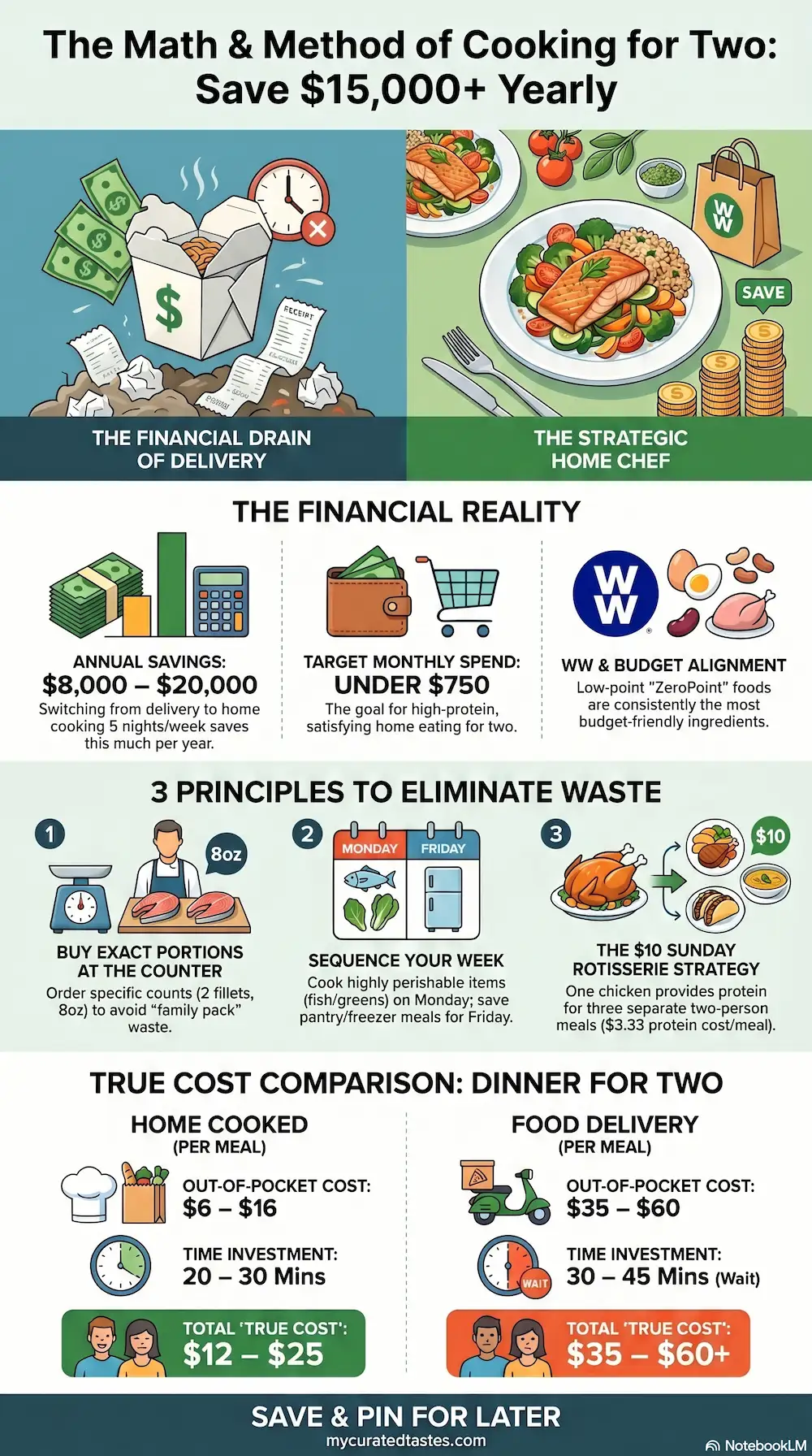
The complete guide to budget cooking for two — not a list of cheap recipes, but a genuine financial and strategic framework for how a two-person household eats well without overspending. Here is what makes this post different from typical budget recipe collections:
Before any strategies, the data. Most ‘budget cooking’ articles skip the actual financial context and go straight to tips. I am going to start with the numbers, because understanding where you are relative to national benchmarks is the foundation of any meaningful budget conversation. Before I started this post, I really was just doing research to see if I was alone. Why was I stressing so much about the cost of everything? How could I continue to create delicious recipes and manage the costs? I am a big “numbers” girl…you know the type; lists, charts, graphs and spreadsheets for everything! I figured, I better get the stats before I started to create a plan. Here’s what I learned.
According to the USDA Monthly Cost of Food Reports (January 2025, adjusted for current pricing), the estimated monthly grocery cost for two adults aged 20–50 ranges across four spending tiers:
Thrifty Plan: Approximately $580/month for two adults — the USDA’s most frugal benchmark, which assumes all meals are home-prepared from basic ingredients. This is the basis for SNAP benefit calculations.
Low-Cost Plan: Approximately $750/month for two adults — a modest but nutritionally complete budget.
Moderate-Cost Plan: Approximately $895/month for two adults — the plan most middle-income Americans follow.
Liberal Plan: Approximately $1,115/month for two adults — a generous food budget with significant variety.
Note: The USDA adds a 10% adjustment for two-person households because smaller households cannot take advantage of bulk pricing to the same extent as families of four. This means two people spend roughly 1.8x (not 2x) what one person spends — shared bulk buying and shared meal planning create modest but real efficiency gains.
The practical benchmark: if you are spending under $750/month for two people on groceries while eating high-protein, varied, genuinely satisfying food — you are doing well. If you are spending over $1,000 and feel like you are constantly throwing food away or relying on takeout, this guide is for you.
This is the analysis nobody does with actual numbers. Most budget cooking articles say ‘cooking at home saves money’ without quantifying how much. Here it is, with real per-serving costs:
| Meal Type | Est. Cost Per Person | Annual Cost (2 people, 5 dinners/week) |
|---|---|---|
| Home-cooked dinner (budget recipes from this site) | $3–8 per person | $1,560–4,160/year |
| Home-cooked dinner (higher-end recipes — salmon, scallops) | $8–15 per person | $4,160–7,800/year |
| Fast casual restaurant (Chipotle, Panera, etc.) | $12–18 per person | $6,240–9,360/year |
| Mid-level restaurant dinner for two | $25–50 per person | $13,000–26,000/year |
| Food delivery app (with fees and tip) | $20–35 per person | $10,400–18,200/year |
| Meal kit delivery service | $12–18 per person | $6,240–9,360/year |
The math is stark: a two-person household that cooks dinner at home five nights per week and eats out twice — rather than ordering delivery or going to restaurants all seven nights — saves $8,000–20,000 per year depending on their baseline habits. That is not a small number. That is a vacation, a car payment, or a meaningful contribution to a savings account. And it assumes restaurant-quality food at home — because that is what the recipes on this site produce. I’m a self-proclaimed foodie and I love dining out and trying new restaurants…always have, always will. But this was eye-opening for me, and has made me pause and rethink my eating out plan. Maybe, I need to reign it in a bit and save the eating out for special occasions or limit the number of times I eat out. With these numbers, I was able to re-evaluate my spending. Hopefully, it will help you too. Of course, that meant more cooking at home, and the creation of delicious recipes just seemed more urgent. Read on…
The specific number from the Meal Planning for Two guide: couples who meal plan consistently spend 20–30% less on food than those who do not — which represents $2,000+ in annual savings at the moderate spending level. That saving comes from eliminated waste, reduced impulse purchases, and fewer ‘we forgot to plan so we’re ordering delivery’ nights. (Mykonos here I come!!!)
Here is something genuinely counterintuitive about cooking for two: it is not more expensive than cooking for a family on a per-meal basis. In many ways it is less expensive. Here is why:
Advantage 1: Less food waste per dollar spent. Larger households buy more food and waste more food proportionally. The EPA estimates the average American wastes roughly $728 per year in food they buy and never eat. Two-person households that plan effectively waste significantly less — because the quantities are smaller, the planning horizon is shorter (5 days not 14), and the consequence of over-buying is more immediately visible. Every dollar saved from waste goes directly back into the food budget for quality ingredients.
Advantage 2: Quality over quantity becomes affordable. A family of four buying salmon for dinner spends $40–60 for four fillets. Two people buying salmon for dinner spend $15–20 for two perfect fillets. The same budget percentage buys a dramatically better dinner at two-person scale. This is the key insight: cooking for two does not mean eating cheap food. It means the per-serving budget for genuinely good food is the same as or lower than the per-person cost of family cooking.
Advantage 3: Small-batch everything is naturally portioned. Family cooking produces leftovers — food that cost money, must be stored, and has to be eaten before it goes bad. Two-person cooking, done with two-serving recipes, produces no leftovers by default. Every dollar spent produces a meal, not a storage burden.
Advantage 4: Grocery shopping is more targeted and less impulse-driven. A two-person grocery run covers fewer categories, requires less volume, and is over faster than a family shop. Shorter time in the store means fewer impulse purchases. A shopping list for two people is achievable in a single pass through the store in under 30 minutes — leaving no time for the ‘that looks good, let’s try it’ additions that inflate family grocery bills.
These are the specific shopping behaviors that make a meaningful financial difference for two-person households. Not ‘use coupons’ (obvious) or ‘buy store brands’ (also obvious) — these are the two-person-specific strategies that the budget cooking sites miss.
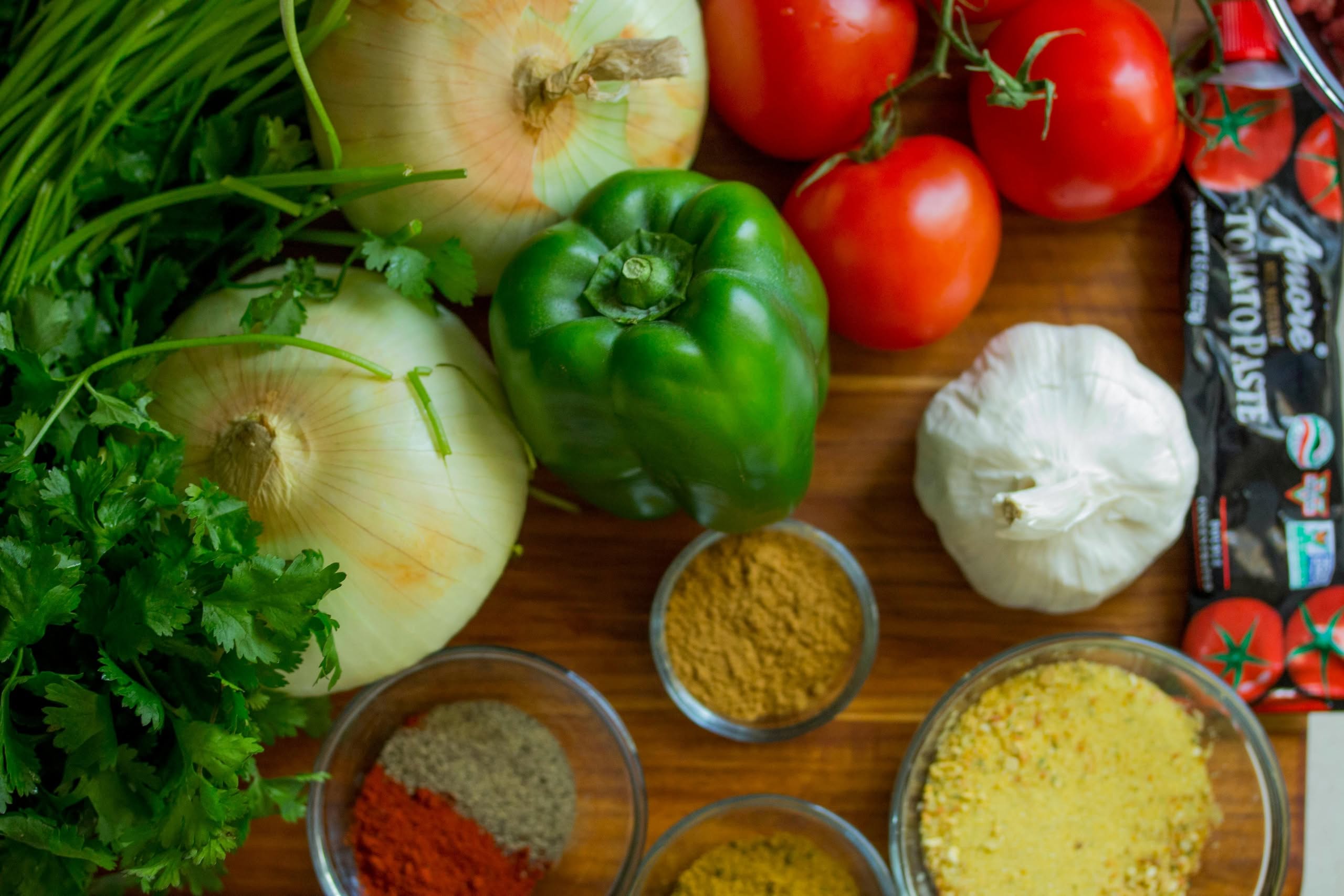
With these items stocked, a genuinely satisfying dinner for two is always $3–5 away — regardless of what was or was not bought fresh that week. These are the ingredients that cost very little per use but enable a disproportionate number of excellent meals:
| Always Stock | Cost & Why It Enables Budget Cooking |
|---|---|
| Canned whole San Marzano tomatoes | $2–3/can — the base of any pasta sauce, soup, or braise. Serves 4+ meals for two. |
| Dried chickpeas or canned chickpeas | $1–2 — zero WW points, high protein, zero-point base for soups, salads, and grain bowls. |
| Dried lentils (red and green) | $1–2/lb — cooks in 20 minutes, no soaking, high protein, extremely versatile. |
| Low-sodium chicken or vegetable broth (carton) | $2–3 — the base of any soup, pan sauce, or braise. One carton = 4+ meals. |
| Chickpea pasta or lentil pasta | $3–4/box — 14g protein per serving, lower points than regular pasta, two meals per box. |
| Oats (rolled) | $3–4/container — breakfast for a month. Also used in meatloaf, baking, granola. |
| Frozen shrimp (IQF large, 1 lb bag) | $9–12 — approximately 4 servings for two. $2.50–3 per serving for premium protein. |
| Eggs (1 dozen) | $3–6 — 12 servings of protein at $0.25–0.50 each. The most budget-friendly protein available. |
| Canned tuna (in water, low-sodium) | $1–2/can — fast protein for salads, pasta, grain bowls. |
| Low-sodium soy sauce | $2–3/bottle — lasts months, enables every Asian-profile dish, zero WW points. |
| Apple cider and red wine vinegar | $2–3 each — zero-point acid for dressings, marinades, and quick sauces. Months of use. |
| Smoked paprika, cumin, Italian seasoning | $2–3 each — the flavor toolkit. Small jars last months. No budget cooking works without these. |
| Fat-free cottage cheese | $3–4/container — zero WW points, 14g protein per ½ cup. Pasta sauces, pancakes, snacks. |
| Fat-free Greek yogurt (Fage) | $5–6/large container — zero WW points, 17g protein per cup. Dressings, sauces, breakfast. |
The budget version of the planned-overs system is slightly different from the variety-focused version described in the Meal Planning for Two guide. In the budget context, the goal is maximum value from every cooking session — stretching a single protein or base ingredient across two genuinely different meals without feeling like repetition.
| Sunday Investment | Monday Planned-Over | Est. Total Cost for Both Meals |
|---|---|---|
| $10 rotisserie chicken | Caesar salad with chicken (zero cooking) | $12–14 total — two full dinners for two people |
| 1 lb ground turkey ($5) | Zucchini canoes + next day: pasta sauce | $8–10 total — two dinners |
| Large batch minestrone soup ($8) | 6–8 individual frozen portions | $1–1.50 per serving — 6–8 meals for two |
| 6 hard-boiled eggs ($1.50) | Egg salad, snacks, salad topping (Mon–Fri) | $0.25 per egg — a week of protein backup |
| Sheet pan chicken thighs ($8) | Dinner + next day shredded over salad | $10–12 total — two dinners |
| Cannellini bean soup ($10–12) | Dinner + freeze 2 portions for future lunches | $3–4 per serving across 4 meals |
Every recipe below includes an estimated cost per serving for two people, the protein count, and the WW points. All costs are approximate and based on typical Southern California grocery prices — your costs may vary.

💰 ~$2.50/serving — eggs, avocado, pickles, Dijon 🥩 18g+ per serving ⭐ WW: 2–4 points
The most budget-friendly high-protein meal on this site — and one of the most genuinely delicious. Hard-boiled eggs (the cheapest protein available) combined with avocado, two types of pickles, pickle juice, Dijon, chives, and fresh dill. Served in lettuce cups, on crackers, or on toasted bread. With pre-boiled Sunday eggs, this is a four-minute lunch. The pickle-dill combination elevates what would otherwise be a functional budget meal into something genuinely memorable.
💡 Budget Tip: Hard-boil 6 eggs every Sunday — they keep a week in the fridge and cost approximately $0.30–0.50 each. This is the cheapest per-gram-of-protein food available at any grocery store.
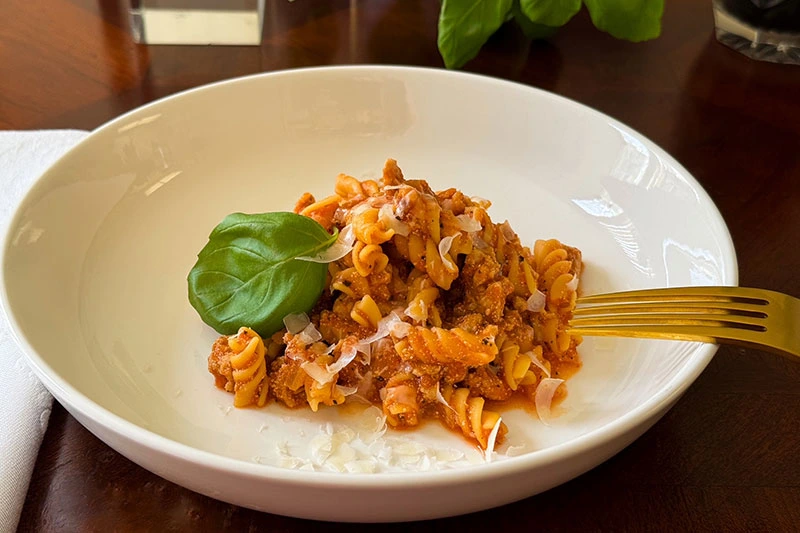
💰 ~$3–4/serving — chickpea pasta, cottage cheese, ground turkey, canned tomatoes 🥩 30g+ per serving ⭐ WW: 5–7 points
The most protein-per-dollar dinner on this site. Blended fat-free cottage cheese (under $4 for a container that makes four pasta sauces) combined with canned tomatoes (under $3 per can) and ground turkey (under $6 per pound) over chickpea pasta. Thirty grams of protein per serving for $3–4 per person. This is the budget weeknight dinner that proves eating well on a budget is not about sacrifice — it is about using inexpensive ingredients intelligently.
💡 Budget Tip: Buy ground turkey in a 1-pound package and use half for this recipe — refrigerate or freeze the second half for zucchini canoes or lettuce wraps later in the week. One pound of ground turkey becomes two dinners for two people.

🥬 Greek Turkey Zucchini Canoes
💰 ~$3–4/serving — ground turkey, zucchini, herbs, feta 🥩 28g+ per serving ⭐ WW: 3–5 points
One of the most points-per-dollar and flavor-per-dollar dinners on this site. Ground turkey (inexpensive), zucchini (seasonal and cheap), fresh herbs from the windowsill plant (practically free), and a small amount of feta and Greek yogurt for the filling. The visual presentation — individual stuffed zucchini boats — makes this look like a restaurant dish. The cost makes it an every-Tuesday dinner.
💡 Budget Tip: Grow a small herb plant — basil, thyme, parsley, or all three — on your kitchen windowsill. A $3–4 plant provides fresh herbs for months rather than spending $2–4 per bunch that wilts before you use it all.
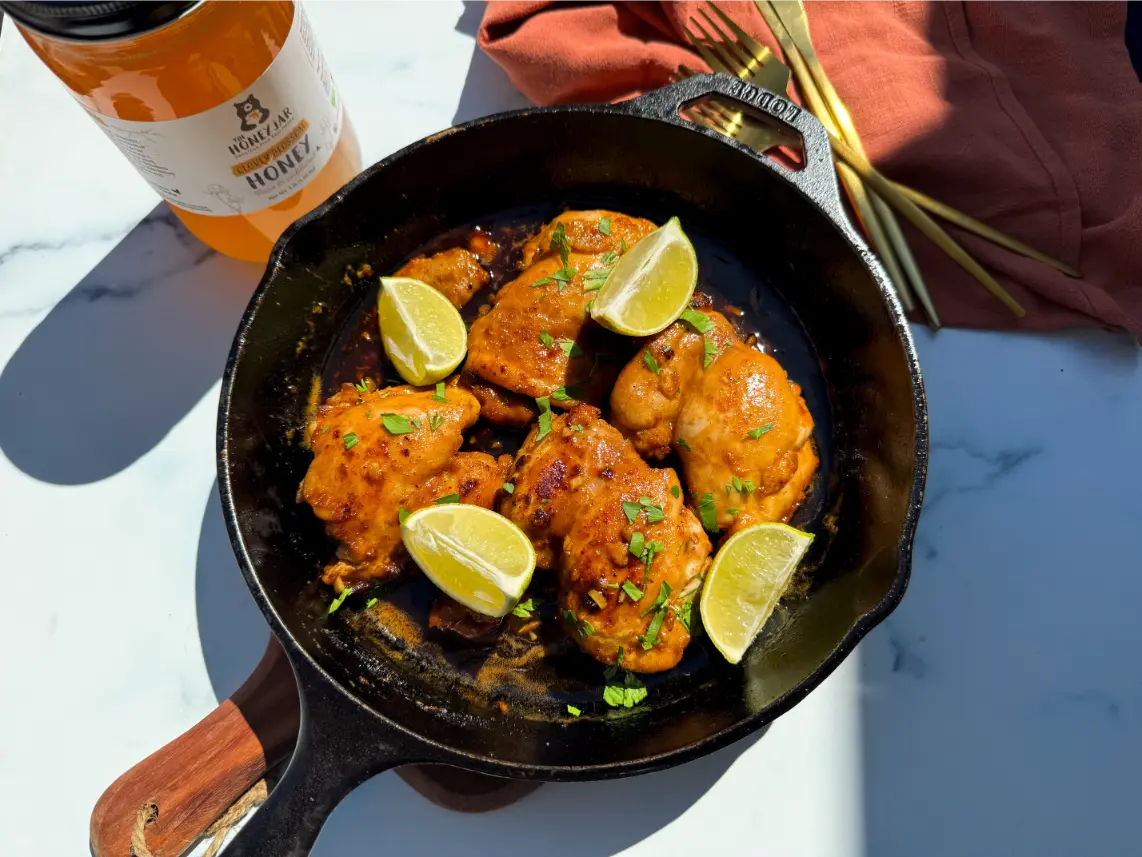
💰 ~$4–5/serving — chicken thighs, honey, pantry spices 🥩 28g+ per serving ⭐ WW: 4–6 points
The most flavor-per-dollar chicken dinner on this site. Boneless skinless chicken thighs — one of the most affordable cuts at any grocery store — glazed with honey, chili sauce, smoked paprika, and garlic. Restaurant-quality result for $4–5 per person. Chicken thighs are the budget cook’s best friend: more flavorful than breasts, harder to overcook, and consistently less expensive at the meat counter.
💡 Budget Tip: Buy chicken thighs in bulk (family pack) when on sale and freeze in two-thigh portions in individual zip-lock bags. Thaw overnight in the fridge. Family-pack pricing typically saves 25–35% versus individual packaging.
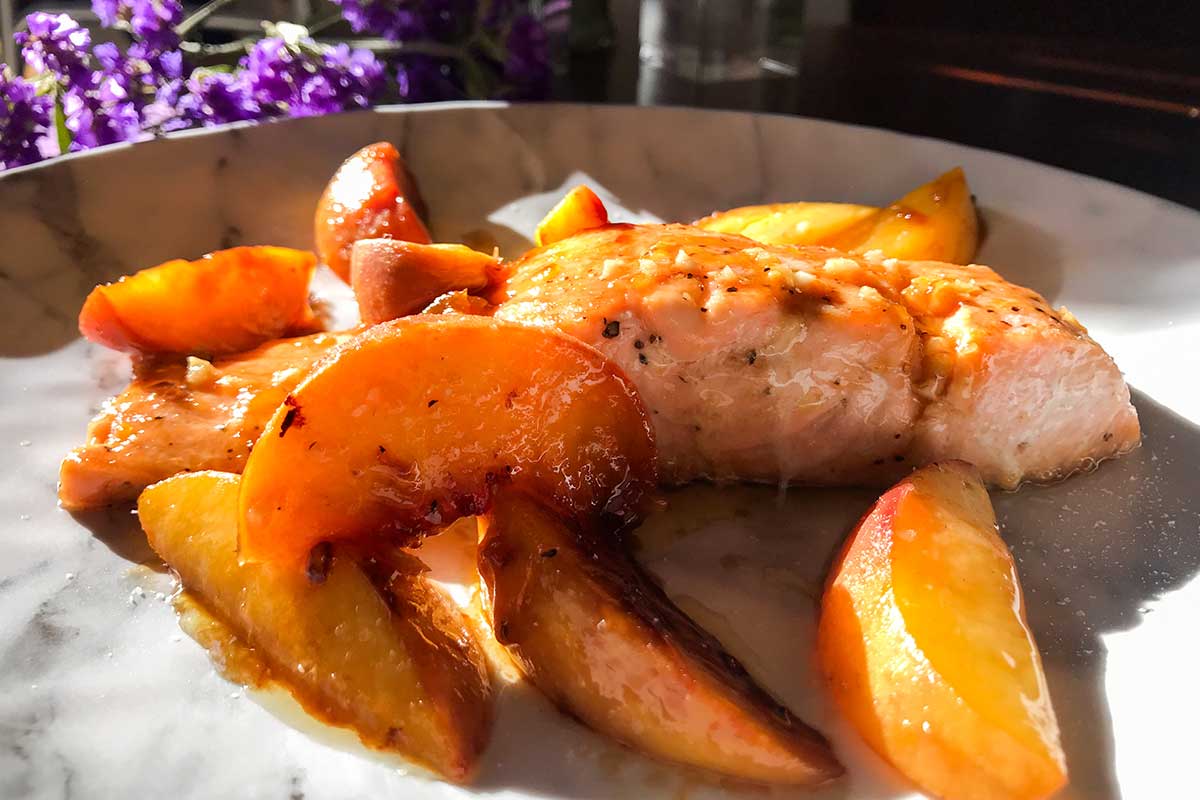
💰 ~$4–5/serving — chicken thighs, bourbon, soy sauce, honey, pantry spices 🥩 30g+ per serving ⭐ WW: 4–6 points
The WW-friendly recreation of the mall food-court classic — made at home for a fraction of the cost. Real bourbon (a tablespoon per recipe costs pennies from any bottle), low-sodium soy sauce, honey, garlic, and ginger over chicken thighs. Serve over steamed cauliflower rice (zero points, microwave in bag, under $3) for a complete dinner under $5 per person.
💡 Budget Tip: A bottle of inexpensive bourbon — even the well brand — produces hundreds of tablespoon-size servings for recipes at roughly $0.15 per tablespoon. It is one of the most cost-effective flavoring ingredients available for the depth it provides.
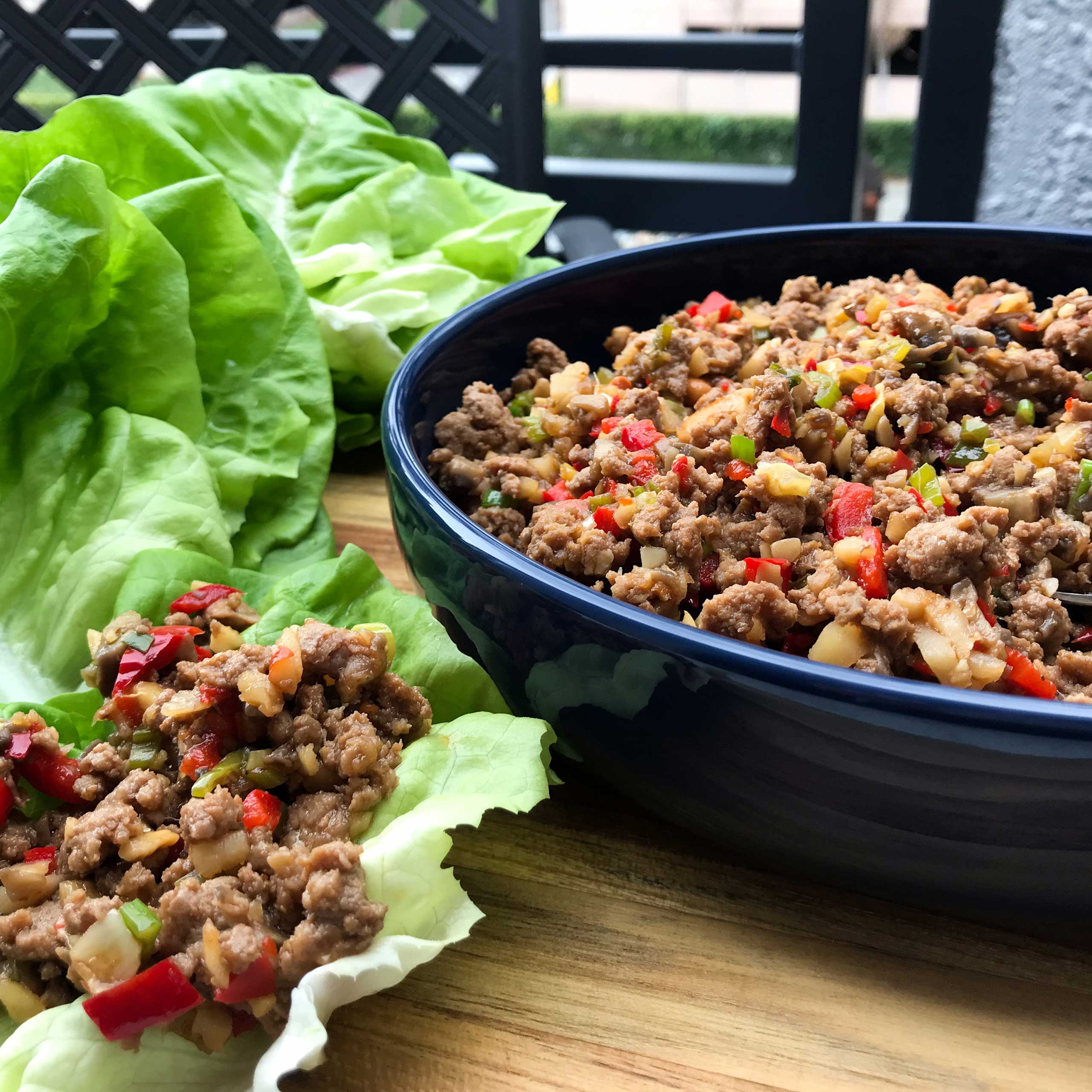
💰 ~$4–5/serving — ground turkey, mushrooms, water chestnuts, hoisin, butter lettuce 🥩 28g+ per serving ⭐ WW: 2–4 points
The dinner that proves ground turkey is one of the most budget-friendly high-protein ingredients available. A full package of ground turkey makes four servings of lettuce wrap filling — two dinners for two people — at $5–6 for the turkey plus a few dollars in pantry ingredients. The hoisin gives the filling bold flavor at minimal cost. The water chestnuts add crunch and volume. Butter lettuce leaves cost $2–3 for a whole head.
💡 Budget Tip: Make a double batch of the turkey filling and refrigerate the second half. Day two: serve in lettuce wraps as planned. Day three: reheat and serve over cauliflower rice as a completely different dish. One cooking session, three meals.
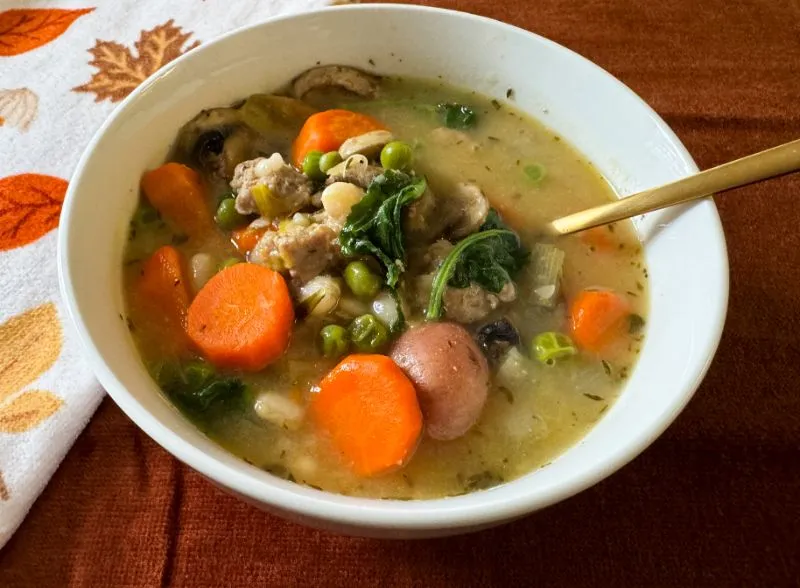
🥣 Cannellini Bean and Sausage Soup
💰 ~$4–5/serving — turkey sausage, dried beans, vegetables, broth 🥩 25g+ per serving ⭐ WW: 4–6 points
One of the best dollar-per-serving investments in this entire collection. Using dried cannellini beans (under $3 for enough for the full recipe) rather than canned multiplies the yield dramatically. One package of turkey sausage ($5–6) provides enough protein for the full recipe. The result: a rich, deeply flavored soup that serves 4–6 and costs $3–4 per serving — with enough to freeze several individual portions for future lunches at effectively zero additional cost.
💡 Budget Tip: Use dried beans rather than canned for maximum budget value — a pound of dried cannellini beans costs $2–3 and produces the equivalent of 5–6 cans of cooked beans. The extra hour of cooking time is almost entirely passive.

💰 ~$8–10/serving — sea scallops (6–8), olive oil, butter, dill 🥩 25g+ per serving ⭐ WW: 2–3 points
The biggest budget surprise in this collection. Sea scallops sound expensive — and at $20–25 per pound, they are not cheap. But two people need only 10–12 ounces for a full dinner — $12–15 at the fish counter. That is $6–8 per person for a dinner that looks and tastes like a $35 restaurant main course. The 15-minute cooking time means zero restaurant labor cost. The result: a dinner that costs as much as two fast food meals and tastes like a Michelin-starred restaurant. This is the core argument for cooking for two on a budget: the per-serving math always beats the restaurant alternative.
💡 Budget Tip: Specify ‘dry-packed’ scallops at the fish counter — wet-packed scallops contain sodium tripolyphosphate and release water during cooking, preventing a proper sear. Dry-packed may cost slightly more per pound but produce dramatically better results.

🐟 Salmon with Cherry Balsamic Sauce
💰 ~$8–10/serving — two salmon fillets, cherries, balsamic, honey 🥩 30g+ per serving ⭐ WW: 3–5 points
The clearest example of the cooking-for-two budget advantage. Two salmon fillets from the fish counter cost $12–16. The cherry balsamic sauce uses pantry ingredients (balsamic vinegar, honey) plus fresh or frozen cherries ($2–3). Total dinner cost: $15–20 for two people, or $8–10 per person. Equivalent restaurant dish: $28–40 per person. Same quality. Same plate. $20–50 in savings. This is why cooking for two at home is the most powerful budget move available.
💡 Budget Tip: Frozen cherries work perfectly in the balsamic sauce and are significantly less expensive than fresh — $3–4 for a bag that makes four batches of the sauce. The sauce itself can be made in advance and refrigerated for two days.

🥗 Apricot Chicken Salad with Dill
💰 ~$5–7/serving — rotisserie chicken, dried apricots, celery, almonds, Greek yogurt dressing 🥩 28g+ per serving ⭐ WW: 3–5 points
The rotisserie chicken planned-over lunch that delivers maximum value from Sunday’s $10 investment. A third of a rotisserie chicken — about 4 ounces of shredded meat per person — combined with dried apricots, celery, slivered almonds, fresh dill, and a Greek yogurt dressing. The rotisserie chicken cost is already sunk from Sunday prep. This salad adds $2–3 in ingredients for a complete, high-protein, genuinely delicious lunch for two. Cost per serving: $5–7 including the chicken allocation.
💡 Budget Tip: Dried apricots keep for months in the pantry and cost $4–5 for a bag that makes many batches of this salad. They are a budget pantry staple that adds sweetness, chewy texture, and iron to any salad.
Here is something that surprises most WW members: WW-friendly eating and budget eating are almost perfectly aligned. The foods that are lowest in WW points are almost always the least expensive at the grocery store. The foods that are highest in points are almost always the most expensive. This is not a coincidence — it reflects the underlying economics of food production.
| Food Category | WW Points | Budget Impact |
|---|---|---|
| Non-starchy vegetables | 0 points | Most affordable fresh food per serving |
| Eggs | 0 points | Cheapest protein per gram available |
| Fat-free cottage cheese | 0 points | One of cheapest dairy proteins available |
| Canned chickpeas/beans | 0 points (most plans) | Under $1 per serving of protein |
| Chicken thighs (boneless, skinless) | 0 points | Among cheapest meat proteins — $2–3/serving |
| Ground turkey | 0 points | $2–3/serving — budget protein staple |
| Full-fat cheese (large quantities) | 4–6 points per oz | Expensive — price matches points |
| Restaurant pasta with cream sauce | 12–18 points | Expensive — both in points and dollars |
| Takeout/delivery meals | Unpredictable, usually high | Most expensive food option available |
The practical implication: when you build meals around zero-point WW foods — chicken thighs, ground turkey, eggs, cottage cheese, beans, vegetables — you are simultaneously building around the most budget-friendly ingredients available. The WW Monday-through-Thursday clean eating framework that builds the weekly bank is the same framework that minimizes the weekly grocery bill. For the complete WW budget and points strategy, see the Cooking for Two on Weight Watchers guide. And let’s not forget some simple basics: scrambled eggs, a can of tuna, pasta, and beans will always be a fast, easy and inexpensive way to get a meal on the table. Use my recipes as a guide, but don’t shy away from the basics.
Sure, I’m cutting back on eating out (it just makes sense (cents$$$), but when I do eat out it is more special now and I really enjoy it and look forward to it. Meanwhile, my cooking has become more creative and I’ve taken it as a challenge to budget and still make delicious food. Hope you join me on this journey. Budgeting can be fun!!!!
According to the USDA Monthly Cost of Food Reports (January 2025, adjusted for current pricing), a realistic monthly grocery budget for two adults aged 20–50 ranges from approximately $580 (thrifty plan) to $895 (moderate plan) to $1,115 (liberal plan). The moderate plan — which most middle-income Americans follow — puts the benchmark at approximately $895/month for two adults, or about $225/week. Two-person households pay approximately 10% more per person than four-person households due to reduced bulk buying efficiency. If your current spending is above $1,000/month for two people and you are not eating exceptionally well, the grocery system in this post can meaningfully reduce that figure. If you are spending under $700/month for two people and eating high-protein, varied, satisfying food — you are already doing well.
The five highest-impact changes for two-person grocery budgets: First, buy proteins from the fish and meat counter in exact two-serving quantities rather than family packages — you buy only what you use and pay no more per pound. Second, apply the perishables-first sequencing rule — plan fresh protein and produce meals for Monday and Tuesday, pantry and freezer meals for Thursday and Friday — which eliminates the majority of produce waste. Third, stock a deep pantry of cheap flavor-drivers (canned tomatoes, dried beans, broth, spices) so a great dinner is always possible without a fresh grocery run. Fourth, use the planned-overs system — cook slightly more of a protein component and repurpose it into a completely different meal the next day. Fifth, buy a rotisserie chicken every Sunday and strip it for planned-over use through Tuesday — the best protein value at any grocery store. For the complete grocery system, see the Meal Planning for Two guide.
On a per-serving basis, no — and in many ways cooking for two is less expensive. The USDA estimates two-person households spend roughly 1.8x what one person spends (not 2x) due to shared bulk buying and more efficient meal planning. The per-meal cost of cooking for two with two-serving recipes and a strategic grocery approach is comparable to or lower than per-person family cooking. The advantages of two-person cooking that offset the loss of bulk pricing: significantly less food waste (proportionally the biggest food cost for any household), naturally portioned meals with no leftover excess, and the ability to buy higher-quality smaller quantities at the same budget percentage — two premium salmon fillets cost less than salmon for six people.
The cheapest high-protein meals for two — by protein cost per serving — are: eggs in any preparation (18–24g protein for $1–2 per serving, the cheapest protein available), canned chickpeas or white beans over greens with olive oil and herbs (14g protein for $1–2 per serving), ground turkey dishes like Turkey Lettuce Wraps or Greek Turkey Zucchini Canoes ($2.50–3 per serving for 28g+ protein), High-Protein Pasta with cottage cheese tomato sauce and ground turkey ($3–4 per serving for 30g protein), and rotisserie chicken planned-overs like the Apricot Chicken Salad with Dill ($3–4 per serving when the chicken cost is amortized across multiple meals). The consistent budget principle: eggs, legumes, ground turkey, and cottage cheese are the highest-protein, lowest-cost ingredients available and should anchor a budget-conscious two-person weekly meal plan.
Food waste is the largest hidden cost in any two-person grocery budget. The three highest-impact waste-prevention strategies: First, the perishables-first rule — always use fresh fish, delicate greens, and tender herbs in the first two days of the week; save pantry and freezer ingredients for later. Second, the planned-overs system — deliberately cook slightly more of any protein component and repurpose it into a completely different lunch or dinner the next day, so every cooking session produces two or more meals. Third, the salad bar rule — for specialty ingredients you only need small amounts of, buy from the grocery store salad bar at per-pound pricing rather than buying full packages that you will only use partially. For the complete waste-reduction framework, see the Complete Guide to Cooking for Two.
Yes, even accounting for time — and by a wider margin than most people calculate. The time cost of cooking a typical weeknight dinner at home for two (using the recipes in this collection) is 20–30 minutes of active work. At a household income of $75,000/year, that time costs approximately $6–9 in hourly value. The dinner itself costs $6–16 in ingredients. Total ‘true cost’ including time: $12–25 for two people. A food delivery order for two people: $35–60 including delivery fee and tip, plus 30–45 minutes of waiting during which you are not productively using your time either. The home-cooked dinner costs less money and less total time. The perception that delivery is faster is largely based on the active cooking time comparison, which ignores the ordering, waiting, and delivery window. A 30-minute home-cooked dinner from a prepped kitchen is genuinely faster than most delivery orders — and costs half as much. The skill that makes home cooking time-competitive: Sunday prep (described in the Meal Planning for Two guide), which moves the prep work to a day when it does not compete with weeknight obligations.
The most effective approach is not the financial argument — even though the savings are real and significant. It is the quality argument. The reason most people prefer restaurants to home cooking is not the food — it is the experience and the perception of quality. Home cooking has a quality ceiling in most people’s minds that restaurant cooking does not. The way to raise that ceiling: cook two or three genuinely extraordinary dinners at home in a row. The Cast Iron Scallops that arrive in 15 minutes. The Salmon with Cherry Balsamic Sauce that looks like a restaurant plate. The Lollipop Lamb Chops that earn a genuinely astonished reaction. Once your partner’s baseline expectation of home cooking shifts — from ‘functional and cheaper’ to ‘actually exceptional’ — the preference calculus changes. The financial argument becomes persuasive because the quality argument is already won. Start with the most impressive recipe in the collection for your partner’s taste preferences. Make it on a Saturday when there is no time pressure. And let the food make the case.
Yes — with some adjustments. I cook in Southern California, which has some of the highest grocery prices in the continental United States. Here is what the budget strategies look like in a high-cost market: proteins cost more, so the buying-from-the-counter strategy becomes even more important — you do not want to over-buy. Produce costs more, so frozen vegetables become more valuable — frozen edamame, peas, corn, and broccoli are nutritionally equivalent to fresh, cost significantly less, and produce zero waste. Ethnic grocery stores (Hispanic markets, Asian markets, Middle Eastern markets) almost universally have dramatically lower prices on produce, legumes, and many proteins than conventional chain grocers — this is the single biggest budget lever available in expensive urban markets. The per-serving cost calculations in this post are based on Southern California prices, so if you are in a lower-cost market, your numbers will be better than the ones cited here. The system works everywhere — it works in the market where it was developed.
I have been cooking for two in Southern California for over a decade, and the consistent truth I have learned about food budgets is this: the savings are not in buying worse food. They are in wasting less, planning better, and understanding the actual cost comparison between home cooking and the alternatives. Is food more expensive out here vs. my time in Iowa? You bet it is…almost double. OUCH! But, I’ve gotten so much better at planning and shopping. You can too.
The math is unambiguous. Two people who cook at home five nights per week — using the recipes in this collection, the grocery system above, and the planned-overs approach — spend $15,000–20,000 less per year on food than two people who rely primarily on delivery and restaurants. That is not a rounding error. That is a life-changing amount of money recovered from a single habit change.
The recipes on this site are not cheap food. They are genuinely excellent food that happens to cost $3–10 per person when made at home. That combination — extraordinary quality at home prices — is the entire point of cooking for two well.
For the complete two-person cooking framework: Complete Guide to Cooking for Two. For the meal planning system that makes this budget approach automatic: Meal Planning for Two. For the WW integration: Cooking for Two on Weight Watchers. For quick weeknight budget dinners: 30-Minute Dinners for Two.

Hi! I’m Diane. I started this site as a passion project. I love to cook, entertain, travel and laugh. (Who doesn’t love a good laugh?) Of course, being from New York, sarcasm rules!
More About Diane
mycuratedtastes@gmail.com