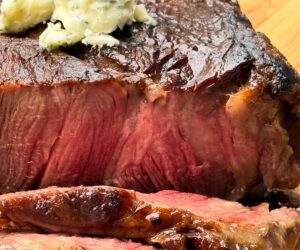
Reverse Seared Ribsteak With Herb Butter
Can I make truffle fries without truffle oil?
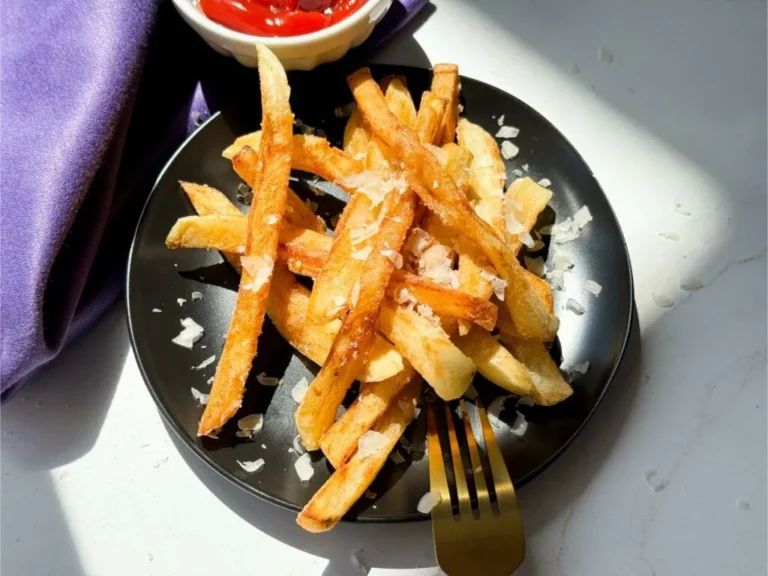
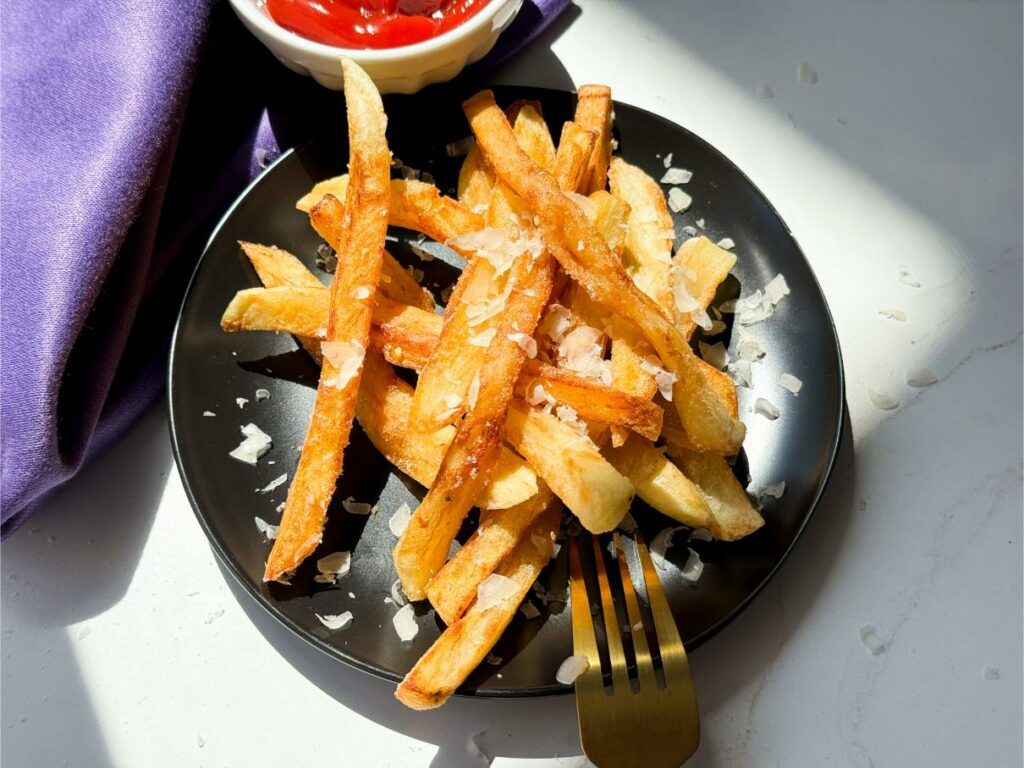
Yes — and honestly, you should. Most truffle oils are made with synthetic truffle flavoring, which is why professional chefs so often criticize them for being harsh and artificial-tasting. A better option is a truffle-infused dry seasoning, like the Shawhan Farms Parmesan Inspirations Truffle Seasoning used in this recipe. It delivers a subtle, nuanced truffle flavor without the overpowering quality that truffle oil is notorious for. If you want the real deal, fresh shaved black or white truffles can be grated directly over hot fries — but at $150–$300 per ounce, that’s a splurge worth saving for a special occasion.
Why do you soak potatoes before frying, and can I skip it?
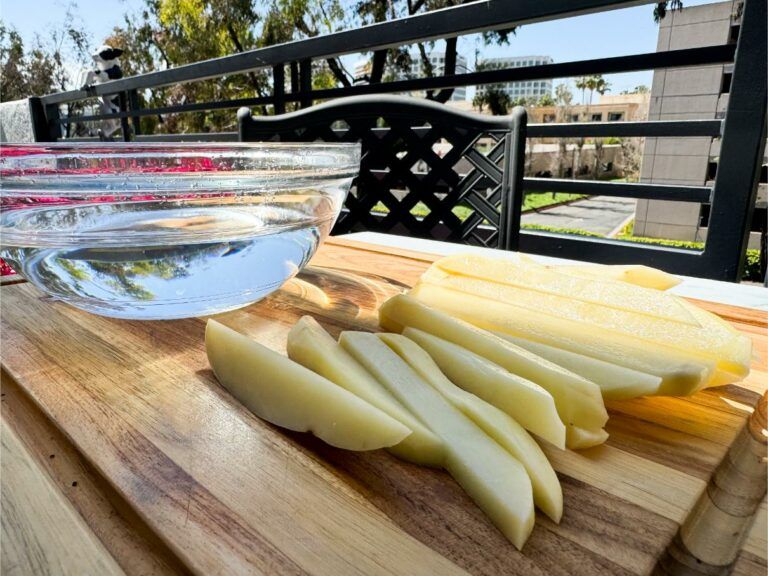
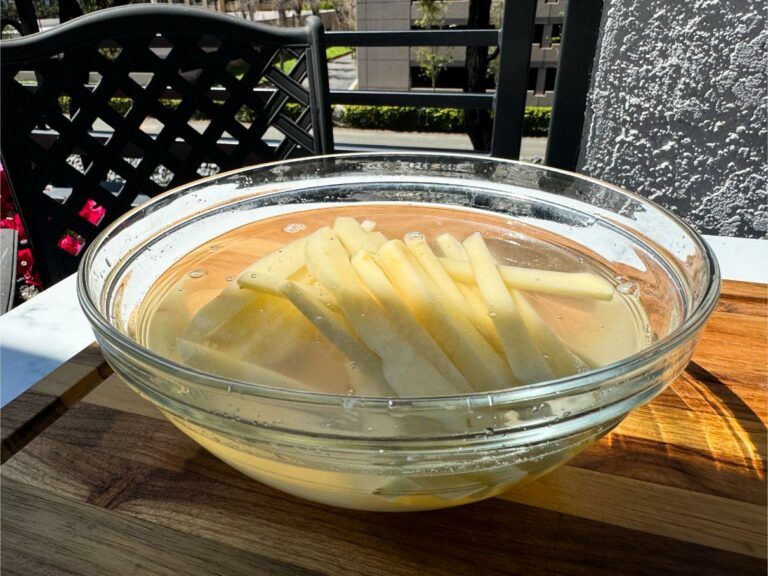
Soaking is not optional if you want truly crispy fries. Raw potatoes are packed with surface starch, and when that starch hits hot oil, it creates a gummy coating that prevents the exterior from crisping properly. Soaking in cold water for at least one hour — or up to 24 hours in the fridge — draws out that excess starch, resulting in fries with a shatteringly crisp shell and a fluffy interior. Skipping this step is the number one reason homemade fries turn out soft and disappointing.
What’s the difference between the first and second fry in the double-fry method?
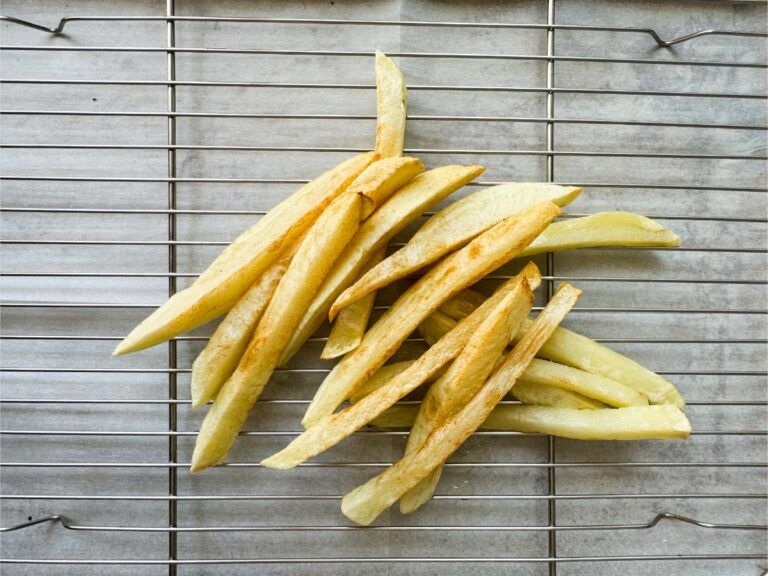
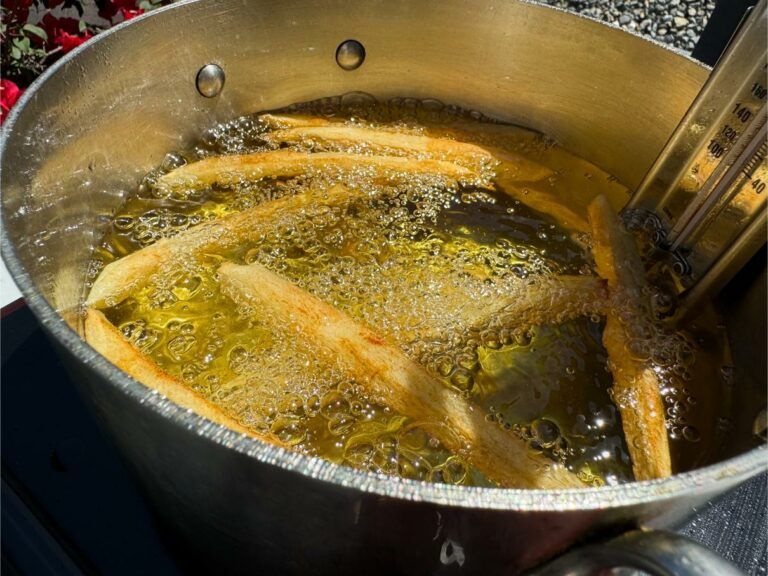
The two fries serve completely different purposes. The first fry at 320–330°F cooks the potato all the way through without browning it — you’re essentially par-cooking the interior. The second fry at 350°F is what creates the golden, crispy crust. Because the potato is already cooked through, the high heat can focus entirely on dehydrating and crisping the outside. Attempting to do this in a single fry forces you to choose between a raw center and a burnt exterior. The double fry eliminates that tradeoff entirely.
How do you keep truffle fries crispy if you’re making a large batch?
The enemy of crispy fries is steam. If you pile hot fries into a bowl or onto a flat plate, steam gets trapped underneath and makes them soggy within minutes. Instead, place finished fries on a wire rack set over a baking sheet and hold them in a 200°F oven. The rack allows air to circulate on all sides, keeping them crisp for up to 20 minutes. Season them immediately after the second fry — salt and seasoning adhere best to hot fries — and serve as soon as the full batch is done. I use this method even when I’m making a serving for two since it usually takes me two batches to serve two people.
What type of potato makes the best truffle fries, and does the size matter?
Russet potatoes are the gold standard for French fries. Their high starch content and low moisture make them ideal for deep frying — they crisp up beautifully on the outside while staying light and fluffy inside. Waxy potatoes like red or Yukon Gold hold too much moisture and tend to turn out dense and chewy when fried. As for size, consistency matters more than exact dimensions. Cutting your fries to a uniform 1/3-inch thickness ensures they all cook at the same rate. Thinner cuts yield crispier, faster-cooking fries; thicker cuts give you a heartier, steakhouse-style fry — just adjust your fry times accordingly.
Add Us As A Trusted Google Source