Add Us As A Trusted Google Source
 Cottage Cheese Recipes — High-Protein, Low-Point, Surprisingly Delicious
»

Quick Summary — What You Will Find in This Post
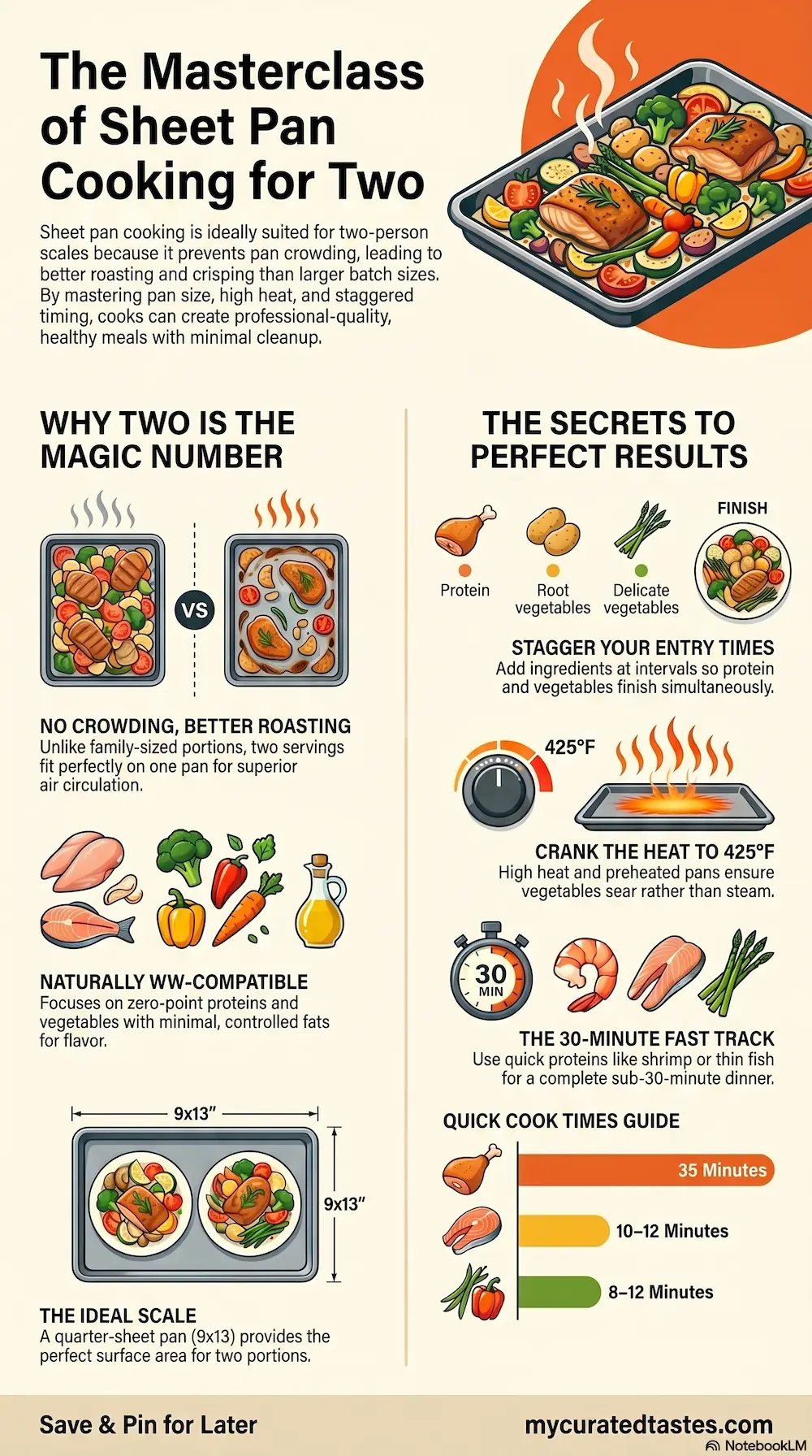
The complete guide to sheet pan dinners sized for two people — not a generic list of recipes that serve six, but a genuine small-scale approach to one of the most efficient cooking methods available. Here is what makes this post different from other sheet pan collections on line. Every recipe and every technique is sized for exactly two people — using the right pan, the right quantities, the right timing
I want to make an argument that sheet pan cooking is not just convenient — it is the ideal cooking method for two people, and for reasons that go well beyond easy cleanup.
Think about the fundamental challenge of cooking for two: you almost always have exactly two portions of protein to cook, a handful of vegetables to roast, and a complete dinner to produce with minimal effort on a Tuesday night when neither of you has the time or energy for anything complicated. A sheet pan solves every element of that equation. Two chicken thighs fit perfectly on a half-sheet pan with their accompanying vegetables. Two fish fillets cook beautifully on a lined quarter-sheet pan. The oven does the work. You get to be somewhere else in the house for 25 minutes.
The large-batch problem that plagues sheet pan cooking for families — the pan is too crowded, the vegetables steam instead of roast, nothing gets crispy — simply does not exist when you are cooking for two. At two-person scale, you have exactly the right amount of food for the pan. Nothing crowds. Everything roasts. Every corner of the pan gets heat. This is why I argue, without reservation, that sheet pan cooking is better for two people than for any other household size.
For the complete guide to cooking at two-person scale — including pan size decisions, scaling math, and timing adjustments — visit the Complete Guide to Cooking for Two. For the WW-friendly approach to sheet pan cooking, see the WW-Friendly Recipes Guide. And for the meal planning framework that incorporates sheet pan dinners into a structured weekly plan, see the Meal Planning for Two guide.
Every sheet pan dinner failure I have ever had — and I have had them — comes from violating one of these seven rules. Every sheet pan dinner success comes from following them. These are not suggestions. They are the technique fundamentals that the major food sites bury in the middle of recipe notes, if they mention them at all. That’s why I put them right upfront…get these quick tips down pat, and you’ll have successful recipes every time!
Rule 1: Use the Right Size Pan
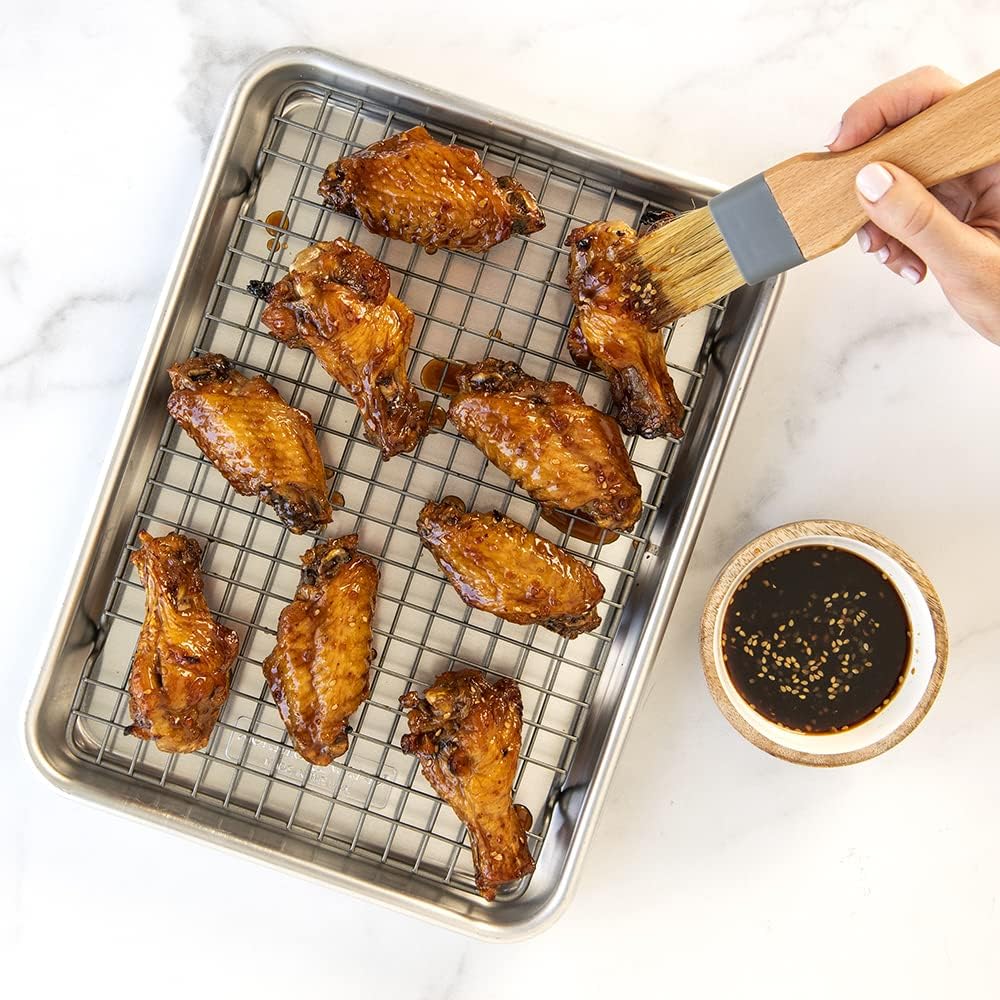
For two people, the quarter-sheet pan (9×13 inches) is your primary sheet pan dinner vessel — not the large half-sheet pan (18×13 inches) that most recipes are written for. A half-sheet pan with two chicken thighs and a handful of vegetables has too much empty space, which causes uneven cooking and less caramelization. The quarter-sheet pan fits two portions of protein with their vegetables snugly, promotes the Maillard reaction across the entire surface, and produces the crispiness and browning that makes sheet pan dinners worth making. (I wasn’t trying to impress you with “Maillard reaction” but there is an actual reason for rule #1…lol) Invest in two quarter-sheet pans (one rimmed, one flat) and a half-sheet pan for larger batches or the recipes specifically designed for it. Line with aluminum foil for easy cleanup. I also like to invest in pans that come with racks (so great for all kinds of recipes).
Rule 2: Preheat the Pan — Not Just the Oven
This is the single most underused technique in sheet pan cooking and the biggest difference between vegetables that roast and vegetables that steam. Put your sheet pan in the oven while it preheats. When your food goes onto a screaming hot pan rather than a room-temperature one, it begins cooking immediately from the bottom — creating a sear on the underside that a cold pan never achieves. This is especially important for vegetables (browned undersides rather than pale and soft) and fish (a slight crust on the bottom rather than sticking and tearing). Add 5 minutes to your preheat time and put the pan in at the start.
This is how I handle “oven frying”. If you eliminate deep frying in oil, and move to “oven frying”, this one tip is a game-changer! When your pan is screaming hot, you can spray it with cooking spray or brush it with olive oil to brown up or “fry” the bottom side of your food.
Rule 3: Never Crowd the Pan
Crowding is the death of sheet pan cooking. When food is touching or overlapping, steam cannot escape — and instead of roasting in dry heat, your food steams in its own moisture. The practical test: every piece of food should have at least half an inch of space around it. For two people with a quarter-sheet pan, this is almost automatic. The danger zone is when you try to add more vegetables than the pan can hold — better to leave some out or use a second pan than to crowd everything in and lose the roast. Since we love our veggies around here, two sheet pans often wins!
Rule 4: Stagger Cooking Times — Not Everything Goes In Together
The most common sheet pan dinner mistake: putting everything in at the same time. A chicken thigh takes 35–40 minutes. Cherry tomatoes take 12 minutes. If they go in together, the tomatoes are mush before the chicken is cooked. The rule: start the longest-cooking item first, then add subsequent items at the right interval so everything finishes simultaneously. The Cooking Time Matrix below gives you the exact timing for every common sheet pan ingredient. Once you understand the staggering principle, you will never have undercooked protein or overcooked vegetables again. You are still using one pan, you are just working on your timing.
Rule 5: Pat Proteins Completely Dry Before Roasting
Moisture on the surface of protein is the enemy of browning. Water must evaporate before the Maillard reaction — the browning process that creates flavor — can begin. Every minute your oven spends evaporating surface moisture is a minute it is not browning your food. Pat chicken, fish, and any other protein completely dry with paper towels immediately before it goes on the pan. This single step produces dramatically better results and requires no additional ingredients or effort.
Rule 6: Use High Heat — Higher Than You Think
Most sheet pan dinner recipes call for 400°F–425°F. I typically run at 425°F–450°F for two-person sheet pan cooking. The higher heat produces better caramelization, faster rendering of fat from poultry skin (if using bone-in cuts), and more dramatic color on vegetables. The concern that high heat will burn your food is largely unfounded with proper timing — food that has space on the pan and is properly dried browns beautifully at 425°F+ in the same time a crowded, wet pan takes at 375°F. The only exceptions: fish, which cooks at 400°F to avoid drying, and sheet pan desserts. REMEMBER: every oven is different, so you may have to”play” a little. Don’t be frightened LOL…you’ve got this!
Rule 7: Rest the Protein Before Serving
The same three-minute resting rule that applies to pan-seared proteins applies equally to sheet pan proteins. Remove the pan from the oven, tent the protein loosely with foil, and let it rest for three minutes before serving. This allows juices to redistribute rather than running out when you cut. The vegetables do not need to rest — serve them directly from the pan while the protein rests. The three minutes also gives you time to plate, pour drinks, and be seated when the protein is ready.
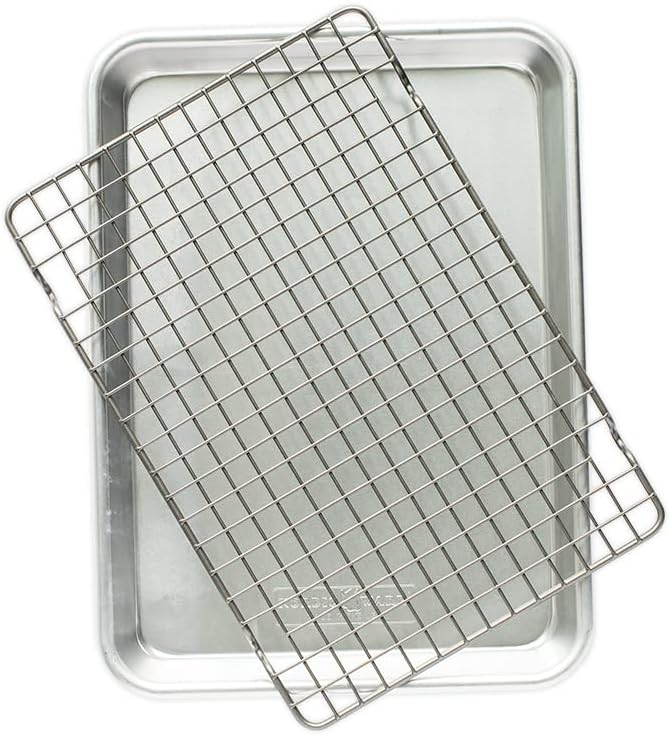
The pan you use determines the outcome as much as the recipe. Here is the complete equipment guide for two-person sheet pan cooking:
| Pan | Best For | Why |
|---|---|---|
| Quarter-sheet pan (9×13) — rimmed | Almost all two-person sheet pan dinners | Perfect size for 2 portions — nothing crowds, everything roasts |
| Half-sheet pan (18×13) — rimmed | Larger vegetables, recipes designed for it, meal prep | Standard size — don’t use for 2 small portions |
| Quarter-sheet pan with wire rack | Chicken thighs, fish, anything you want crispy underneath | Elevated rack allows air circulation under protein for all-over crispiness |
| Nordic Ware or USA Pan brand | Any sheet pan application | Heavy-gauge aluminum — heats evenly, doesn’t warp at high temperatures |
| Nonstick coating | Avoid for high-heat roasting | Nonstick degrades above 450°F and prevents proper browning |
| Aluminum foil lining | Every sheet pan dinner | 30-second cleanup. Always line. No exceptions. |
| Parchment paper lining | Fish and delicate items | Less heat-resistant than foil — use below 425°F only |
This is the reference table I use every time I build a sheet pan dinner without a recipe. All times assume oven preheated to 425°F with pan preheated inside. Fish times assume 400°F.
| Ingredient | Approximate Time at 425°F | When to Add (if chicken takes 35 min) |
|---|---|---|
| Bone-in chicken thighs | 35–40 minutes | Start — add at minute 0 |
| Boneless skinless chicken thighs | 25–30 minutes | Add at minute 10 |
| Boneless skinless chicken breast | 20–25 minutes | Add at minute 15 |
| Salmon fillet (1 inch thick) | 12–15 min at 400°F | Add at minute 25 |
| Cod/tilapia fillet | 10–12 min at 400°F | Add at minute 28 |
| Large shrimp (peeled) | 6–8 minutes | Add at minute 30 |
| Baby potatoes (halved) | 30–35 minutes | Start — add at minute 0 |
| Large potato cubes (1 inch) | 25–30 minutes | Add at minute 5 |
| Broccoli or cauliflower florets | 20–25 minutes | Add at minute 15 |
| Asparagus (medium stalks) | 12–15 minutes | Add at minute 22 |
| Cherry tomatoes | 12–15 minutes | Add at minute 22 |
| Zucchini (1/2 inch rounds) | 15–18 minutes | Add at minute 18 |
| Bell pepper strips | 20–25 minutes | Add at minute 12 |
| Red onion (wedges) | 25–30 minutes | Add at minute 5 |
| Brussels sprouts (halved) | 25–30 minutes | Add at minute 5 |
| Green beans | 15–18 minutes | Add at minute 18 |
| Thin asparagus | 8–10 minutes | Add at minute 27 |
Note: Times are approximations based on standard oven temperature. Actual timing varies by oven, pan material, and ingredient size. Always verify protein doneness with an instant-read thermometer: chicken to 165°F, fish to 145°F (or until it flakes). YES, invest in a thermometer. They aren’t expensive and you’ll be a much better cook if you watch your temperatures!
This is the framework that makes you independent of recipes for weeknight sheet pan cooking. Once you understand it, you can make a different sheet pan dinner every night of the week using whatever protein and vegetables you have on hand. Honestly, this is such a fast and easy approach to healthy cooking and a Weight Watcher’s dream formula. If you master this, you’ll be able to cook anything, anytime without me! (Geez, I hope I didn’t just lose you as a reader? LOL)
The 5-Step Sheet Pan Formula for Two
Step 1: Choose your protein. One type, two portions. Bone-in chicken thighs, boneless chicken breasts, salmon fillets, cod, tilapia, shrimp, or any lean protein that roasts well.
Step 2: Choose your vegetables. One to three types, selected by cooking time proximity. Use the matrix above — choose vegetables that finish within 5 minutes of each other or add them at staggered times.
Step 3: Choose your flavor profile. Mediterranean (olive oil, garlic, lemon, oregano, cherry tomatoes). Persian (pomegranate molasses, cumin, walnuts). Asian (soy, ginger, sesame, scallion). Italian (marinara, basil, Parmesan). Southern California (citrus, chili, avocado). The protein and vegetables stay the same; the seasonings change everything.
Step 4: Apply the technique. Preheat oven to 425°F (400°F for fish) with pan inside. Pat protein dry. Season everything. Place protein on the preheated pan, add vegetables at the staggered times from the matrix. Do not crowd. Do not open the oven unnecessarily.
Step 5: Finish and rest. When the protein reaches safe internal temperature, pull from the oven. Rest the protein 3 minutes under loose foil. Serve directly from the pan.
Sheet pan cooking is one of the most naturally WW-compatible cooking methods available, for reasons that go beyond the obvious ‘less oil’ argument:
For the full WW points bank strategy that integrates sheet pan Thursday with the rest of the week, see the WW-Friendly Meal Plan for Two — 7 Days. For all WW-friendly recipes on this site, see the WW-Friendly Recipes Guide.
Every recipe below is from My Curated Tastes, sized for two servings, and tested for the two-person sheet pan approach described in this guide. This collection is actively growing — check back as new recipes are added.
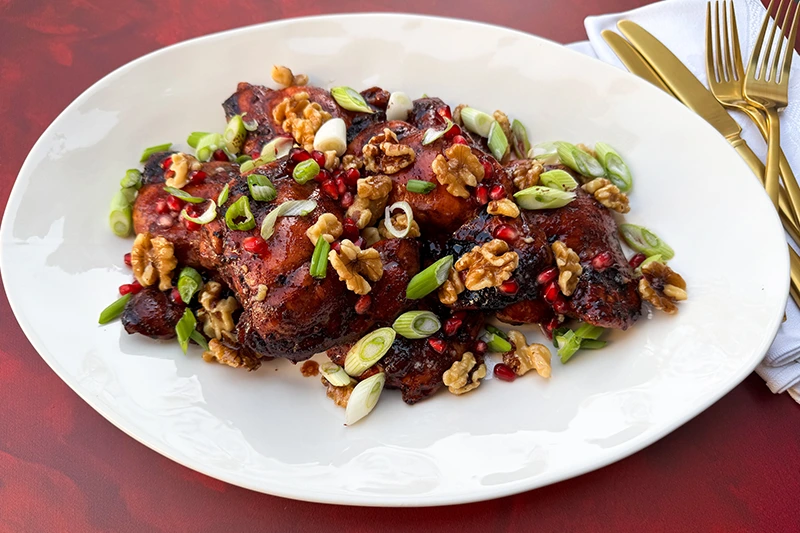
🍗 Sheet Pan Chicken Thighs with Pomegranate and Walnuts
⏱ 45 minutes (mostly hands-off) 🥩 30g+ per serving ⭐ WW: 5–7 points — the glaze is where the points live
The flagship sheet pan dinner on this site — and the recipe that best demonstrates why sheet pan cooking for two is better than sheet pan cooking for a crowd. Chicken thighs glazed with a deep, complex pomegranate molasses and balsamic sauce (with a secret: grenadine syrup, the same ingredient in a Shirley Temple, which is made from pomegranates), roasted until the glaze caramelizes into a burnished, sticky-glossy coating that looks extraordinary on the plate. Scattered with toasted walnuts and fresh pomegranate seeds at serving. Persian-inspired, visually stunning, almost entirely hands-off. The sauce can be made up to 3 days in advance — the chicken can marinate overnight. On the night itself, this is a 5-minute prep, 40-minute oven dinner.
💡 Sheet Pan Tip: Marinate the chicken in a few tablespoons of the sauce overnight in the fridge — the acid and sweetness of the pomegranate penetrates deeply, producing dramatically more flavor than a same-day glaze. Reduce the remaining sauce on the stovetop before roasting for a thicker finish.
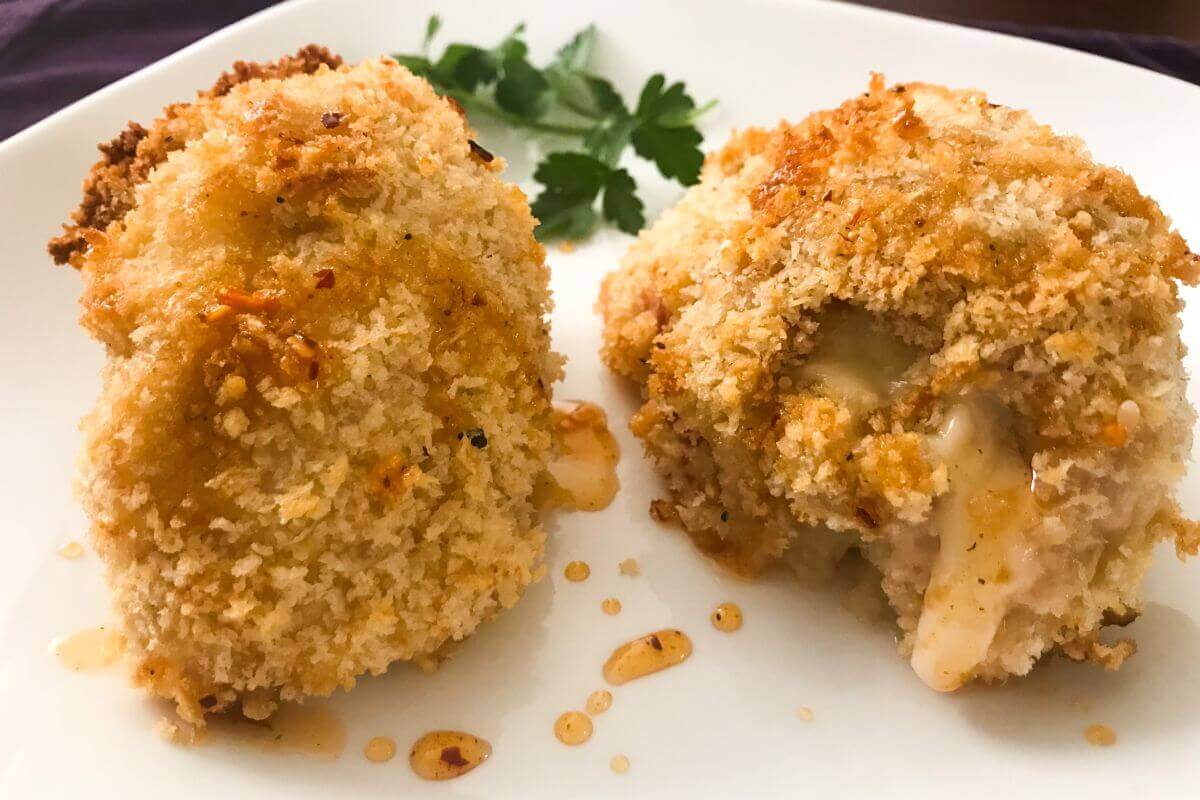
🍗 Panko Crusted Stuffed Chicken Thighs with Hot Honey
⏱ 45 minutes (assemble ahead) 🥩 35g+ per serving ⭐ WW: 7–9 points — the showstopper sheet pan
The most impressive-looking sheet pan chicken dinner on this site — and one that proves sheet pan cooking is not only for casual weeknights. Chicken thighs stuffed with ham and fontina cheese, breaded in a panko crust, baked on a sheet pan until golden and shatteringly crispy, then drizzled with a homemade hot honey at the table. The make-ahead advantage: assemble and bread the stuffed thighs up to 2 hours in advance, refrigerate on the sheet pan, and bake when ready. The 15-minute chill after breading is the technique secret that makes the panko adhere perfectly rather than sliding off during roasting. Use a wire rack over the sheet pan for all-over crispiness.
💡 Sheet Pan Tip: Preheat the sheet pan and rack in the oven before placing the breaded chicken on it — the immediate bottom heat is what seals the panko against the chicken and produces the shatteringly crispy result. A cold pan produces a soft, pale bottom.
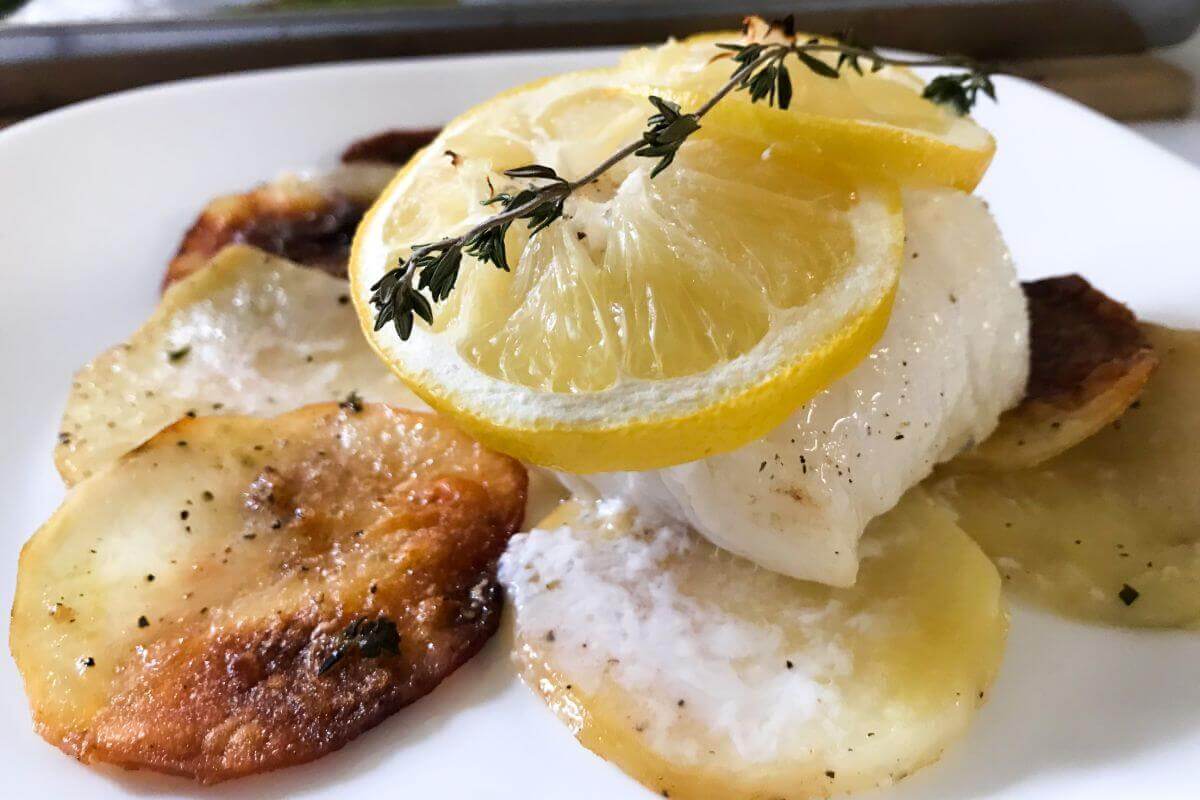
🐟 Sheet Pan Lemon Cod on Crispy Garlic Potatoes with Asparagus
⏱ 55 minutes total (35 min potato + 12-15 min fish) 🥩 28g+ per serving ⭐ WW: 4–6 points
The most elegant sheet pan fish dinner for two on this site — and the one that demonstrates the staggered timing principle most clearly. Potato slices shingled in two overlapping rows, roasted in butter, garlic, and fresh thyme until deeply golden and crispy. Then the cod fillet goes directly on top of the potato base, with a pat of butter and lemon slices laid over the fish, and the asparagus goes alongside — everything finishing simultaneously in the final 12–15 minutes. The presentation when this comes out of the oven is genuinely restaurant-worthy: the fish sitting elevated on its crispy potato pedestal, the asparagus alongside, the butter and lemon having created a simple basting sauce in the final minutes. I’ve made this with halibut, tilapia, and salmon with equally excellent results — use whatever is freshest.
💡 Sheet Pan Tip: The potato base is the soul of this recipe — take the full 25–35 minutes to get them genuinely golden before the fish goes on. Pale, under-roasted potatoes make the whole dish fall flat. Rotate the pan halfway through the potato roasting for even color.
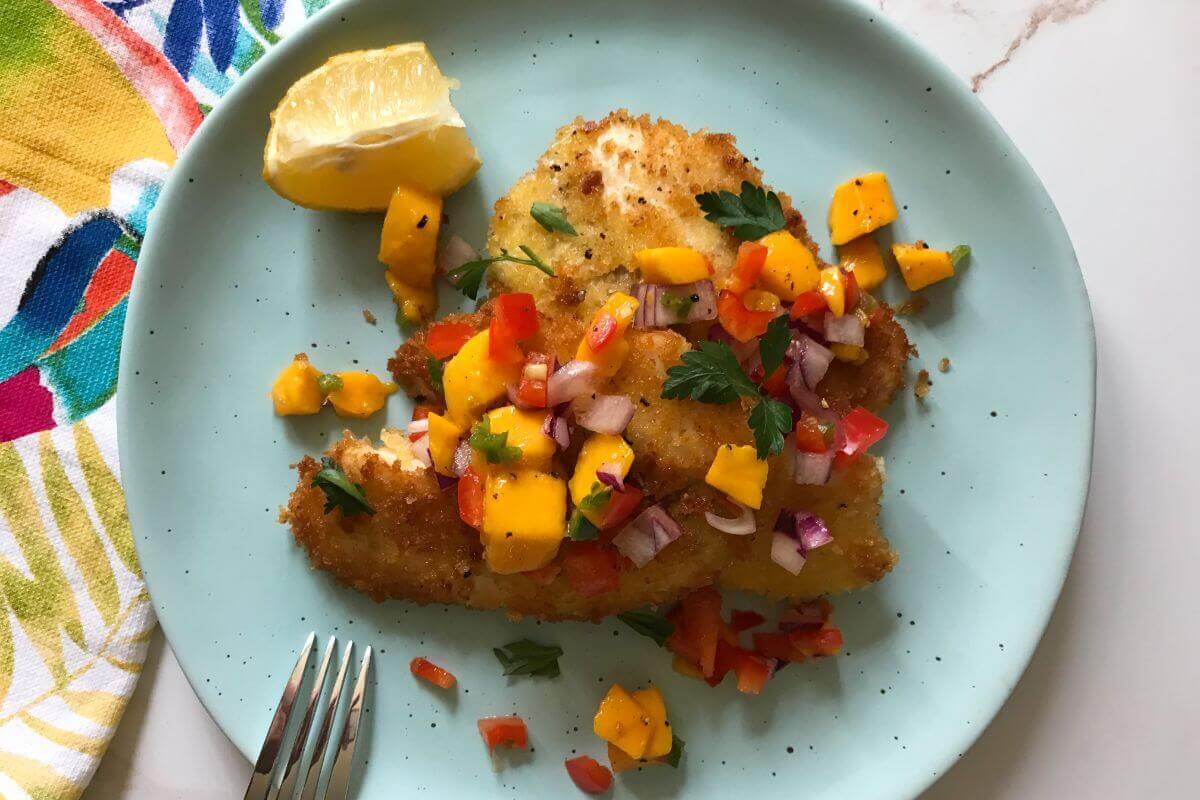
🐟 Crispy Tilapia with Mango Salsa
⏱ 25 minutes total 🥩 28g+ per serving ⭐ WW: 4–6 points
The fastest sheet pan fish dinner in this collection — and the most vibrant. A light coating of panko-seasoned breadcrumbs on tilapia fillets, baked on a preheated sheet pan at 425°F until crispy and golden, then topped at serving with a fresh mango salsa of diced mango, red onion, jalapeño, cilantro, and lime. The panko crust goes genuinely crispy in the oven — no frying, no oil splatter, no standing at the stove. Make the mango salsa up to a few hours in advance (it improves as it sits and the flavors meld) and the actual sheet pan work is about 25 minutes from start to table. The finished plate — golden crispy fish topped with jewel-bright mango salsa — looks like dinner at a California coastal restaurant.
💡 Sheet Pan Tip: A preheated sheet pan is essential for crispy panko without frying — the immediate bottom heat from a hot pan seals the crust before moisture can escape and soften it. Give the pan a full 5 minutes in the preheated oven before placing the fish.
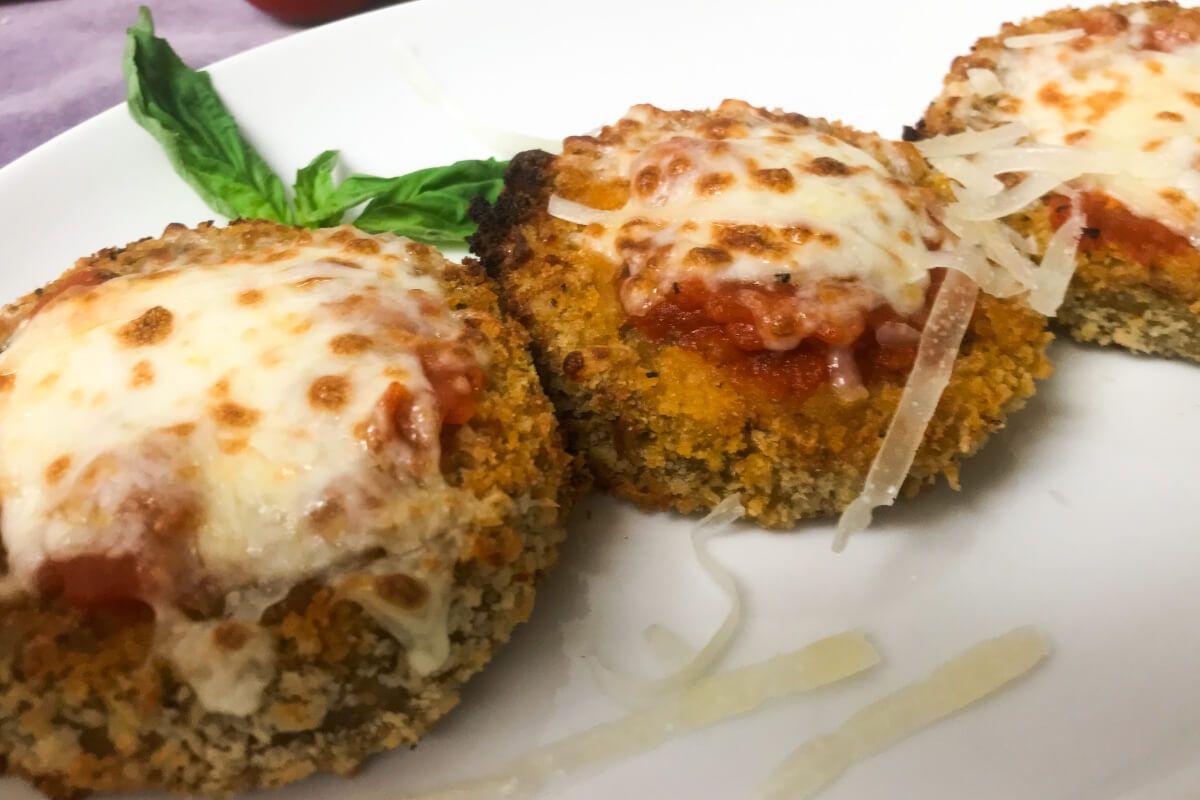
🍆 Crispy Eggplant Parmesan Slices for Two
⏱ 60 minutes (mostly hands-off oven time) 🥩 12g per serving (vegetarian) ⭐ WW: 7–10 points
The vegetarian sheet pan dinner that converts meat eaters — and the recipe that proves the preheated sheet pan technique most dramatically. Thick eggplant slices salted to remove bitterness, pressed dry, then coated in a seasoned panko-breadcrumb mixture and roasted on a preheated sheet pan at high heat until the crust is genuinely, shatteringly crispy — without a drop of frying oil. Each slice is then finished individually under the broiler with marinara, Pecorino, and fresh mozzarella so the cheese melts without losing the crunch. Two individual beautifully composed plates rather than a shared baking dish. A lighter, more elegant, sheet-pan-specific take on classic Eggplant Parmesan. Pair with a simple arugula salad.
💡 Sheet Pan Tip: Salt the eggplant slices and let them sit 20 minutes to draw out moisture before roasting — this is what allows the crust to crisp rather than steam. Press dry with paper towels after salting. Do not skip this step.
This collection is actively growing. Here are the sheet pan recipes currently in development for this site — check back as they are published and linked:
🔜 Coming Soon: Sheet Pan Salmon with Asparagus and Lemon Butter
Salmon fillets and thin asparagus — one of the most perfectly timed two-ingredient sheet pan dinners. Everything goes in together, everything comes out at the same moment. The lemon butter sauce builds itself from the fish and asparagus juices in the pan.
🔜 Coming Soon: Sheet Pan Shrimp Fajitas for Two
Shrimp, bell peppers, and onions with fajita seasoning — 15 minutes on a hot sheet pan. The fastest protein option in the sheet pan roster and the one with the best produce-sweep potential for Thursday night.
The best sheet pan dinners for two combine a zero-point protein with zero-point vegetables in a technique that produces genuinely restaurant-quality results. Top choices from this site: Sheet Pan Chicken Thighs with Pomegranate and Walnuts (bold Persian-inspired glaze, mostly hands-off, 5–7 WW points), Sheet Pan Lemon Cod on Crispy Garlic Potatoes with Asparagus (the most elegant fish option, beautifully staggered timing), Crispy Tilapia with Mango Salsa (fastest option at 25 minutes, brilliant color and flavor), Panko Crusted Stuffed Chicken Thighs with Hot Honey (the showstopper — 7–9 points, assemble ahead), and Crispy Eggplant Parmesan Slices for Two (the vegetarian winner). The general principle: choose a protein and two or three vegetables, use the Cooking Time Matrix to stagger their entry into the oven, and follow the 7 Rules for guaranteed success.
The solution is staggered cooking times — adding different ingredients to the pan at different intervals so everything finishes simultaneously rather than putting everything in at once. A chicken thigh takes 35 minutes; cherry tomatoes take 12 minutes. If they go in together, the tomatoes are mush by the time the chicken is safe to eat. The Cooking Time Matrix in this post gives the exact timing for every common sheet pan ingredient at 425°F. The practical approach: start your longest-cooking item (usually the protein or dense root vegetables), then add subsequent items at the right interval. Set a timer for each addition. The result is everything arriving at the table perfectly cooked at the same moment.
A quarter-sheet pan (9×13 inches, rimmed) is the ideal size for two-person sheet pan cooking. The most common mistake when cooking for two is using a full half-sheet pan (18×13 inches) with only two portions of food — leaving too much empty space on the pan, which causes uneven cooking and reduces the caramelization and browning that makes sheet pan dinners delicious. A quarter-sheet pan fits two chicken thighs, two fish fillets, or two portions of any protein alongside their vegetables with just enough space between items to allow proper air circulation and browning. Invest in two quarter-sheet pans as the primary sheet pan equipment for a two-person household. For the full equipment guide, see the Equipment section above.
Four techniques produce crispy rather than soggy sheet pan vegetables. First: preheat the pan in the oven before adding vegetables — the immediate heat from the hot pan surface produces a sear rather than steam. Second: dry the vegetables completely before seasoning — any surface moisture must evaporate before browning can begin. Third: do not crowd — every piece of vegetable needs air space around it for moisture to escape; crowded vegetables steam in their own moisture. Fourth: use high heat — 425°F–450°F produces the rapid moisture evaporation and Maillard reaction that creates crispiness, while 375°F–400°F tends toward soft and pale. The pan preheat and the high heat together are the most impactful changes for vegetables specifically.
Yes — with the right protein choice. The fastest complete sheet pan dinners use thin, quick-cooking proteins: shrimp (6–8 minutes), fish fillets like tilapia or thin cod (10–12 minutes), or pre-pounded thin chicken cutlets (12–15 minutes). Pair any of these with thin asparagus or cherry tomatoes (both 8–12 minutes), use a preheated pan at 425°F, and the entire dinner — prep included — comes in under 30 minutes. The Crispy Tilapia with Mango Salsa on this site is the best example: make the mango salsa while the oven preheats, the tilapia goes in for 12 minutes, and dinner is on the table in 25 minutes total. For the complete timing guide, see the Cooking Time Matrix above.
Sheet pan cooking for two is actually better than sheet pan cooking for a family in one fundamental way: food fits the pan correctly. At family scale (4–6 portions), sheet pans are inevitably crowded — food touches, steam cannot escape, and roasting becomes steaming. At two-person scale, the quarter-sheet pan holds two portions of protein with their vegetables at exactly the right density for proper roasting. Every piece has space. Moisture escapes freely. Everything browns. The techniques are identical — preheat the pan, stagger the cooking times, use high heat, do not crowd — but the two-person execution is structurally more forgiving because crowding is difficult to achieve when you are only cooking for two. The main adjustment is pan size: use a quarter-sheet pan rather than the half-sheet pan that family recipes are written for. See the Equipment Guide above for the complete pan selection framework.
Glaze and sauce management is one of the most important and least-discussed aspects of sheet pan cooking. The key principles: Apply a light initial layer of marinade or glaze before the pan goes in the oven — this creates the first layer of caramelization. Add subsequent layers of glaze during the last 10–15 minutes of cooking rather than all at once — multiple thin layers build dramatically more depth of flavor than one thick application. Reduce the sauce separately on the stovetop until it is thick and syrupy before applying — thin sauces pool at the bottom of the pan and burn rather than coating the protein. For particularly sticky or sweet glazes (honey-based, pomegranate-based), line the pan with foil and consider adding a splash of water or broth to the pan during the last 10 minutes to prevent the drippings from carbonizing. The Sheet Pan Pomegranate Chicken on this site shows this technique in practice — the sauce is reduced first on the stove, applied in layers during roasting, and produces a deeply caramelized result without burning.
The Sheet Pan Formula in this post is your answer: rather than making the same recipe repeatedly, use the formula to vary the protein, vegetable, and flavor profile every week. Monday’s sheet pan dinner uses chicken thighs with Mediterranean vegetables (garlic, cherry tomatoes, olives, oregano). Thursday’s uses salmon with asparagus and a lemon butter finish. Next Monday’s uses shrimp with bell peppers and a fajita seasoning profile. The protein, vegetables, and seasonings rotate; the technique and the pan stay the same. In practice, a two-person household can have a genuinely different sheet pan dinner every week for a year without repeating a specific combination. The Meal Planning for Two guide designates Thursday as the standing sheet pan night in the weekly template — using whatever protein is in the freezer and whatever produce needs to be used — for exactly this purpose.
There is a version of Tuesday night where you spend 15 minutes on prep, put a pan in the oven, and 35 minutes later bring a genuinely extraordinary dinner to the table for two people — a Persian-glazed chicken with pomegranate seeds and walnuts, or cod sitting on a crispy potato base with asparagus alongside, or a shatteringly crispy panko chicken with hot honey drizzled at the table. You do not stand at the stove. You are not watching anything. You are doing something else while the oven does the work.
That is what sheet pan cooking for two actually looks like when you know the technique. The recipes matter, but the technique is what makes every recipe work. Start with the 7 Rules. Learn the Cooking Time Matrix. Try the Sheet Pan Formula once without a recipe. After that, the possibilities are genuinely endless.
For the complete two-person cooking framework: Complete Guide to Cooking for Two. For WW-friendly dinners: WW-Friendly Recipes Guide. For high-protein dinner options: 30 Grams of Protein Dinners for Two. For the weekly meal plan that puts sheet pan Thursday into practice: Meal Planning for Two.

Hi! I’m Diane. I started this site as a passion project. I love to cook, entertain, travel and laugh. (Who doesn’t love a good laugh?) Of course, being from New York, sarcasm rules!
More About Diane
mycuratedtastes@gmail.com