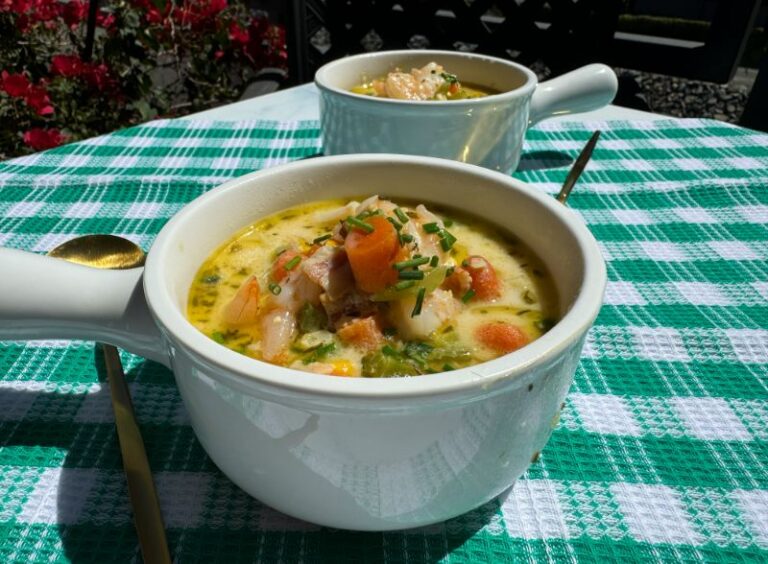
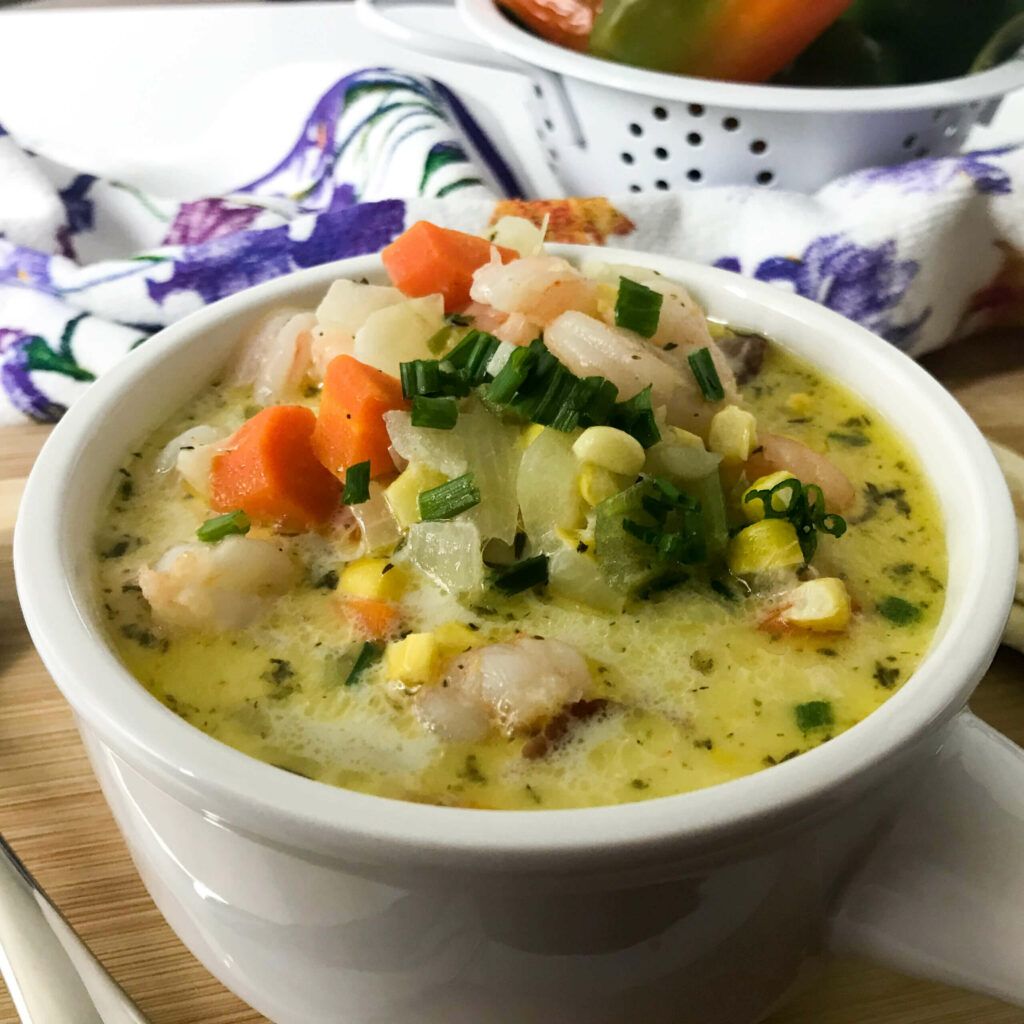
two cups of shrimp & Lobster corn chowder.

My Curated Tastes is reader-supported. When you buy through links on our site, we may earn an affiliate commission at no extra cost to you. As an Amazon Associate I earn from qualifying purchases.

Why This Recipe Works

This shrimp and lobster corn chowder delivers restaurant-quality flavor through a few key techniques that elevate it beyond ordinary seafood soup. The secret lies in building a deeply flavorful stock from shrimp and lobster shells along with fresh corn cobs—elements that would otherwise be discarded. This foundation creates layers of sweet, briny complexity that permeate every spoonful. The combination of smoky bacon, fresh summer corn, and tender shellfish creates a perfect balance of richness and brightness, while the addition of mild chili pepper cuts through the cream with just enough heat to keep things interesting. Unlike fussy recipes that require live lobsters, this version uses convenient lobster tails and shrimp, making it accessible enough for a weeknight yet impressive enough for special occasions.

Ingredient Breakdown

Lobster Tails: The star protein that provides sweet, delicate flavor without the hassle of dealing with live lobsters. The shells are essential for building a rich, flavorful stock.

Shrimp: Adds another layer of shellfish sweetness while being more economical than using all lobster. Like the lobster, the shells are flavor gold for the stock.

Chicken Stock: Forms the base of the chowder and carries all the flavors together while providing body to the soup.

White Wine: Adds brightness and acidity that balances the richness of the cream and seafood while enhancing the overall depth of flavor.

Fresh Corn: The kernels provide natural sweetness and texture, while the cobs infuse the stock with concentrated corn flavor that makes this truly taste like summer.

Bacon: Provides smoky, savory depth and rendered fat that forms the flavor foundation for sautéing the vegetables.

Onion: Builds aromatic sweetness and creates the flavor base alongside the other vegetables.

Carrots: Add natural sweetness, color, and texture while contributing to the overall vegetable profile.

Celery: Provides aromatic depth and a subtle savory note that’s essential to classic chowder flavor.

Hatch Chili or Jalapeno: Cuts through the richness with a touch of heat and adds complexity without overwhelming the delicate seafood.

Half and Half: Creates the creamy, luxurious texture that defines a chowder while being lighter than pure heavy cream.

Yukon Gold Potatoes: Add heartiness and help thicken the chowder naturally while their thin skins blend seamlessly into the soup.

Dried Thyme: Brings an earthy, slightly floral note that complements seafood beautifully.

Fresh Chives: Provide a mild onion flavor and bright green color that freshens up the rich soup.

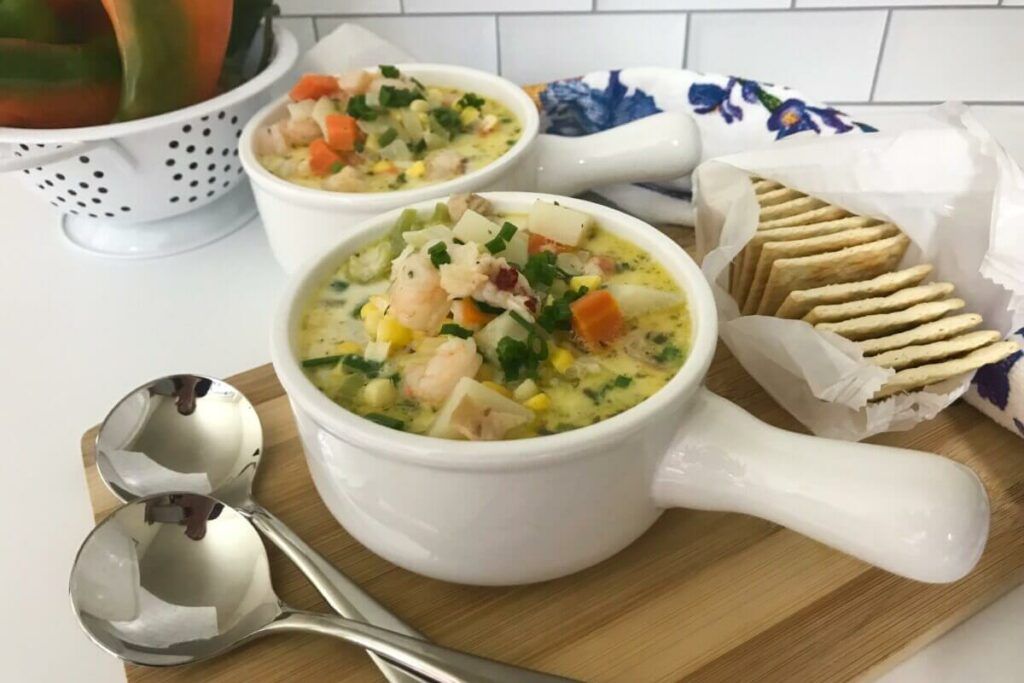
two bowls of shrimp and lobster soup with spoons and crackers on a board

CORN:

Fresh corn is best and the amount of “corn juice or milk” that you get from fresh corn cobs just translates into a delicious stock.  If you must (or it is winter and you just can’t wait…lol), use whole frozen ears of corn so you still have the cobs for your stock.  In a pinch, omit the cobs and use just plain frozen corn.

WHITE WINE:

This adds a nice acidity to the soup BUT if you don’t have any or don’t want alcohol in your recipe, just use  more stock or water.

POTATOES:

Yukon gold potatoes are great in this soup since they have a thin skin and the color blends right into the soup.  You could substitute baby red potatoes or regular Idaho potatoes.  If using the Idaho potatoes, be sure to peel them first.  In all cases, cut the potato up small.  Remember, this is for soup.

BACON:

Bacon is a must in a corn chowder (at least for me) and if you are a fan, use a thick cut and add more if you like!  If you don’t eat pork or don’t like it, just omit it but note that you are omitting a piece chunk of flavor.  You could substitute chopped Canadian ham or Pancetta for the bacon.

ADDITIONAL NOTE: For the one person who doesn’t like bacon (you know who you are), just use one tablespoon of olive oil instead of the bacon drippings to sauté your veggies. It works just fine. You are missing out on that great bacon flavor, but that is your choice. 

PRO TIPS on removing shells from shellfish

When it comes to lobster, I buy frozen lobster tails, let them thaw then remove the meat from the shells.  The easiest way to do that is to use a sharp pair of kitchen schears and cut right across the length of the outer shell, then flip the tail over and cut right through the thinner bottom of the lobster tail.  Pull the two halves apart and pull out the meat.  You will use the shells to make the stock.  Take the meat and cut into spoon size chunks and put to the side.

For the shrimp, remove the shells and tails (you’ll use those for the stock).  Devein the shrimp and discard that black or orange tract.  I usually cut the shrimp in half so that you have spoon size pieces.

PRO TIP on using seafood shells for stock:

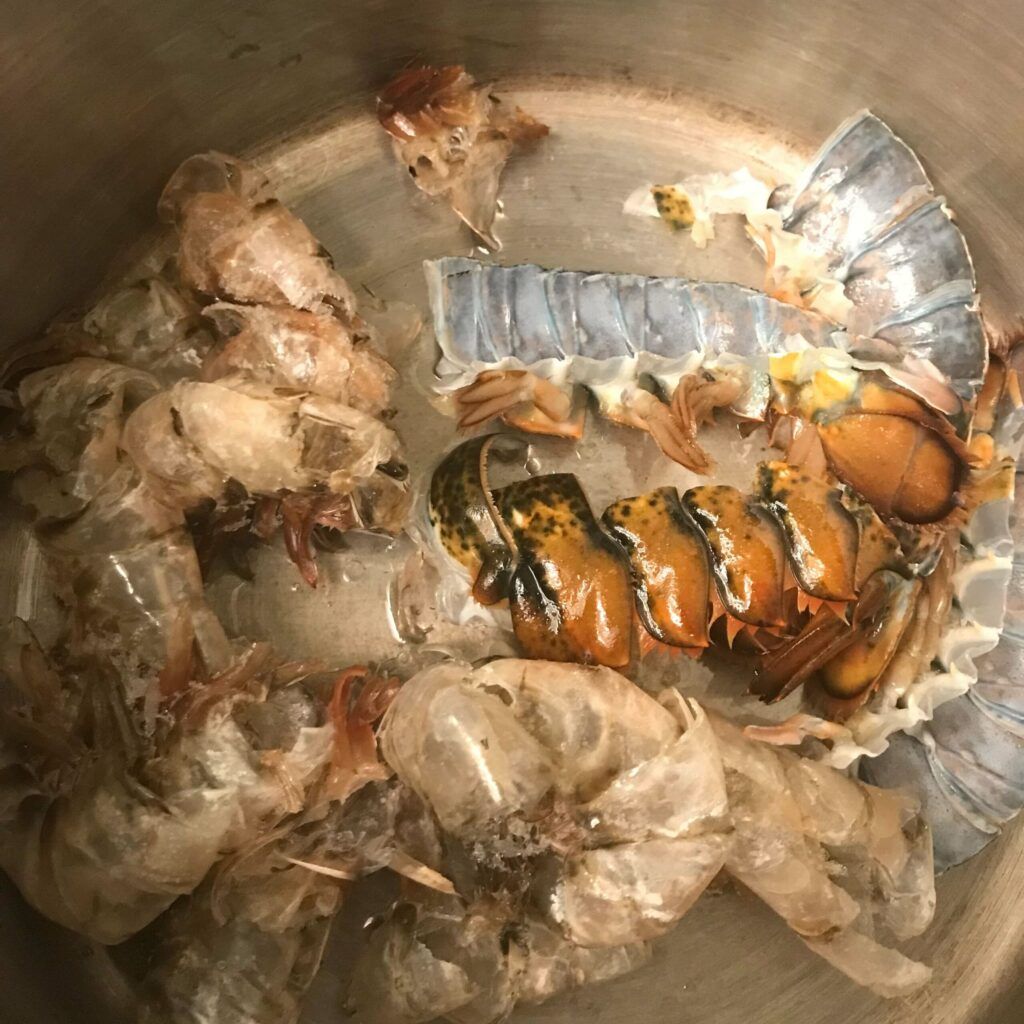
Whenever I make shrimp, (Which is quite often since it is one of my favorite shellfish) I save the shells and put them in a baggie and keep them in the freezer. Then, I can just pull them out and make this stock anytime. I do the same with lobster shells. The more shells the better, so load up that pot and make the most wonderful stock using any additional shells you might have in the freezer.

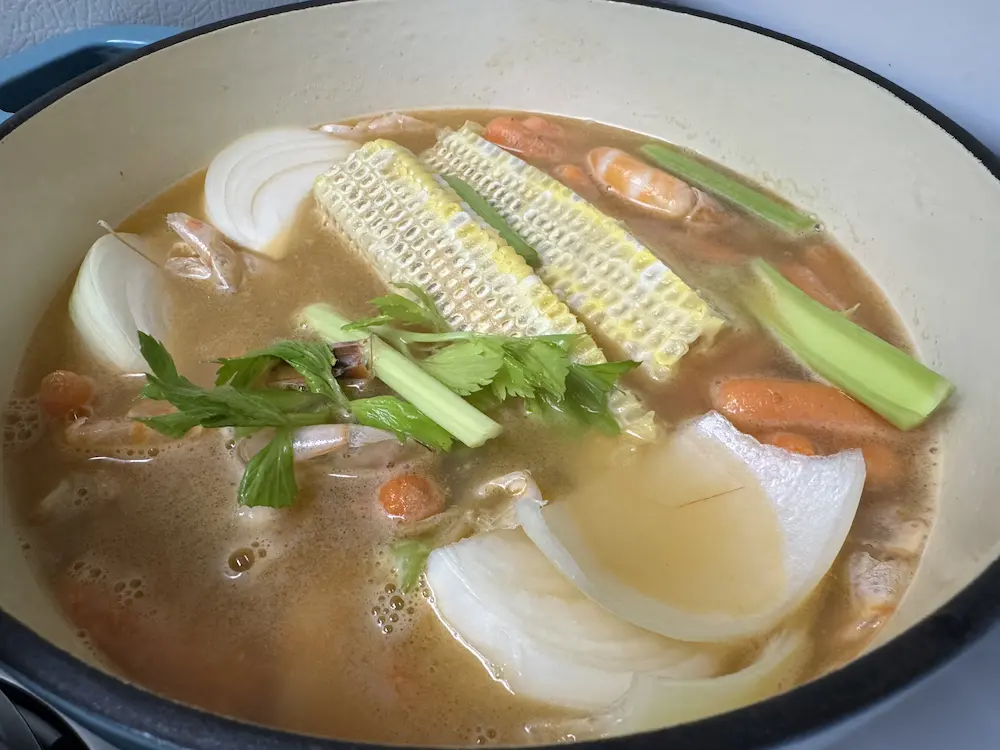
lobster and shrimp shells in a pot

Want to share this infographic?

Download the Image Now or Copy and Paste the code below!
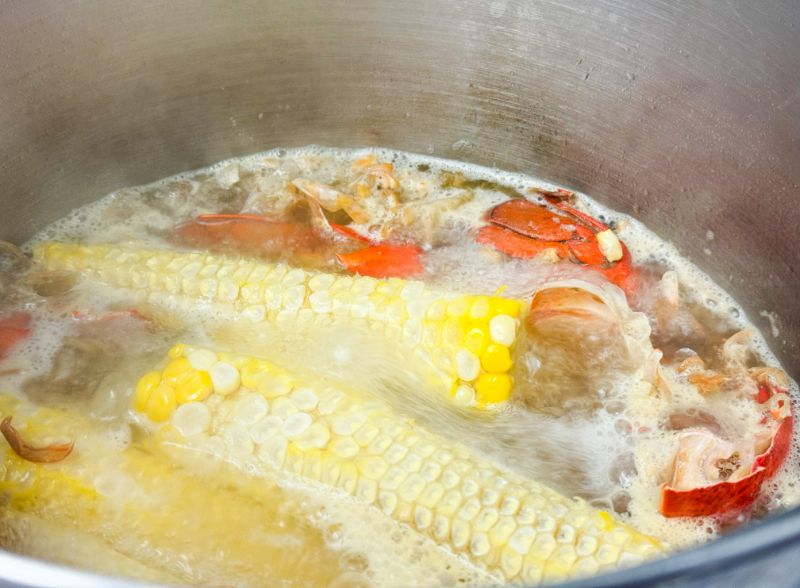
corn shellfish shells and stock cooking in pot.
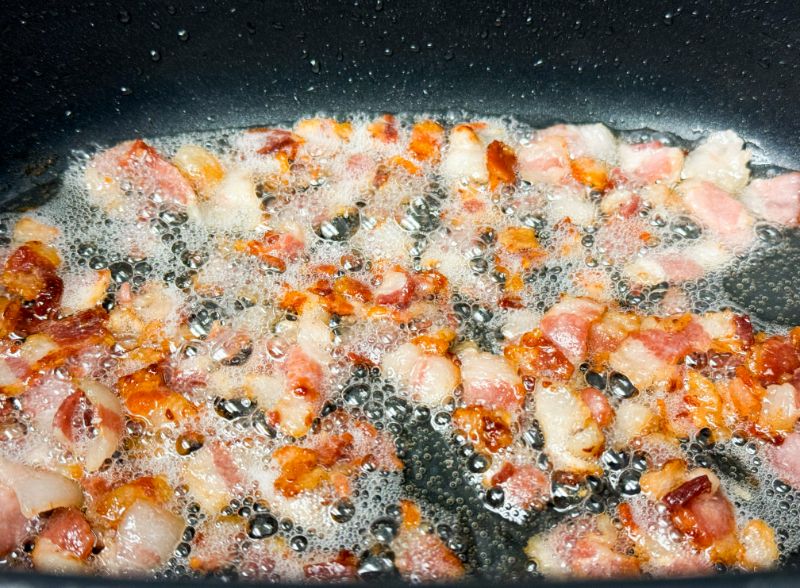
bacon cooking in a pot.
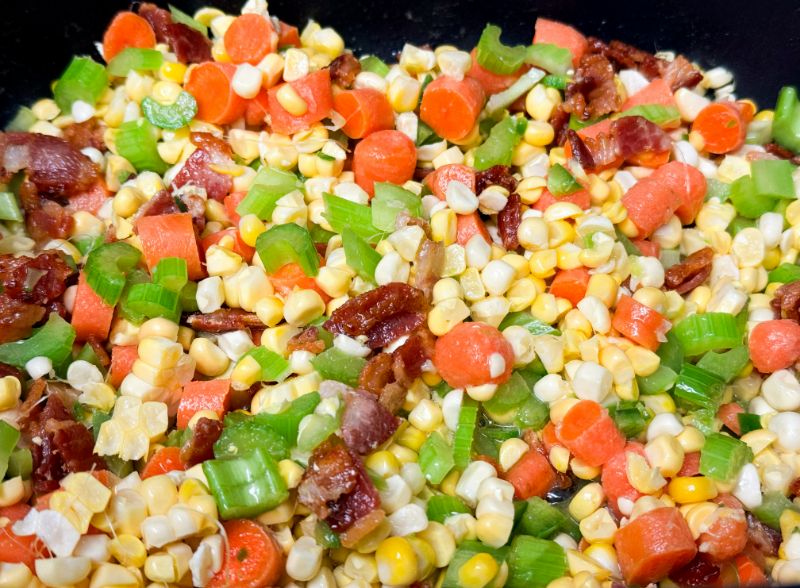
veggies and bacon cooking in pot.
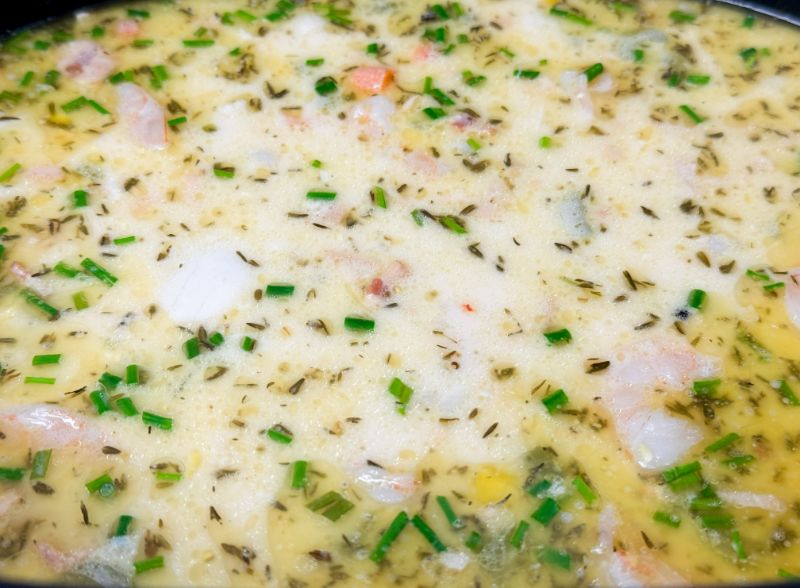
  • Add the stock and half and half (or milk of your choice) to the veggies.  Add the thyme and stir everything together.  Bring to a simmer.  Add in the chopped potatoes and let them cook for about 15 – 20 minutes until tender.  Taste the soup and add salt and pepper to taste.  Start slow and adjust seasoning as needed.
soup with potatoes cooking on stove.
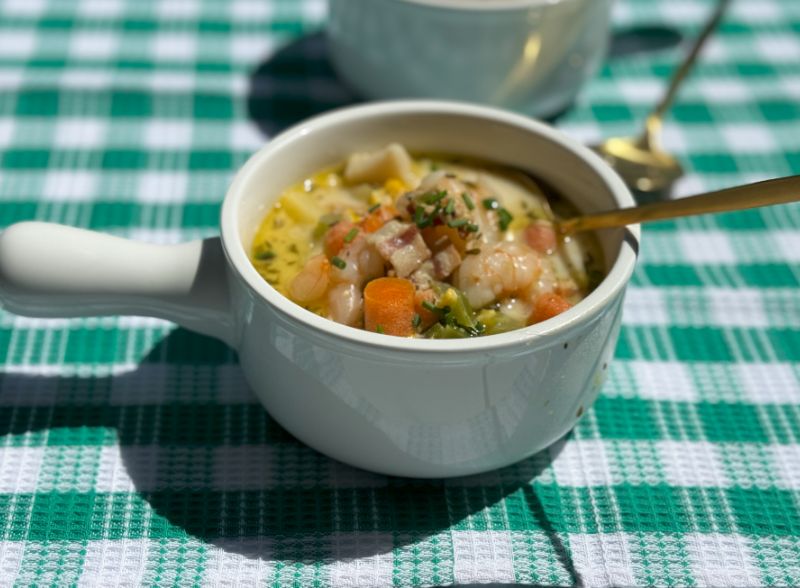
soup in bowl.

Shrimp and Lobster Corn Chowder – Frequently Asked Questions

The main difference lies in texture and consistency. Bisque is smooth and silky, while chowder is thick and chunky with pieces of vegetables, seafood, and potatoes. Whereas a bisque is smooth, a chowder is chunky, chock full of hearty pieces of ingredients such as potato and clams or corn. Bisques are typically strained and pureed for a velvety finish, while chowders maintain their rustic, hearty texture with visible ingredients.
Yes, shrimp and lobster chowder is considered an excellent, indulgent dish. This indulgent seafood soup is packed with flavor and perfect for cold days. The combination creates a rich, luxurious flavor profile that’s both comforting and sophisticated, making it popular for special occasions and cold weather dining. But I grew up on the East Coast where this was a summer staple. It works year round.
It depends on the cooking method, but many recipes add raw seafood directly to the chowder to cook gently in the broth. However, some recipes do pre-cook the seafood, especially lobster. The key is not to overcook the delicate seafood, which can become tough and rubbery.
To make shrimp taste more like lobster, poach the shrimp gently in butter and white wine, cook it just until pink (about 2-3 minutes), and use larger shrimp like jumbo or colossal sizes. Adding a touch of seafood stock made from shells and cooking at lower temperatures helps develop a more lobster-like sweetness and texture. This is completely optional but a pro-tip for making this soup even richer.
The key to making this great shrimp & lobster corn chowder is the stock, and the flavor comes from the shells and corncobs. Chef Andrew Zimmern enriches the seafood chowder with a stock made from corn cobs and shrimp shells to add depth of flavor. Always buy shellfish with shells on to make the most flavorful stock. NOTE: I keep shells from shrimp and lobster that I cook for other dishes in a large ziplock bag in the freezer. This way, they are always available when I want to make this stock and/or soup. Never throw those shells away … they are flavor gold!
Yes, but fresh corn is preferred for the best flavor. This chowder is best made with fresh corn on the cob to flavor the stock, but if you can’t find it, substitute 2 cups of frozen corn kernels. Fresh corn cobs add significant flavor to the stock, while frozen corn should be added directly to the chowder. Obviously, you won’t have the cobs from the fresh corn to make the stock. In the winter, when I can’t get fresh corn, I’ll buy frozen corn on the cob and use that for the stock BUT I use the actual frozen kernels to add to the soup.
You can use any combination of lobster, shrimp or crab that you like. Popular combinations include shrimp and crab, lobster and scallops, or all three together. The key is maintaining a balance of flavors and textures while ensuring you have enough shells for a flavorful stock.
Use lobster claw and body meat rather than tail meat. Lobster tail can become tough when cooked in chowder, and it’s more expensive. Claw meat is sweeter, more tender, and better suited for the gentle cooking method used in chowders. The truth is, I use whatever I can find and whatever looks fresh.
Traditional chowder is thick enough to coat a spoon but still pourable. The thickness comes from potatoes, roux (flour and butter mixture), or cream. Some recipes are lighter with no flour, getting rich broth from fish stock, while others use traditional thickening methods. This recipe is thinner but rich with ingredients and flavor. I don’t use the flour.
Chowder can be made ahead, but seafood should be added fresh when reheating to prevent overcooking. The base (vegetables, stock, cream) can be prepared 1-2 days ahead. When reheating, do so gently over low heat and add the cooked seafood just before serving.
To prevent curdling, temper the cream by adding a small amount of hot chowder to the cream first, then gradually incorporate it back into the pot. Keep the heat low when adding dairy, never let it boil vigorously, and stir constantly. Some recipes use milk and butter instead of heavy cream to reduce curdling risk. I have made this soup with whole milk, low fat milk and even skim milk when trying to cut calories and saturated fats. It always comes out great – just thinner.
Traditional garnishes include fresh chives, crispy bacon bits, a drizzle of cream, or oyster crackers. Serve it with a crusty baguette for dipping, or garnish with a sprinkle of fresh chives for a touch of color and freshness. A splash of sherry is also a classic finishing touch that adds depth and complexity.

Storage and Reheating

Store leftover chowder in an airtight container in the refrigerator for up to 3 days. For best results when making this soup ahead or storing leftovers, prepare the entire base—making the stock, sautéing the vegetables, and cooking the potatoes—but stop before adding the shellfish. This is the key to maintaining the tender texture of your shrimp and lobster, as reheating already-cooked shellfish will make it tough and rubbery.

To reheat, transfer the soup base to a pot and warm it gently over medium-low heat, stirring occasionally. Once the soup is simmering, add your fresh (or reserved cooked) shellfish and the chives, cooking just until the seafood is heated through—about 5 minutes. If you’re adding raw shellfish at this stage, cook for 5-8 minutes until just opaque. Never bring the chowder to a rolling boil during reheating, as high heat will toughen the seafood and can cause the cream to separate.

For entertaining or holiday meals, this make-ahead method is ideal: prepare everything through step 3 of the recipe, let the base cool completely, then refrigerate for up to 3 days. When ready to serve, simply reheat and add the fresh shellfish at the last moment for perfectly tender results every time.

one cup of the shrimp and lobster corn soup

How to Serve

Ladle the hot chowder into wide, shallow soup bowls or handled soup crocks for an authentic presentation. Garnish each serving with a sprinkle of fresh chopped chives for a pop of color and freshness.

Serve alongside oyster crackers, saltine crackers, or thick slices of crusty baguette for dipping into the rich broth. For a more substantial meal, pair the chowder with a simple green salad dressed in a light vinaigrette to balance the richness.

This chowder makes an excellent first course for a special dinner or can stand alone as the main event for lunch or a cozy dinner. For entertaining, consider serving it in bread bowls for a fun, impressive presentation. A splash of dry sherry added to individual bowls just before serving is a classic New England touch that adds sophisticated depth. No matter how you serve it, make sure to have plenty of napkins on hand—this is a soup meant to be savored slowly and thoroughly enjoyed.


two cups of shrimp & Lobster corn chowder.

Shrimp & Lobster Corn Chowder

A delicious combination of shrimp and lobster flavor this soup and add richness to the corn flavored stock. The fresh hatch chilis add a little heat and cut the richness of the soup.
5 from 3 votes
Prep Time 15 minutes
Cook Time 1 hour
Total Time 1 hour 15 minutes
Course Soups & Salads
Cuisine General
Servings 6 Served

Nutritional information is only an estimate. The accuracy of the nutritional information for any recipe on this site is not guaranteed.

Ingredients


  • 2 5 Oz. Lobster tails, meat separated from the shell and cut into small chunks (save shells)
  • 1 Lb. Medium Shrimp, shelled and deveined, cut into small pieces (save shells)
  • 5 Cups Chicken Stock
  • ½ Cup White wine
  • 4 Fresh Ears of Corn, kernels removed and placed in a bowl (save cobs)
  • 6 Pieces of bacon, chopped into small pieces
  • 1 Yellow onion, finely chopped
  • 2 Carrots, chopped
  • 3 Celery stalks, chopped
  • ½ – 1 Hatch chili pepper OR Jalapeno, seeded and chopped
  • 2 Cups Half and half
  • 2 Yukon Gold potatoes, peeled and chopped into small pieces
  • 1 Tbsp. Olive oil
  • 1 Tsp. Dried Thyme
  • 2 Tsp. Fresh chives, chopped
  • Kosher salt and freshly ground pepper to taste

Instructions
 

  • Add the oil to a large pot. Add all the shrimp and lobster shells and stir until toasted and lightly browned. This takes about 5-8 minutes.
  • Add the chicken stock, wine and four reserved corncobs and bring to a boil. Lower the heat and simmer until the stock is reduced to about 2 ½ cups (about 25-30 minutes). In a separate large pot or Dutch oven, add the bacon and cook over medium high heat until the bacon is crispy. About 5 minutes. Add the onion, carrots, celery, pepper and corn kernels and cook until the vegetables are starting to get soft. About 5 minutes.
  • Meanwhile, strain the seafood and corn stock into the pot with the vegetables. Discard the shells and corn cobs – their job is done. Stir. Add the half and half and dried thyme and bring to a simmer.
  • Stir in the potatoes and get the mixture heated back up to a simmer. Reduce the heat to medium low and cook until the potatoes are tender. About 15 -19 minutes.
  • Stir in the shrimp and lobster, chives and a pinch of salt and some freshly ground black pepper.  Add the fresh chives and stir. Cook until the seafood is cooked (about 5-8 minutes). Taste and add more salt and pepper if necessary. Serve in individual soup crocks with saltine crackers and more cut chives on top. FYI:  I LOVE my soup crocks with the handles.  I originally bought them to serve my French Onion Soup in but now use them for all my soups, stews and chilis.  I love that I can grab the handle and serve.  So much more convenient than trying to lift a bowl of hot soup; plus, they look great.  Enjoy.
Keyword chowder, seafood, soup
Tried this recipe?Let us know how it was!