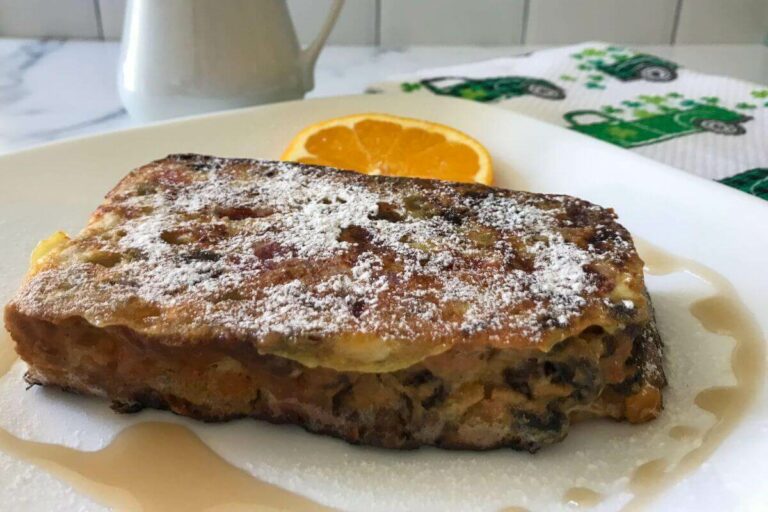
Barmbrack-French-Toast.

My Curated Tastes is reader-supported. When you buy through links on our site, we may earn an affiliate commission at no extra cost to you. As an Amazon Associate I earn from qualifying purchases.

Why This Barmbrack French Toast Works

This recipe transforms leftover Irish barmbrack bread into an extraordinary breakfast that’s far from ordinary French toast. The secret lies in the bread itself – barmbrack’s dried fruit and subtle spice profile adds natural sweetness and complexity that regular bread simply can’t match. Day-old or slightly stale barmbrack is actually ideal here; its drier texture absorbs the orange-spiked custard without becoming soggy, creating perfectly cuspy edges with a tender, custardy center. The orange juice in the egg mixture complements the tea-soaked raisins in the bread, while vanilla rounds out the flavors. It’s a brilliant way to use up leftover bread while creating something that feels special enough for a holiday brunch or weekend treat.

Testimonial

“I made the bread for Halloween (I liked the Irish story), and then make this a couple of days later. Really good.”” – Cathy L..

Ingredient Breakdown: What Each Adds to Barmbrack French Toast

Barmbrack Bread – Provides the foundation with its tea-soaked dried fruits and warm spices, adding natural sweetness and complex flavor that sets this apart from ordinary French toast.

Eggs – Create the custard base that transforms the bread, binding the ingredients together while adding richness and protein for a satisfying, custardy interior.

Milk – Adds creaminess to the custard and helps achieve the perfect consistency for soaking, ensuring the bread becomes tender without falling apart.

Orange – The juice brightens the custard with citrus notes that complement the dried fruits in the barmbrack, while the slices serve as a fresh, vibrant garnish.

Pure Vanilla Extract – Rounds out the flavors with warm, sweet aromatics that enhance both the custard and the spiced notes already present in the barmbrack.

Butter – Creates a golden, crispy exterior when the bread cooks, adding rich flavor and preventing sticking while helping achieve that signature caramelized crust.

Maple Syrup – Provides classic sweetness and moisture as a finishing touch, complementing the fruit-studded bread without overpowering its unique flavors.

Powdered Sugar – Adds a delicate sweetness and elegant presentation as a light dusting, creating visual appeal and a subtle sweet finish to each bite.

Egg Alternatives:

  • Flax Eggs or Chia Eggs – Mix 2 tablespoons ground flaxseed or chia seeds with 6 tablespoons water for a vegan binder, though the custard won’t be quite as rich.
  • Commercial Egg Replacer – Products like Just Egg work well for those avoiding eggs, maintaining the custard texture.
  • Extra Egg Whites – Use 3-4 egg whites instead of whole eggs for a lower-cholesterol, lower-fat option that’s still protein-rich.

Orange Substitutes:

  • Lemon – Provides similar acidity and brightness with a slightly more tart profile that cuts through the sweetness.
  • Apple Juice or Apple Cider – Complements the tea-soaked fruits in barmbrack with natural sweetness and a milder flavor.
  • Grand Marnier or Orange Liqueur – Adds sophisticated adult flavor for brunch entertaining (use sparingly, about 1-2 tablespoons).
  • Orange Zest Only – If you don’t have fresh oranges, zest adds citrus oils and aroma without the liquid.

Vanilla Extract Alternatives:

  • Almond Extract – Provides a nutty sweetness that pairs well with dried fruits, though use half the amount as it’s more potent.
  • Maple Extract – Amplifies the maple syrup topping flavor throughout the dish.
  • Cinnamon or Pumpkin Pie Spice – Adds warmth and complements the spices already in barmbrack (use ½ teaspoon).

Butter Substitutes:

  • Coconut Oil – Works for dairy-free cooking and adds a subtle tropical note that complements the orange.
  • Vegan Butter – Plant-based options like Earth Balance function identically to dairy butter for cooking.
  • Ghee (Clarified Butter) – Has a higher smoke point and nuttier flavor, plus it’s suitable for those avoiding milk solids.
  • Cooking Spray – Drastically reduces calories and fat while still preventing sticking, though you’ll lose the rich butter flavor.

Want to share this infographic?

Download the Image Now or Copy and Paste the code below!
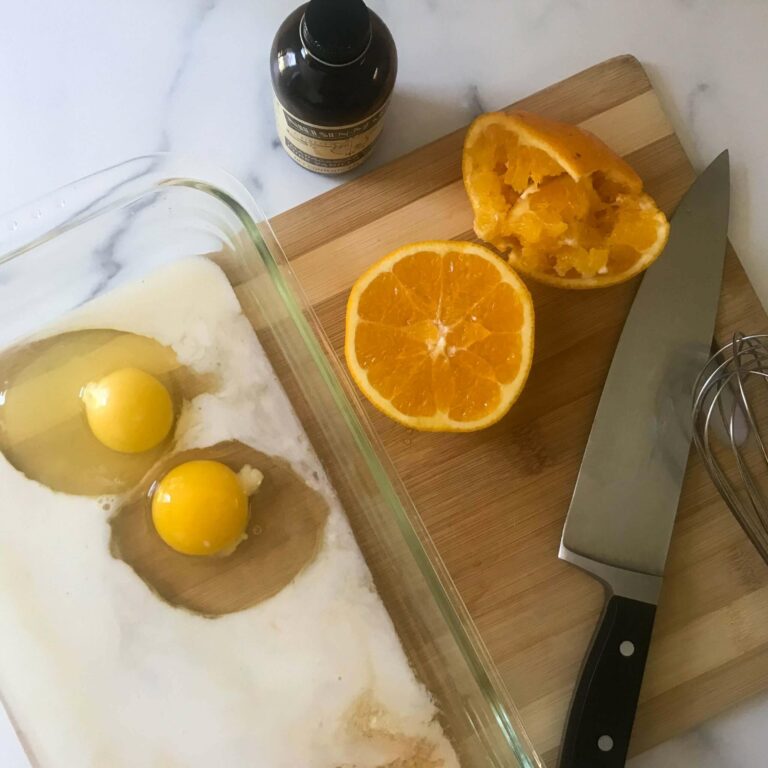
ingredients for barmbrack french toast custard.
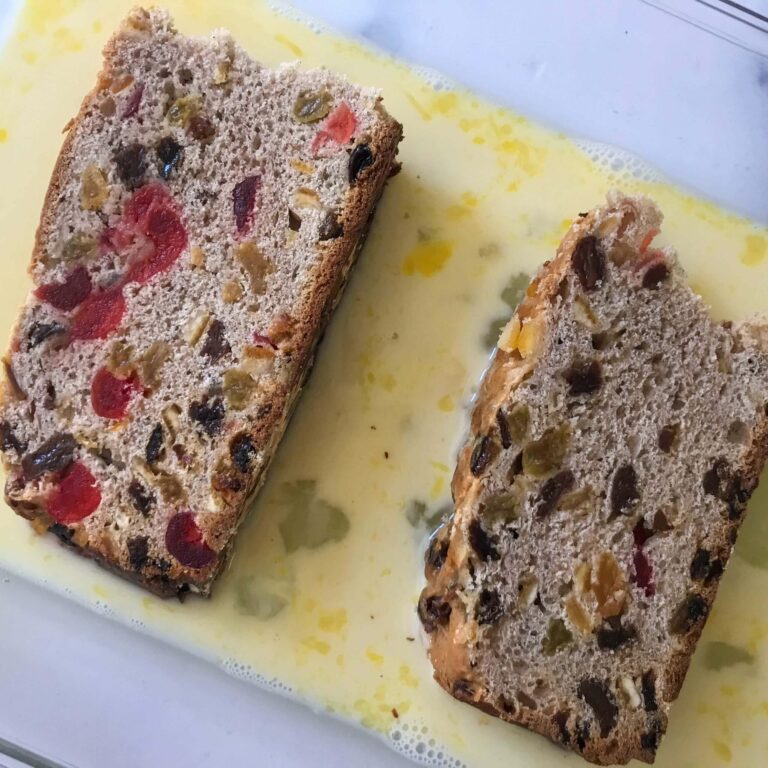
  • Add two slices of the bread to the egg mixtures and let sit for five to then minutes, then flip and let soak on the other side for another 5-10 minutes.
Barmbrack bread soaking in custard.
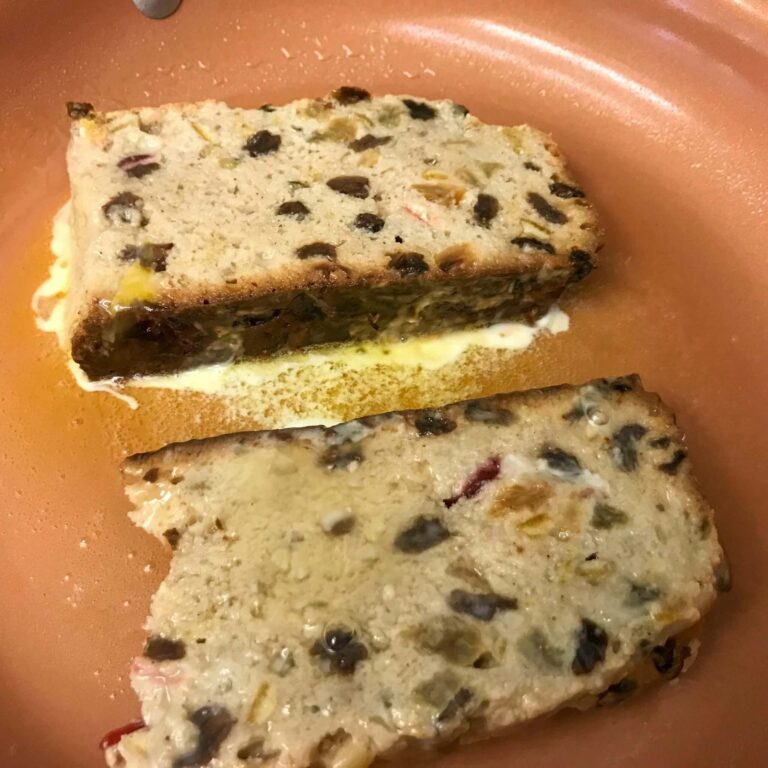
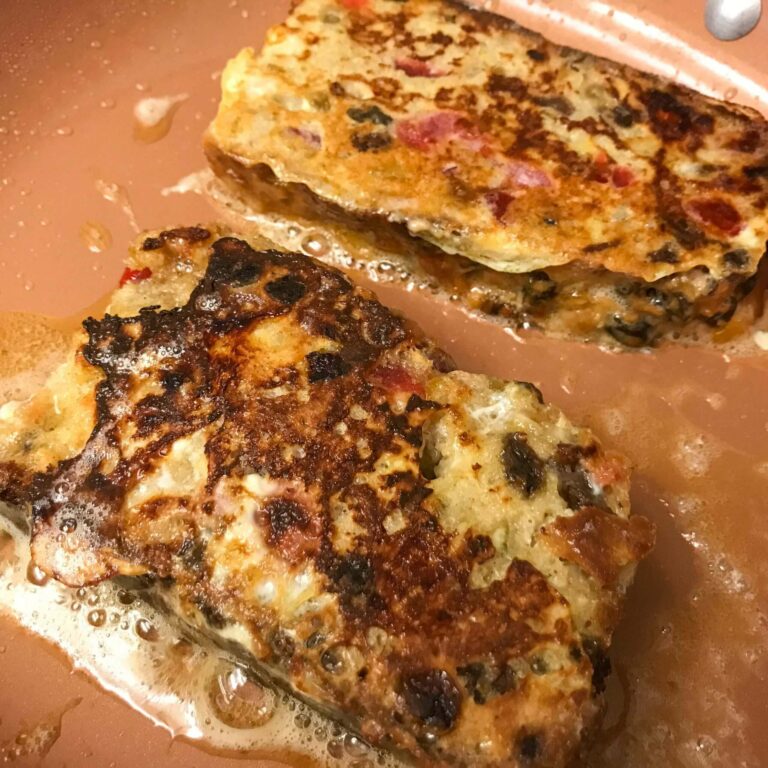
Barmbrack-French-Toast in skillet.
  • Flip the bread over and cook until golden brown on the second side and the egg is cooked through – about another 5 minutes.
Barmbrack-French-Toast cooking in skillet.

Barmbrack French Toast FAQ

Barmbrack is a traditional Irish fruit bread made with tea-soaked dried fruits, warm spices, and a slightly sweet dough. It’s excellent for French toast because the dried fruits add natural sweetness and the bread’s texture absorbs custard beautifully without falling apart. Day-old barmbrack works best as it’s slightly drier and won’t become soggy when soaked in the egg mixture.
Yes, but you’ll need to dry it out first. Slice the fresh barmbrack and toast it in a 350°F oven for about 15 minutes, or place slices under the broiler for 1 minute per side. This prevents the bread from becoming too soggy when soaked in the custard mixture. Alternatively, leave sliced barmbrack uncovered overnight to stale naturally.
Barmbrack French toast has a more complex flavor profile thanks to the tea-soaked raisins, sultanas, and spices already baked into the bread. The fruit pieces caramelize slightly during cooking, adding bursts of sweetness throughout. The orange juice in the custard complements the dried fruit, creating a uniquely Irish twist that’s richer and more interesting than traditional French toast.
Cut barmbrack slices approximately 1 inch thick. This thickness allows the bread to absorb enough custard to create a creamy interior while maintaining structural integrity during cooking. Thinner slices may fall apart, while thicker slices won’t cook through properly in the center.
Soak each side for 5-10 minutes, for a total soaking time of 10-20 minutes. The slightly stale texture of day-old barmbrack needs adequate time to absorb the custard, but avoid over-soaking or the bread will become too fragile to handle. The bread should feel saturated but still hold together when lifted.
Powdered sugar and warm maple syrup are classic choices that let the bread’s flavors shine. Fresh orange slices make an excellent garnish that echoes the orange juice in the custard. For variety, try fresh berries, whipped cream, honey, or agave nectar. Sugar-free alternatives like monk fruit sweetener and sugar-free maple syrup work well for low-sugar diets.
Yes, Irish soda bread makes an excellent alternative for French toast and works particularly well when slightly stale. While it won’t have the dried fruit sweetness of barmbrack, it creates a wonderfully tender French toast with a subtle buttermilk tang. You can also use any fruity or nutty bread varieties for similar results.
Orange juice adds brightness and acidity that balances the sweetness of the dried fruits in barmbrack. It also complements the tea-soaked raisins and creates a more complex flavor profile than traditional French toast custard. The citrus notes make the dish feel lighter and more refreshing.
Use a good-quality non-stick skillet and ensure the butter is fully melted and bubbling before adding the soaked bread. Heat the pan over medium-high heat – too low and the bread will absorb more butter and stick; too high and it will burn before cooking through. Let excess custard drip off before placing bread in the pan.
While best served fresh, you can prepare the custard mixture and slice the bread the night before. Soak the bread just before cooking for optimal texture. If you need to keep cooked French toast warm, place finished slices on a baking sheet in a 200°F oven for up to 15 minutes, though texture is best when served immediately.
The traditional recipe contains dairy (milk, butter) and eggs, but you can modify it for dietary needs. Use plant-based milk and vegan butter for a dairy-free version, though you’ll need an egg replacer for the custard. For lower sugar options, skip the powdered sugar and use sugar-free maple syrup or fresh fruit as toppings.
Cook over medium-high heat for 4-6 minutes per side without moving the bread. The key is patience – let a golden crust form before flipping. The butter should be bubbling but not smoking. Resist the urge to press down on the bread, which squeezes out the custard and prevents proper browning.
Barmbrack-French-Toast.

Barmbrack French Toast

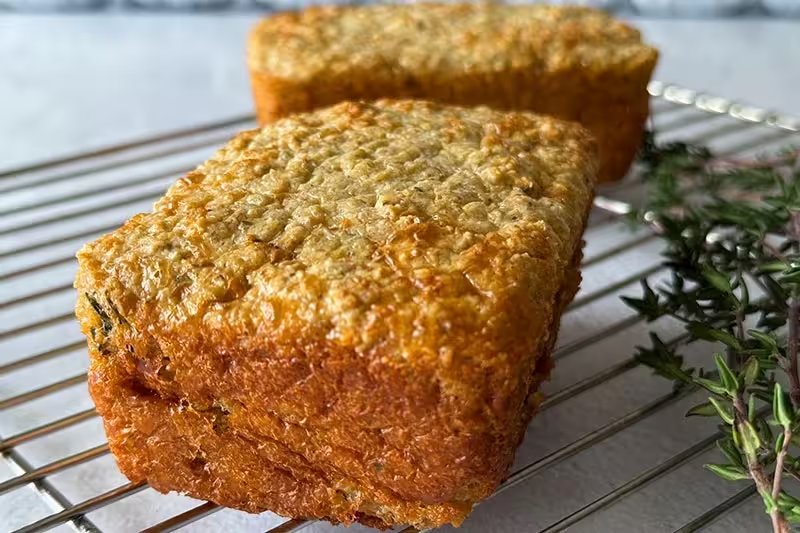
A fabulous bonus recipe from my Traditional Irish Barmbrack Bread is this french toast. Packed with flavor and not like any other french toast you've made.
5 from 1 vote
Prep Time 20 minutes
Cook Time 10 minutes
Total Time 30 minutes
Course Brunch
Cuisine General
Servings 2 Served

Nutritional information is only an estimate. The accuracy of the nutritional information for any recipe on this site is not guaranteed.

Ingredients


  • 2 Slices of Barmbrack bread, about one inch thick
  • 2 Eggs, whipped
  • 1/4 Cup Milk
  • 1 Orange, juice of half and other half cut into slices
  • 1/2 Tsp. Pure vanilla extract
  • 1 Tbsp. Butter
  • Maple syrup
  • Powered Sugar, to finish

Instructions
 

  • Make the Barmbrack bread and let it sit a couple of days OR cut slices and toast them to dry them out.  Get the recipe here.
  • Mix the eggs, milk, orange juice and vanilla in a casserole dish. Add the two slices of bread and let sit for 5-10 minutes. Flip them over and let them soak up the liquid for another 5 – 10 minutes.
  • Heat a large skillet over a medium-high heat. Add the butter and let it melt. Swirl the pan so it coats the bottom. Add the bread slices (let the excess liquid drip off).
  • Let the bread brown for 4-6 minutes until golden brown. Flip them and let them cook another 4-6 minutes until that side is brown and the bread is warmed through.
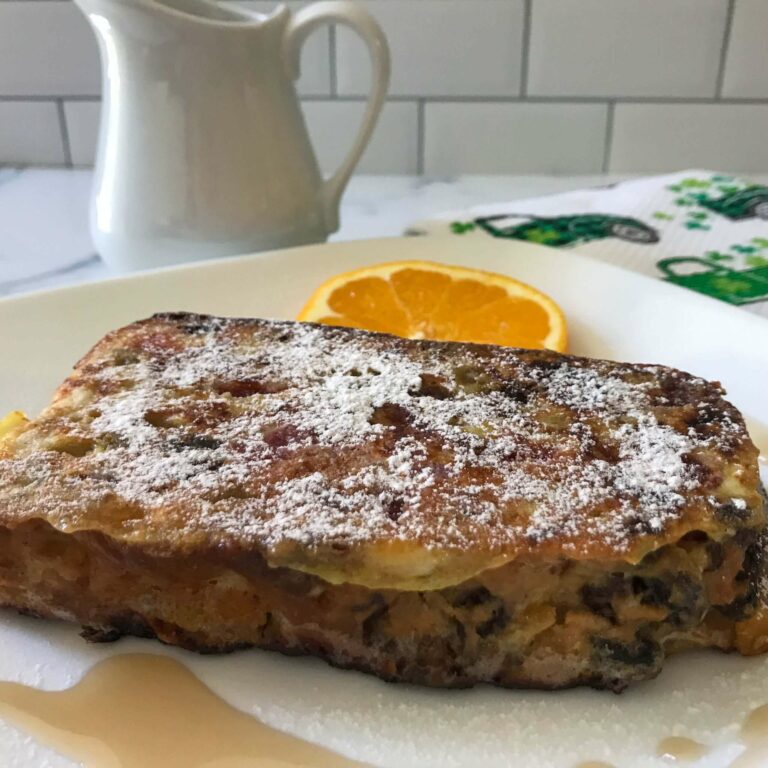
  • Serve topped with a dusting of powdered sugar and maple syrup. Garnish the plate with a slice or two of the orange. Enjoy.
Keyword brunch
Tried this recipe?Let us know how it was!