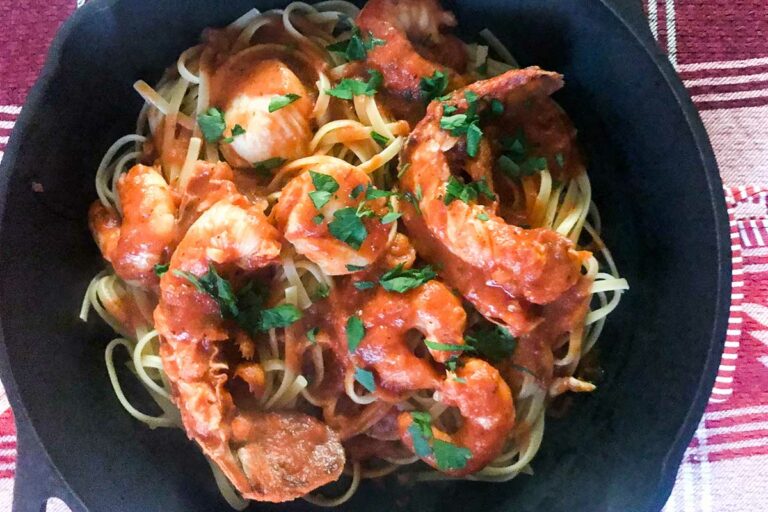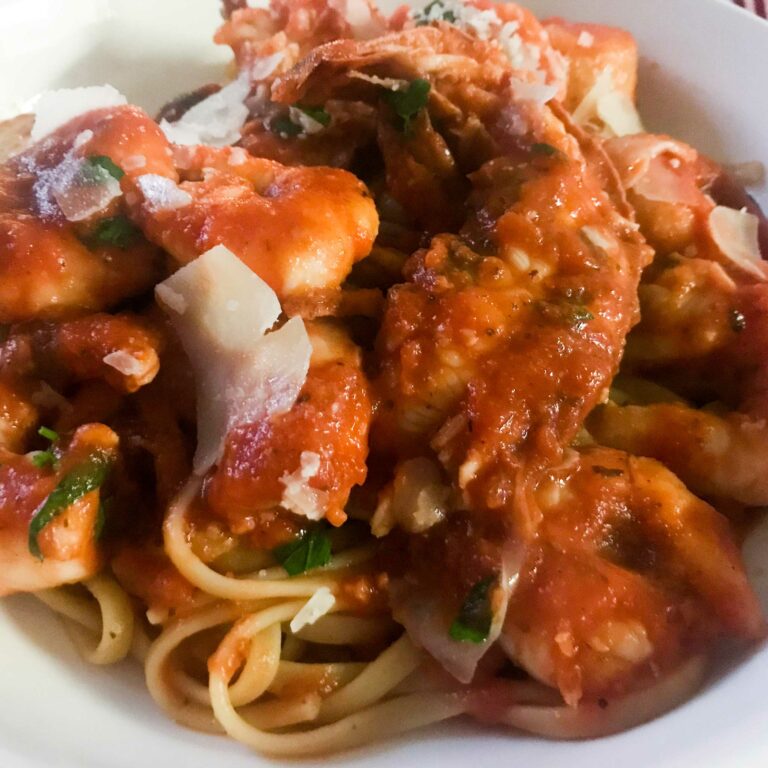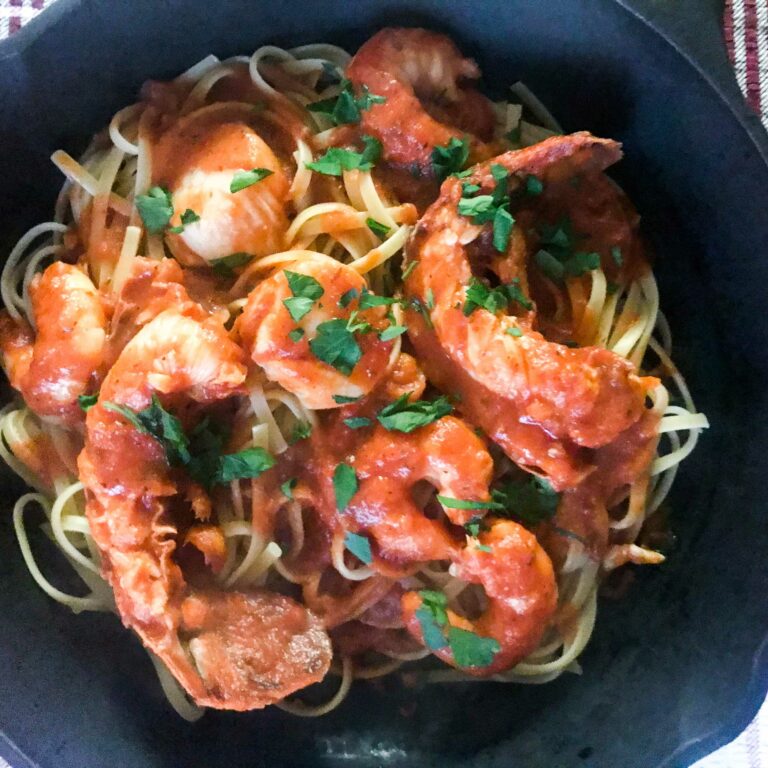
Seafood Arrabbiata on a plate.

My Curated Tastes is reader-supported. When you buy through links on our site, we may earn an affiliate commission at no extra cost to you. As an Amazon Associate I earn from qualifying purchases.

Arrabbiata vs. Arrabiata

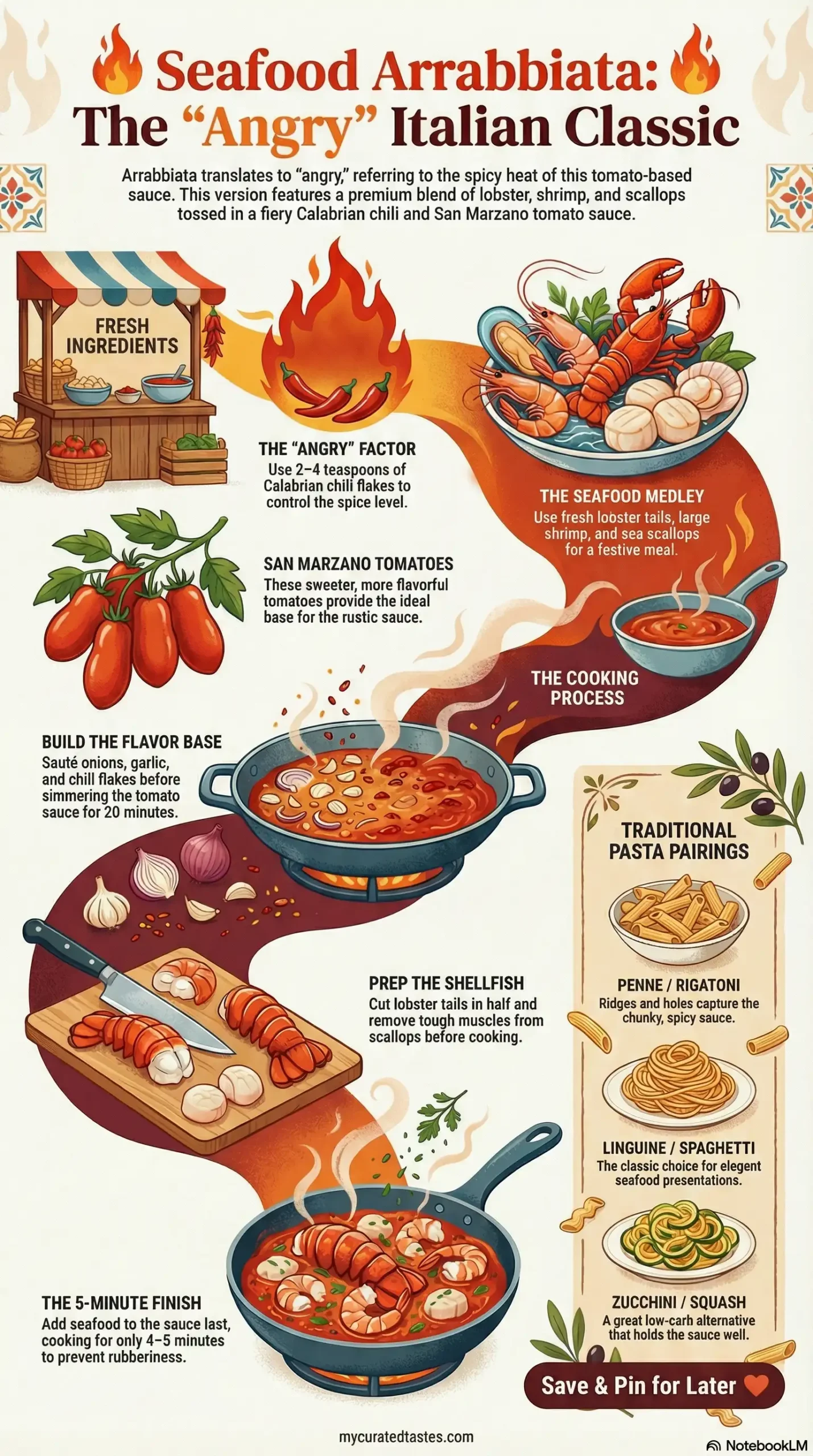
You are going to see both spellings all over the internet and they are often seen interchanged but the correct spelling is arrabbiata with two “b”s.  It is an Italian word meaning “angry” which of course refers to the spicy sauce.

No matter how you spell it, this is a tasty sauce but for the record, arrabbiata is correct.

Ingredients in my seafood arrabbiata

PASTA

Spaghetti arrabiata is probably the most common pasta shape used.  But I also like fettucini, rigatoni and penne in this too.  You certainly can use whole wheat pasta for a little more protein too.

SHELLFISH

When it comes to the shellfish you use in this dish, I always recommend going with your favorites and/or with what is fresh. The use of mussels or clams is very common, although on this day at the seafood market, I went with the shrimp, scallops and lobster. Yes, this can get pricey, so I tend to pull this out on the holidays and when I’m having guests for dinner.

But, a real affordable way to make this dish is to do just shrimp arrabbiata. Grab a couple of bags of shrimp when they are on sale, and you can have this very affordable meal anytime.

You could also use firm fish in this recipe like halibut, tuna and cod.

TOMATOES

San Marzano tomatoes always gets top billing in Italian recipes and with good reason.  They are sweeter and more flavorful then regular canned tomatoes, so if you can find them, use them.  Don’t worry if you only have grocery store canned tomatoes on hand, they’ll work.

CHEESE

Finally, the never ending debate over whether to use cheese on seafood. Die hard Italian chefs usually say no. I’m not Italian (but boy do I love their food) and I use the cheese. As far as I’m concerned, Parm makes everything better. But, you decide.

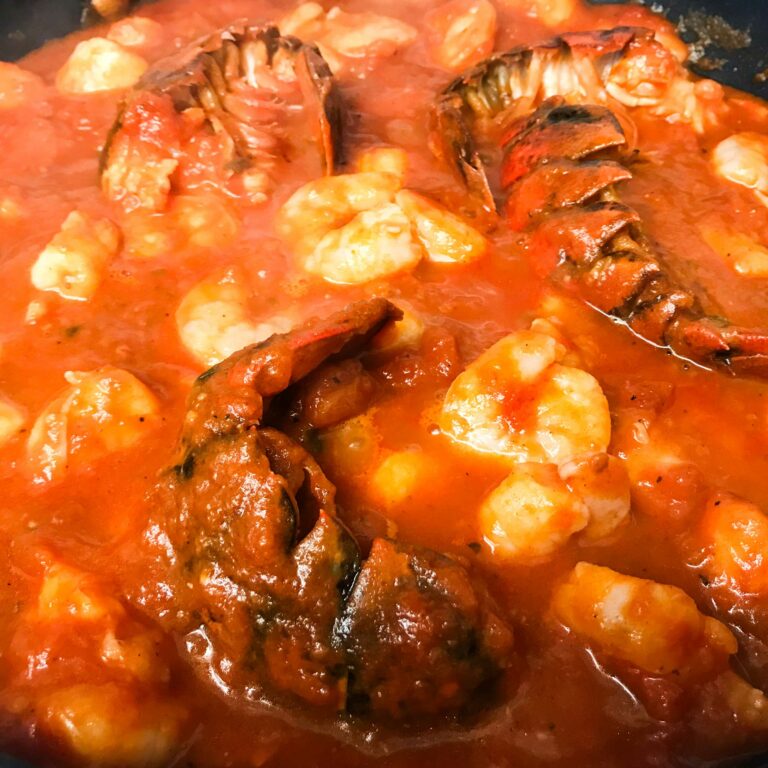
Seafood Arrabbiata cooking in a pot.

Frequently asked questions and answers about seafood arrabbiata

The correct spelling is “arrabbiata” (with two R’s and two B’s). This Italian word means “angry” in English, referring to the spicy, fiery nature of the sauce. Common misspellings include “arribbiata,” “arabiata,” and “arabbiata.” The dish originates from Rome and gets its name from the heat provided by red chili peppers.

The best seafood options for arrabbiata include:

  • Shrimp (most popular choice)
  • Scallops (sweet and tender)
  • Mussels (add briny flavor)
  • Clams (traditional Italian choice)
  • Calamari/Squid (adds texture)
  • Lobster tail (for special occasions)
  • Crab meat (lump or jumbo lump)
  • Mixed seafood combination (surf and turf style)

Choose firm, fresh seafood that won’t fall apart during cooking. Shrimp and scallops are beginner-friendly options.

Traditional and best pasta shapes for arrabbiata include:

  • Penne (classic choice – holds sauce well)
  • Rigatoni (ridged tubes capture sauce)
  • Fusilli (spirals grab spicy sauce)
  • Farfalle (bow-ties work beautifully)
  • Paccheri (large tubes, very traditional)
  • Linguine (perfect for seafood versions)
  • Spaghetti (classic but sauce may slide off)

Short, ridged pasta shapes work best as they hold the chunky, spicy sauce better than smooth varieties.

Seafood arrabbiata ranges from mild to very spicy depending on preparation. The heat level depends on:

  • Type of chili peppers used (Calabrian red pepper flakes, fresh chilies, or dried peppers)
  • Amount of peppers added
  • Whether seeds are included (seeds add more heat)
  • Personal tolerance level

You can easily adjust the spice level by starting with less chili and adding more to taste. The dish should have a pleasant heat that doesn’t overpower the seafood.

Arrabbiata sauce has a bold, vibrant flavor profile featuring:

  • Spicy heat from red chili peppers
  • Rich tomato base with slight acidity
  • Garlic depth and aroma
  • Herbal notes from fresh basil or parsley
  • Fruity undertones from quality olive oil

The sauce is more intense and fiery than marinara, with a rustic, chunky texture that coats pasta beautifully.

Total cooking time is typically 20-30 minutes:

  • Prep time: 10-15 minutes
  • Cooking time: 15-20 minutes
  • Pasta cooking: 8-12 minutes (can be done simultaneously)

This makes it perfect for weeknight dinners. The key is having all ingredients prepped before you start cooking, as the process moves quickly once you begin.

While best served fresh, you can partially prepare it:

  • Sauce: Make arrabbiata sauce 1-2 days ahead and refrigerate
  • Seafood: Cook seafood just before serving for best texture
  • Pasta: Cook fresh when ready to serve
  • Reheating: Gently reheat sauce and add freshly cooked seafood

Avoid fully preparing and storing the complete dish, as seafood can become rubbery when reheated.

Excellent wine pairings include:

  • White wines: Pinot Grigio, Sauvignon Blanc, or Vermentino
  • Red wines: Chianti, Sangiovese, or light Barbera
  • Rosé: Provence rosé or Italian rosato
  • Sparkling: Prosecco or Champagne.  For something new, try sparkling Cremant.  See Prosecco or Cremant? for more information and recommendations.

The wine should complement both the spicy sauce and delicate seafood without overwhelming either component.

Traditional seafood arrabbiata contains gluten from wheat pasta. To make it gluten-free:

  • Use gluten-free pasta (rice, corn, or chickpea-based)
  • Ensure all seasonings and ingredients are certified gluten-free
  • Check that seafood hasn’t been processed with gluten-containing ingredients

The sauce itself is naturally gluten-free when made with pure ingredients.

Key differences include:

  • Heat level: Arrabbiata is spicy, marinara is mild
  • Ingredients: Arrabbiata contains chili peppers, marinara typically doesn’t
  • Texture: Arrabbiata is often chunkier and more rustic
  • Origin: Arrabbiata is specifically Roman, marinara has broader Italian origins
  • Flavor intensity: Arrabbiata is bolder and more aggressive

Both are tomato-based, but arrabbiata has a distinctly fiery character.

To keep seafood tender:

  • Add seafood last (final 2-3 minutes of cooking)
  • Don’t overcrowd the pan
  • Use high heat for quick cooking
  • Remove from heat as soon as seafood is opaque
  • Size matters – cut seafood into uniform pieces
  • Pre-cook larger items like scallops separately if needed

Overcooked seafood becomes tough and rubbery, so timing is crucial.

Freezing is not recommended because:

  • Seafood texture degrades significantly when frozen in sauce
  • Pasta becomes mushy after freezing and thawing
  • Sauce may separate during the freezing process

If you must freeze, freeze only the arrabbiata sauce (without seafood) for up to 3 months, then add fresh seafood when reheating.

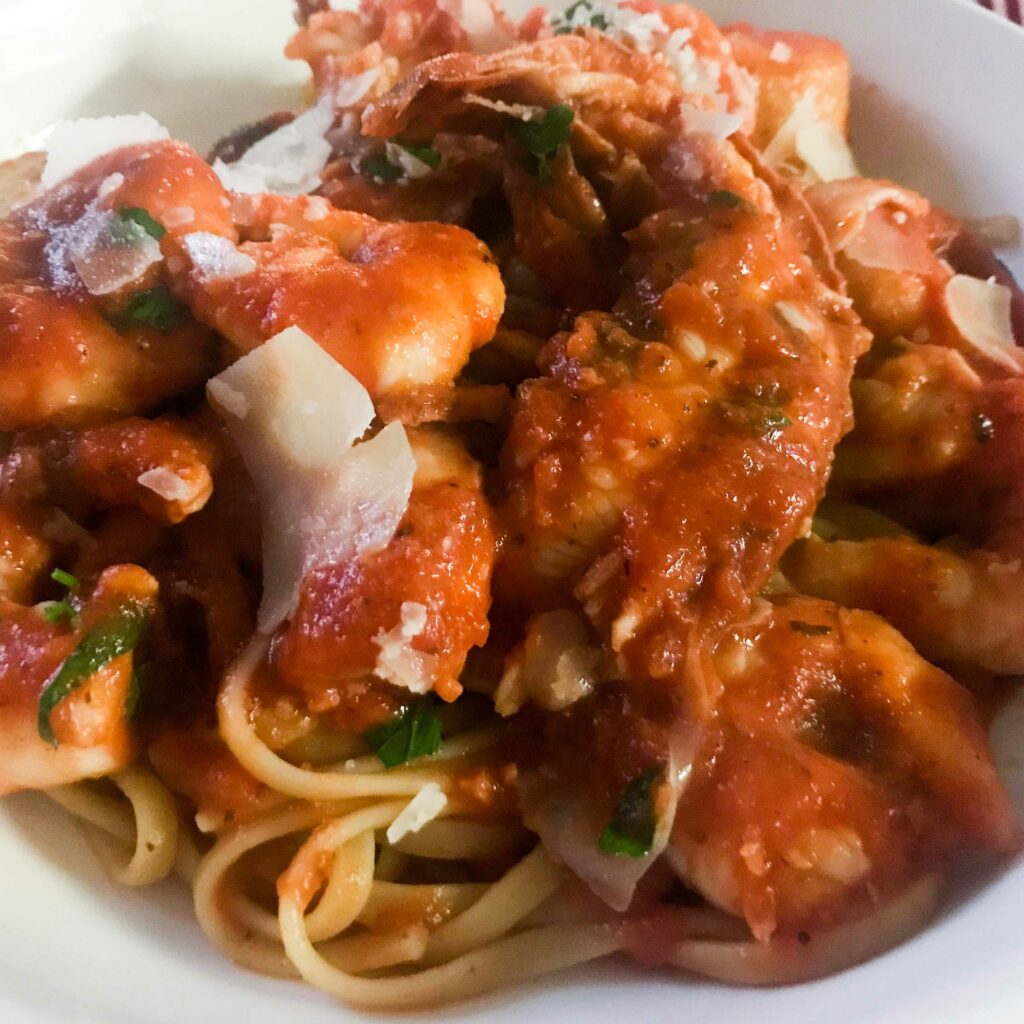
Seafood Arrabbiata in a bowl.
Seafood Arrabbiata on a plate.

Seafood Arrabbiata

This delicious and spicy Seafood Arrabbiata recipe is easy to pull together using your favorite shellfish.
5 from 1 vote
Prep Time 20 minutes
Cook Time 35 minutes
Total Time 55 minutes
Course Dinner
Cuisine Italian
Servings 4 Served

Nutritional information is only an estimate. The accuracy of the nutritional information for any recipe on this site is not guaranteed.

Ingredients


  • 4 Small Lobster tails (3-5 oz. each)
  • 16 Large Shrimp, peeled and deveined
  • 12 Large Sea Scallops, tough muscle removed
  • 2 Tbsp. Olive oil
  • 2+ Tsps. Calabrian chili flakes
  • 1/2 Large Onion, finely diced
  • 5 Large Garlic cloves, finely minced
  • 1 Tbsp. Tomato Paste
  • 2 28- Oz. Cans San Marzano whole tomatoes
  • 1 Tbsp. Dried Oregano
  • 1 Tbsp. Dried Basil
  • 1/2 Tsp. Kosher salt
  • 20 Grinds of fresh black pepper
  • 2 Tbsp. Fresh Italian flat leafed parsley, chopped
  • 8-12 Oz. Linguine, spaghetti, rigatoni or pasta of your choice
  • Shaved Parmesan (optional) to finish

Instructions
 

  • Add the oil to a large skillet. Heat until hot but not smoking.
  • Add the onions and Calabrian chili flakes and stir a few times until the onions are translucent. (about two minutes)
  • Add the tablespoon of tomato paste and stir into the onions for about a minute.
  • Add the minced garlic and stir into the mix. Cook for one minute.
  • In a blender, add the two cans of whole tomatoes and blend until smooth (Or you can leave small pieces of tomato. This is completely a matter of preference.) Add to the onion and garlic mixture and stir to combine.
  • Add the oregano, basil, slat and pepper and mix in. Let cook for 20-25 minutes to meld the flavors. If the sauce is to thick, add a little water, a tablespoon at a time until you have the right consistence.
  • Meanwhile, boil a large stock pot of water to cook the pasta. Make sure you season it heavily with kosher salt…the water should be very salty. Taste it!
  • Once the water comes to a boil, add your pasta and stir. Cook per package instructions.
  • Meanwhile, prep your shell fish. Make sure you remove the tough muscle from the scallops and pat dry. Remove the shell and tai from the shrimp for easy eating. (You can leave the tail intact, but be sure the rest of the shell is removed after deveining. You can often find these already prepared in the seafood section of the supermarket. Last, to prep your lobster tails, I cut them with a kitchen scissors down the shell all the way to the tail. Then flip them over and cut through the under belly all the way to the tail. Take a knife and cut completely through. You should how have 8 halves of lobster tails. Gently lift the lobster meat from the shell then place it back into the shell. This will make eating it much easier for your guests.  Cook the lobster in the shell in the sauce for maximum flavor.
  • Add the shellfish to the sauce and tuck it into the sauce to cook for about two minutes. Flip the shellfish over and cook another 2-3 minutes in the sauce.
  • Plate your pasta and top with the spicy sauce and the shellfish.
  • Always controversial is whether or not to use Parmesan cheese on shellfish. Over the years, I’ve noticed more and more people going with cheese. I always have so I shave some Parmesan on top of each plate (just use a vegetable peeler for this task) and sprinkle with the chopped parsley. Enjoy.
Keyword dinner, pasta, shellfish
Tried this recipe?Let us know how it was!