Grilled Baby Lamb Chops With Rosemary & Thyme & Roast Garlic Aioli
Chocolate Covered Halva
Updated: June 30, 2025
Published: December 28, 2020
My Curated Tastes is reader-supported. When you buy through links on our site, we may earn an affiliate commission at no extra cost to you. As an Amazon Associate I earn from qualifying purchases.
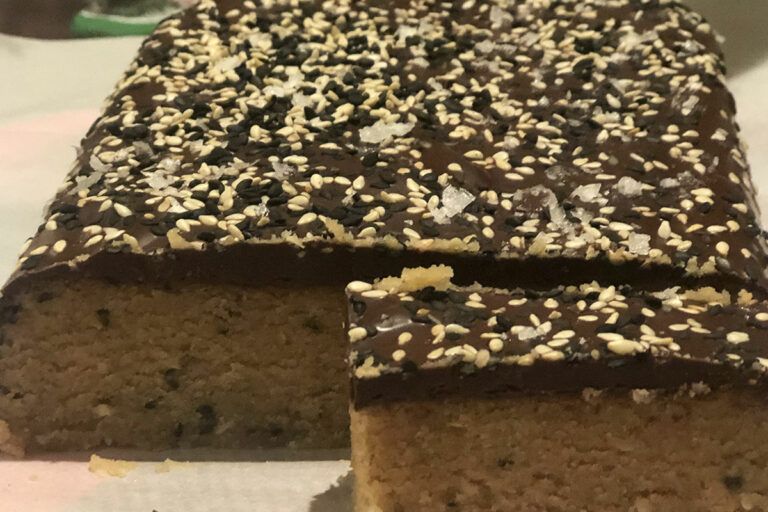
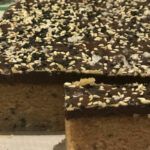
Are you familiar with halva (or halvah)? It is a Middle Eastern candy that is pretty unique in texture and taste. I often have a hard time describing it (see my in-depth description in my basic halva recipe). Have you ever had a Butterfinger? You know that crystalized texture in the middle? It is something like that only softer and it kind of melts away when it hits the tongue. It is so good and you definitely want to try it if you haven’t had it. This is my chocolate covered halva recipe and one of my favorite versions.
Making this candy has special meaning for me. It was my dad’s favorite candy and one of the few sweets he indulged in on a regular basis. Growing up, there was always a bar of halva in our refrigerator and every kid in our house (all six of us) knew that was “daddy’s candy”. Like all things you are told you “can’t have”, I wanted it, loved it and still crave it from time to time. I made it for the first time when I started blogging and have been making it, ever since. It has been a joy and a gift of love learning to make it, and I know he would have gone nuts over this recipe. I served it for Christmas 2020 and learned that my niece’s finance and family loved Halva (who knew?). So this been a regular on my dessert buffet ever since. On a mission to try new flavors, I also have a basic halva and an Israeli Tahini halvah for you to try. You’ll also want to check out my Halvah Apple Bars – so good!
Ingredients in this halva recipe
- Tahini
- Sugar
- Kosher Salt
- Black and White Sesame seeds
- Bittersweet Chocolate
- Flaky salt (Maldon is a favorite)
- Cooking spray
Ingredient substitutions
You certainly can substitute dark chocolate or semi-sweet chocolate for the bittersweet chocolate. Use your favorite but make sure it is a good quality chocolate like Callebaut, Godiva or Valrhona are all good choices.
I wouldn’t use milk chocolate as it would be too sweet when added to the halva base – but that is your choice.
You could omit the sesame seeds or just use all white or all black. The flaky salt is optional but it brings this whole candy recipe together.
How to make chocolate covered halva
- To get started, spray an 8 x 4 inch loaf pan with nonstick spray and then line it with parchment paper. Leave 2-inch overhang on both of the long sides.
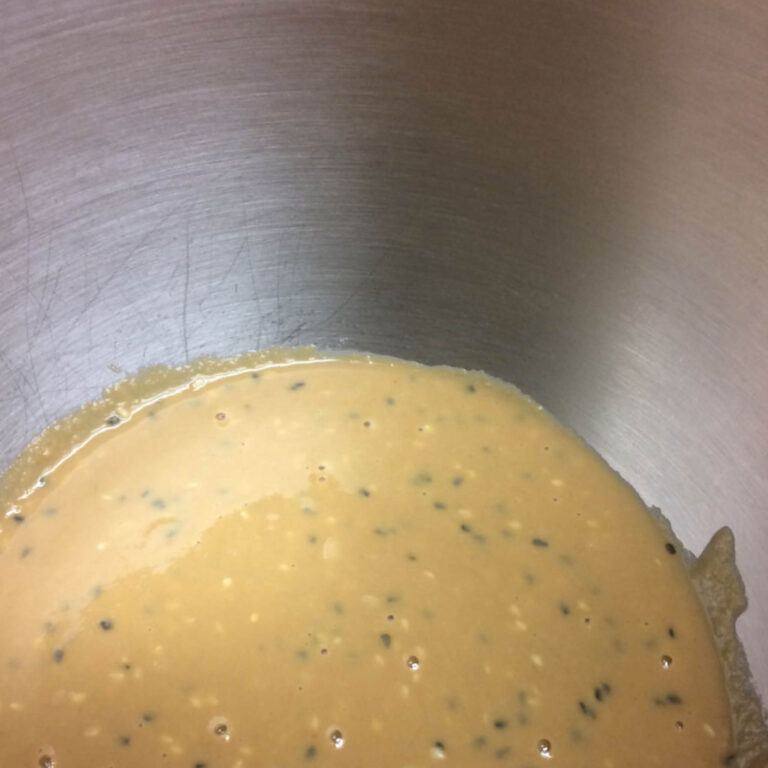
- Mix the tahini (often the oil has separated from the sesame paste so stir this completely before adding to other ingredients), salt and 2 Tbsp. of the mixed sesame seeds in a medium bowl to combine. Put that to the side.
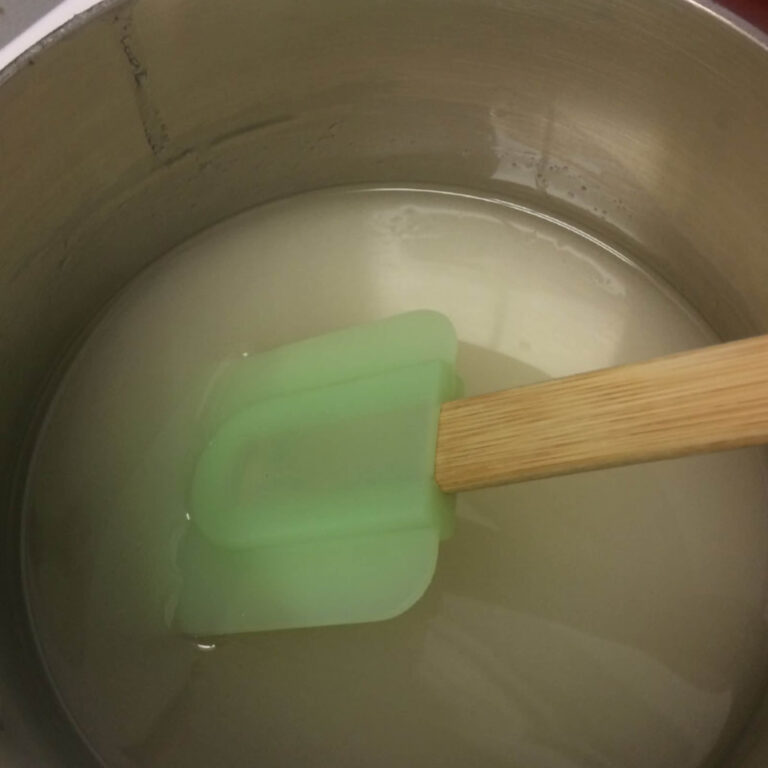
- Cook the sugar and ½ cup of water in a small saucepan until the sugar is dissolved (about 4-5 minutes). Increase the heat to medium high and fit with a candy thermometer. Cook the syrup, brushing the sides of the pot with a wet pastry brush as needed to dissolve the crystalized sugar that forms, until the thermometer reads 250 degrees F. exactly. (This can take anywhere from 7-10 minutes)
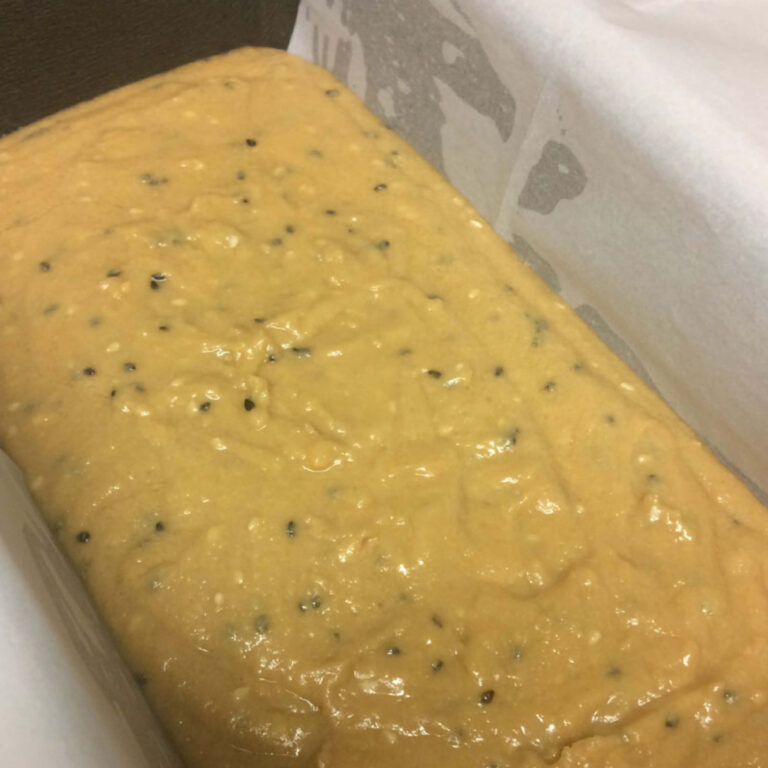
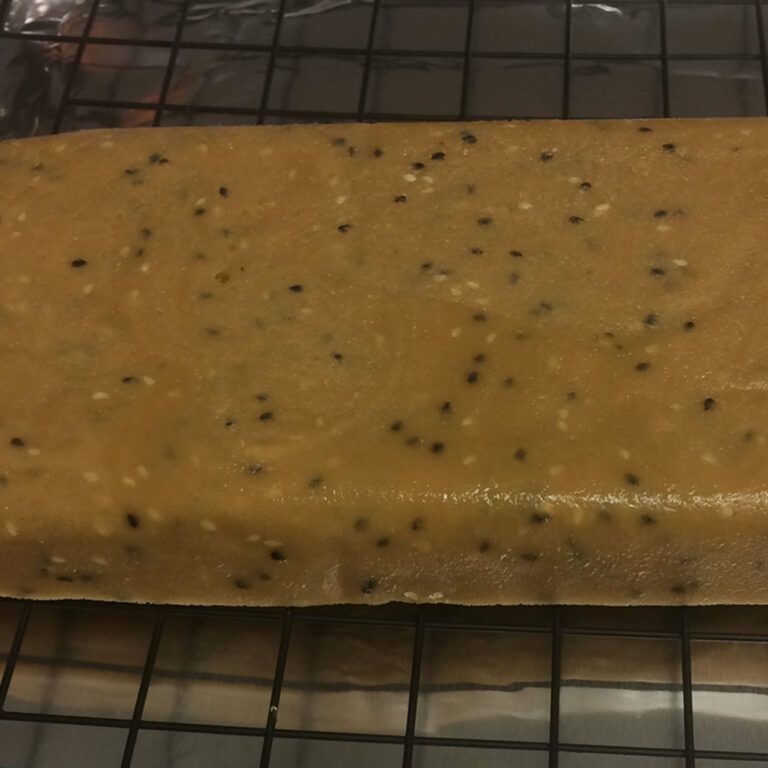
- As soon as it hits 250 degrees F., immediately remove pan from stove and gradually add to the tahini in the bowl stirring constantly with a spatula. Continue to mix until the halva comes together into a smooth mass and starts to pull away from the sides of the bowl (takes under a minute for this to happen). Don’t over mix this or the candy becomes crumbly. Immediately scrape the mixture into the prepared pan. Let cool completely. Then, let this sit overnight to completely set. You can leave it in the pan and cover with plastic wrap.
- Melt the chocolate in the microwave in 30-second intervals stirring after each 30-second period until the chocolate is smooth and melted.
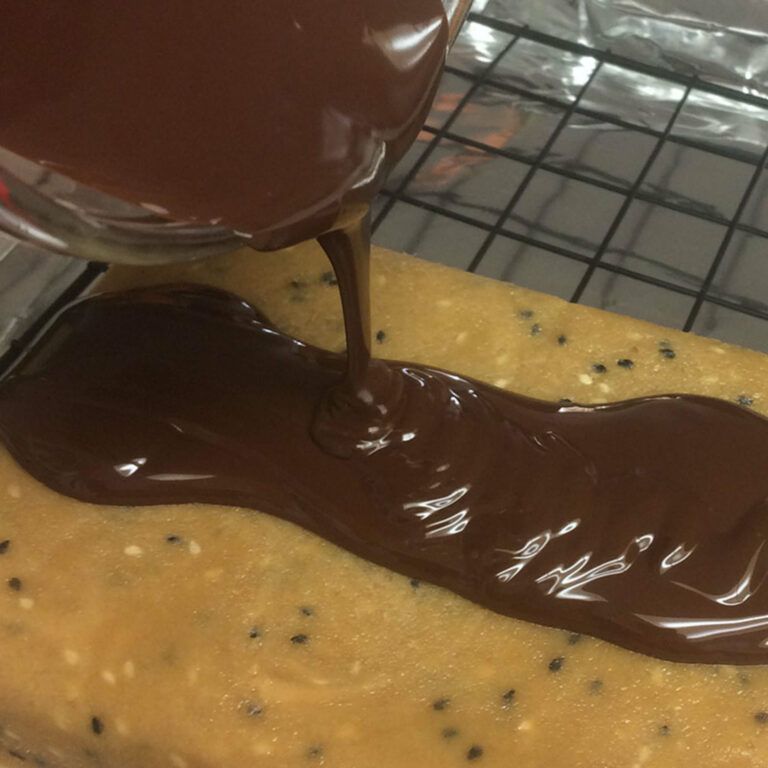
- Invert your set halva onto a wire rack sitting over a parchment lined baking sheet (to catch the dripping chocolate). Pour your chocolate over the halva and smooth it out so it completely covers the top and sides of the candy.
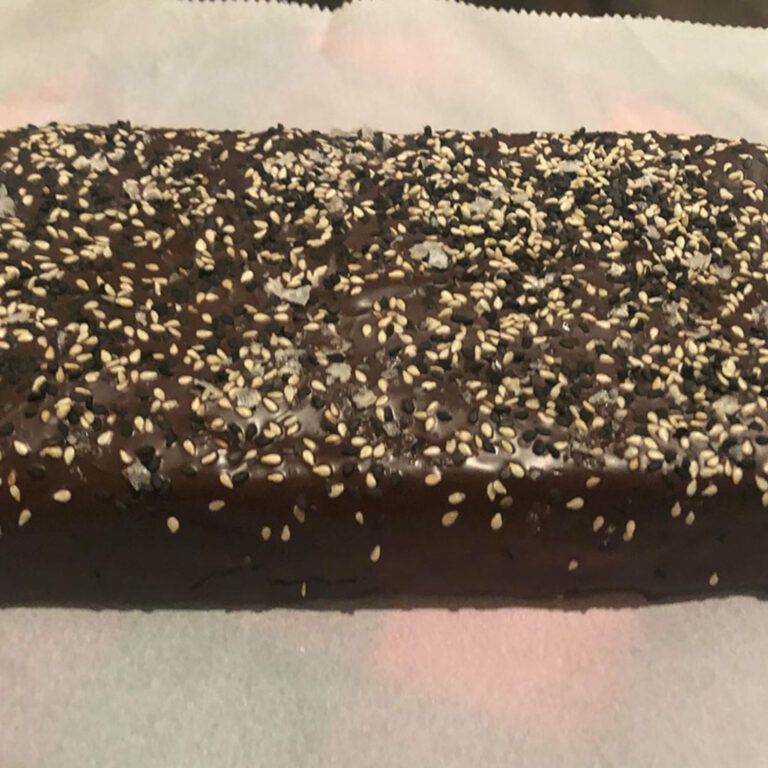
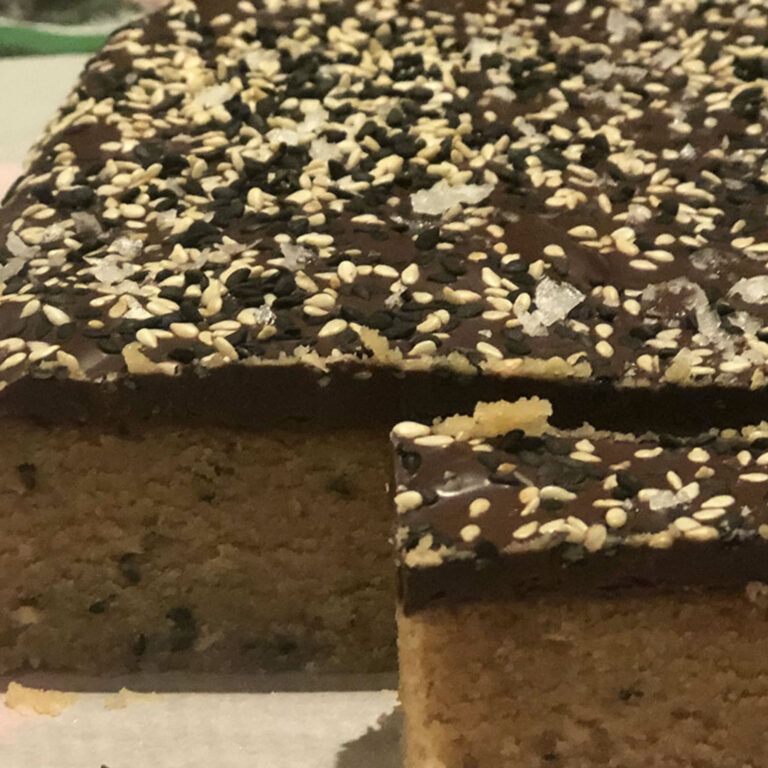
- Sprinkle with the remaining sesame seeds and flaky salt. Let sit until the chocolate is set. You can place this in the fridge for an hour to speed up the process. Cut into small squares and serve or box as gifts. Cover tightly and store for up to 3 days at room temperature.
Frequently asked questions and answers about halva and halvah
Halva and halvah are different spellings of the same word and refer to the same Middle Eastern dessert made from sesame seeds or flour. Both spellings are considered correct, with “halva” more common in American English and “halvah” more common in British English.
The origins are debated among food historians. Some scholars have suggested it originated near Byzantium, now Istanbul, some time before the 12th century, while others believe it dates back all the way to 3000 B.C.E. More than likely, the dish originated in the area around present day Turkey, Syria, or Iran during the 13th century and spread from there. Beginning life in Persia around the 7th Century, this traditional confection traveled down the Silk Road and inspired regional variations all across North Africa, Eastern Europe, and the Middle East.
Halva, from the Arabic ḥalwá for “sweet,” is a beloved Middle Eastern confection found across the world. In Arabic, “halwa” translates to “sweet,” “sweet dish,” or “sweet meat.”
Halva is made of tahini and sugar in the sesame-based variety. However, there are many regional variations using different ingredients like flour, butter, and various flavorings.
It should be preserved at room temperature.
Storage in cool, dark places helps maintain quality and prevents the sesame oils from going rancid.
Based on consumer discussions, halva can typically be kept for a couple of weeks to about 2 months when stored properly in a cool, dark place.
Yes, these are different desserts despite similar names. Halva is sometimes confused with halwa, a South Asian dessert made with rice or semolina paste that has a gelatinous, smooth texture similar to pudding.
There are numerous regional variations including sesame-based (tahini) halva popular in the Middle East and Mediterranean, flour-based varieties from Iran and other regions, and semolina-based versions from Greece and Turkey.
Fat is not one of the ingredients used to make halva as an added ingredient, but tahini (sesame paste) naturally contains oils from sesame seeds.
E471 is used in a 5/1000 ratio to reduce oiling in halva; it is completely vegetable
based according to some manufacturers.
Halva is typically eaten as a sweet treat or dessert, often served in small portions due to its rich, dense texture. It can be eaten on its own or incorporated into other desserts.
Halva (also halvah, halwa, halua, and other spellings is a type of confectionery that is widely spread throughout the Middle East and North Africa, Eastern Europe and the Balkans, Central Asia, and South Asia.
If you liked this recipe, do leave a comment and rating below. Looking for other easy candy recipes? Check out some of these:
White Chocolate, Pecan and Berry Bites

Chocolate Covered Halva
Nutritional information is only an estimate. The accuracy of the nutritional information for any recipe on this site is not guaranteed.

Ingredients
- Nonstick vegetable oil spray
- 1 ½ Cups Tahini (usually a 16 oz. jar of tahini)
- 1/3 Tsp. Kosher salt
- 3 Tbsp. Black and white sesame seeds, divided
- 1 ½ Cups Sugar
- 4 Oz. Bittersweet chocolate
- Flaky sea salt (Maldon is my preference)
Instructions
- Spray an 8 x 4 inch loaf pan with nonstick spray and then line it with parchment paper. Leave 2-inch overhang on both of the long sides.
- Mix the tahini (often the oil has separated from the sesame paste so stir this completely before adding to other ingredients), salt and 2 Tbsp. of the mixed sesame seeds in a medium bowl to combine. Put that to the side.
- Cook the sugar and ½ cup of water in a small saucepan until the sugar is dissolved (about 4-5 minutes). Increase the heat to medium high and fit with a candy thermometer. (See note below) Cook the syrup, brushing the sides of the pot with a wet pastry brush as needed to dissolve the crystalized sugar that forms, until the thermometer reads 250 degrees exactly. (This can take anywhere from 7-10 minutes).
- As soon as it hits 250 degrees, immediately remove pan from stove and gradually add to the tahini in the bowl stirring constantly with a spatula. Continue to mix until the halva comes together into a smooth mass and starts to pull away from the sides of the bowl (takes under a minute for this to happen). Don’t over mix this or the candy becomes crumbly. Immediately scrape the mixture into the prepared pan. Let cool completely.
- You can melt the chocolate in the microwave in 30-second intervals stirring after each 30-second period until the chocolate is smooth and melted.
- Invert your set halva onto a wire rack sitting over a parchment lined baking sheet (to catch the dripping chocolate). Pour your chocolate over the halva and smooth it out so it completely covers the top and sides of the candy.
- Spring with the remaining sesame seeds and flaky salt. Cut into small squares and serve or box as gifts. Cover tightly and store for up to 3 days at room temperature.

Meet Diane
Hi! I’m Diane. I started this site as a passion project. I love to cook, entertain, travel and laugh. (Who doesn’t love a good laugh?) Of course, being from New York, sarcasm rules!
More About Diane
mycuratedtastes@gmail.com
This Week’s Finds
See the latest deals, newest products and fabulous new finds for the kitchen, dining room and beyond.

Jingle Bell Bites 2025
26 Irresistible Christmas Appetizers Made Easy
I love everything about the holiday, from shopping, to decorating, wrapping and putting up the tree. Christmas has always been celebrated in my family with joy, excitement and food! Get my favorite appetizer recipes and let the season begin!

Stay Connected
Sign up for my latest recipes, menu ideas, travel suggestions and promotions sent to your inbox every month….