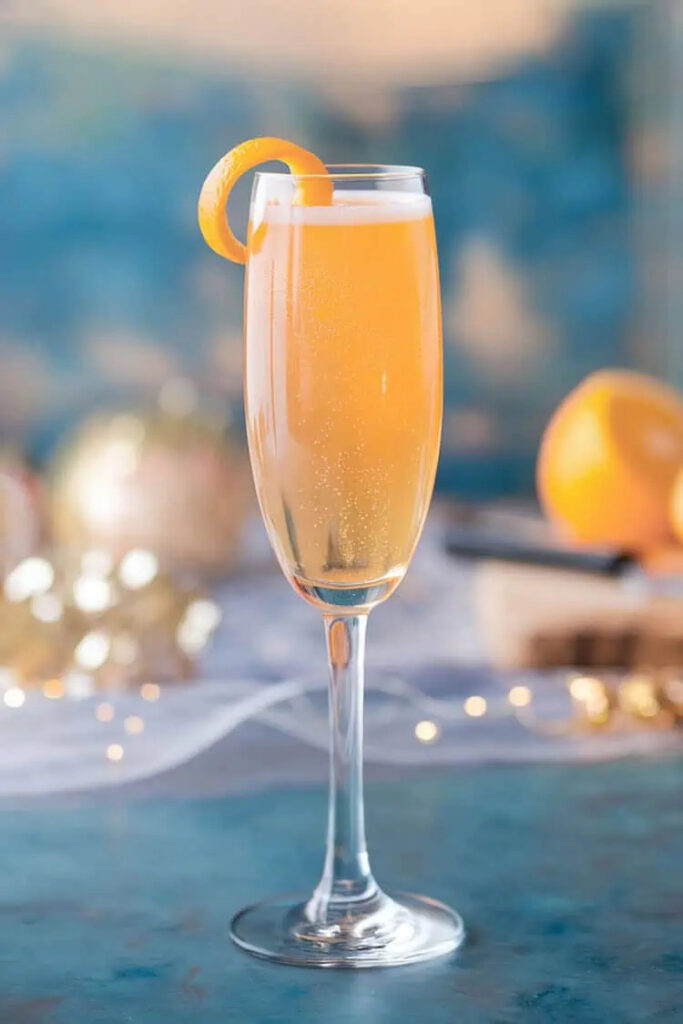
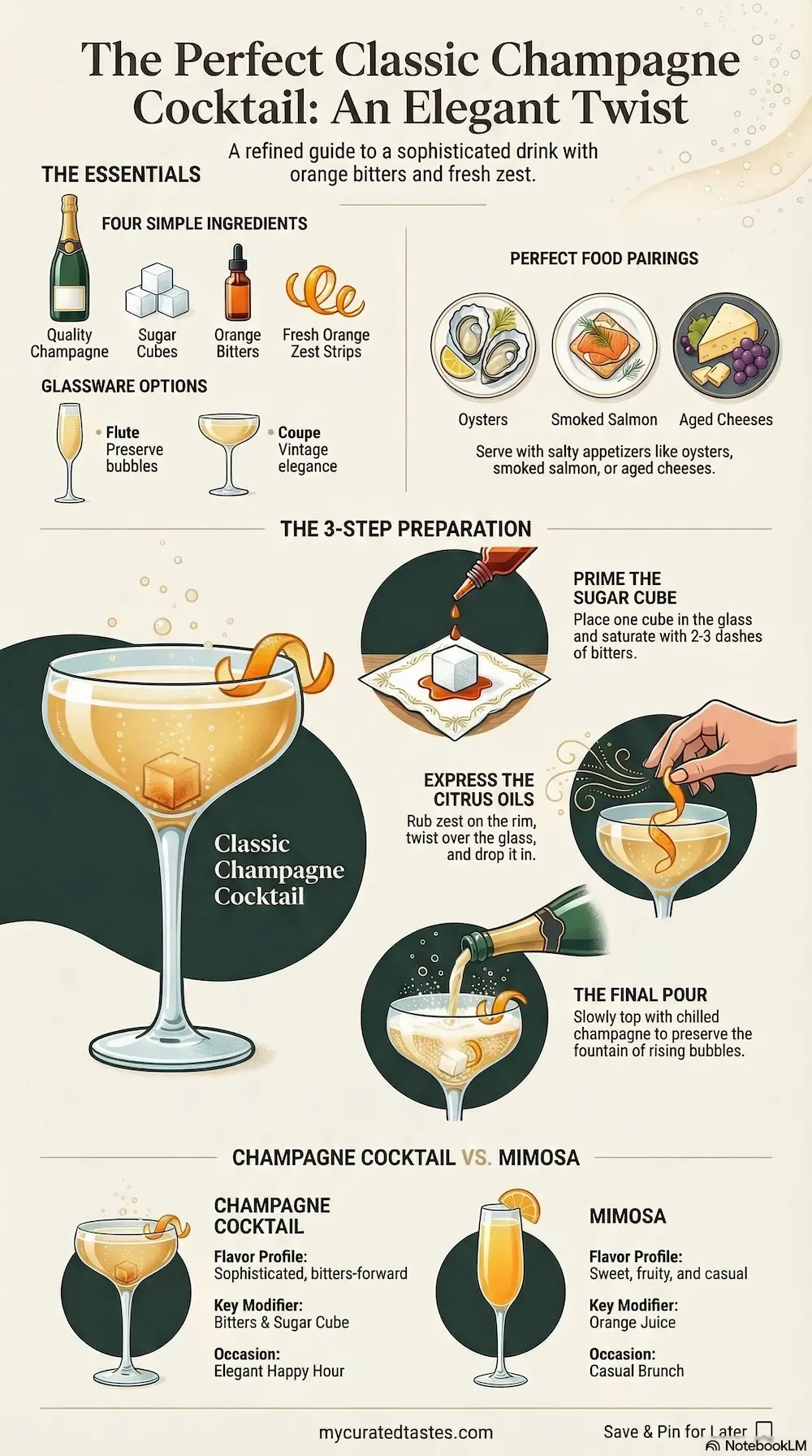
A classic champagne cocktail contains just four simple ingredients: one sugar cube, 2-3 dashes of Angostura or orange bitters, a strip of orange peel (zest), and champagne or sparkling wine. This timeless recipe dates back to the 1860s and remains one of the most elegant cocktails you can serve.
Absolutely! Prosecco, cava, or any quality sparkling wine works beautifully in a champagne cocktail. In fact, many bartenders prefer using prosecco or cava since the cocktail’s other ingredients add flavor and complexity, making expensive champagne unnecessary. Save your vintage Dom Pérignon for sipping solo.
While Angostura bitters are traditional, orange bitters have become increasingly popular and complement the orange garnish perfectly. Peychaud’s bitters offer a lighter, more floral option. Feel free to experiment—even a dash of aromatic or grapefruit bitters can create interesting variations.
The rough, porous surface of the sugar cube provides nucleation sites where dissolved carbon dioxide in the champagne can escape and form bubbles. As the sugar slowly dissolves, it continuously releases these bubbles, creating that mesmerizing fountain effect rising through your glass throughout the entire drink.
Hold a 2-inch strip of orange peel (colored part only, no white pith) between your thumb and forefinger with the colored side facing down toward the drink. Quickly bend or twist it over the glass—you should see a fine mist of citrus oil spray across the surface. This releases the aromatic oils that enhance both the aroma and flavor.
A champagne cocktail uses a sugar cube, bitters, and orange zest, creating a sophisticated, bitters-forward drink. A mimosa combines champagne with orange juice in roughly equal parts, resulting in a sweeter, fruitier brunch beverage. The champagne cocktail is more complex and spirit-focused, while mimosas are lighter and more casual.
It’s best to assemble champagne cocktails just before serving to preserve the bubbles and fresh citrus aroma. However, you can prep your glasses in advance by placing the sugar cubes and adding the bitters up to an hour before guests arrive. Cover the glasses with plastic wrap, then add the orange zest and champagne right before serving.
A champagne flute is the traditional choice because its tall, narrow shape preserves carbonation and showcases the rising bubbles. However, a coupe glass (shallow champagne saucer) offers a more vintage, glamorous presentation and makes it easier to enjoy the aromatic orange oils. Both work beautifully—choose based on your aesthetic preference.
No, you don’t eat the sugar cube—it’s meant to dissolve slowly throughout the drink, gradually sweetening your champagne cocktail as you sip. The cube typically takes 10-15 minutes to fully dissolve, which means your last sip will be sweeter than your first, creating an evolving flavor experience.
Champagne cocktails pair wonderfully with salty, rich appetizers that complement their bittersweet profile. Try them with oysters, smoked salmon canapés, aged cheese, salted nuts, or caviar. The bitters and citrus also cut through fatty foods beautifully, making these cocktails excellent pre-dinner drinks that stimulate the appetite without overwhelming the palate.
 Add Us As A Trusted Google Source