Embossed Rolling Pin Shortbread Cookies

My Curated Tastes is reader-supported. When you buy through links on our site, we may earn an affiliate commission at no extra cost to you. As an Amazon Associate I earn from qualifying purchases.

Testimonial

“The cookies were delicious and a big hit with the family. I made a double batch and they’re still asking for more!” – Holly

Embossed Rolling Pin Cookies – Frequently Asked Questions

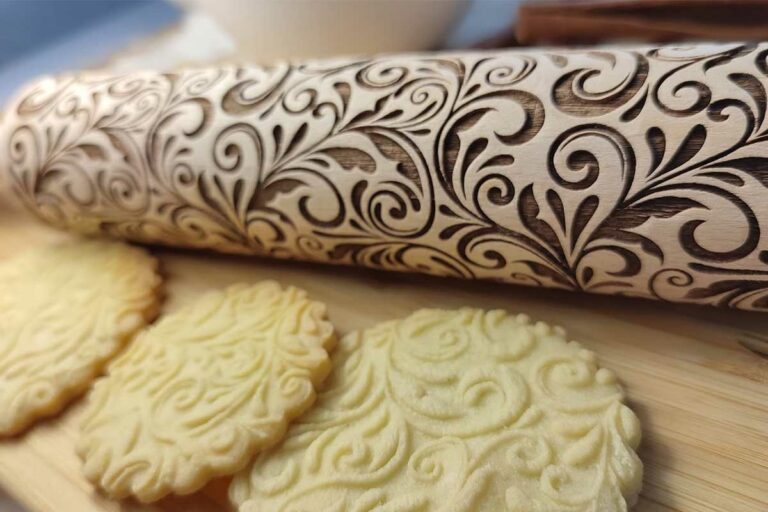
An embossed rolling pin is a specialized baking tool that features raised or engraved patterns carved into its surface. When rolled over cookie dough, it transfers beautiful designs, textures, or images directly onto the dough surface, creating decorative cookies without the need for additional decorating tools. These rolling pins are typically made from wood, acrylic, or silicone and come in various pattern designs ranging from Christmas themes to geometric patterns, florals, and seasonal motifs.
Yes, embossed rolling pins work effectively when used with the right technique and dough consistency. The key is using a firm, non-sticky cookie dough that holds its shape well. For anyone who is wondering how to use embossed rolling pins, they absolutely do work when you use a dough recipe that makes a slightly firm-to-the-touch dough which is not sticky. Success depends on proper dough temperature, adequate flour dusting, and applying even pressure while rolling.

The best cookie dough for embossed rolling pins is firm, slightly dry, and holds its shape well. Ideal dough types include:

  • Shortbread dough – Perfect texture and holds patterns beautifully
  • Sugar cookie dough – Classic choice that embosses cleanly
  • Gingerbread dough – Gingerbread works nicely because the deeper color shows off the designs nicely
  • Spiced butter cookie dough – Maintains structure while adding flavor

Avoid doughs with mix-ins like chocolate chips, nuts, or dried fruit, as these will interfere with the pattern clarity.

Dough sticks to embossed rolling pins for several reasons:

  1. Insufficient flour dusting – If the dough sticks to the rolling pin, it means insufficient flour was used. Generously flour the pin and re-chill the dough to get a clean release
  2. Dough too warm – Warm dough becomes sticky and fills the pattern grooves
  3. Dough too wet – Excessive moisture makes dough cling to surfaces
  4. Overworking the dough – Creates heat and breaks down structure

Solution: Chill your dough for 30 minutes before rolling, dust both the rolling pin and work surface generously with flour, and work quickly.

To maintain crisp embossed patterns during baking:

  1. Chill shaped cookies – Refrigerate embossed cookies for 15-30 minutes before baking
  2. Use proper oven temperature – Place the baking tray on the top rack of the oven and bake for the first two minutes with the fan on. After that, switch to a regular setting for the remaining time. This helps set the pattern quickly
  3. Don’t overbake – Remove when edges are just set to prevent pattern distortion
  4. Avoid over-spreading doughs – Use recipes with adequate flour content to maintain structure

The terms “embossed” and “engraved” are often used interchangeably, but technically:

  • Embossed rolling pins have raised patterns that create indented designs in the dough
  • Engraved rolling pins have carved-out patterns that create raised designs in the dough

Most commercial “embossed” rolling pins are actually engraved, with patterns carved into the surface to create raised designs on cookies. The end result is beautiful textured cookies regardless of the technical terminology.

Roll embossed cookie dough to approximately 1/4 inch (6mm) thickness. This provides enough depth for clear pattern definition while ensuring cookies bake evenly. Thinner dough may not capture fine pattern details, while thicker dough can result in undercooked centers and overly thick final cookies.

Embossed rolling pins work best on:

  • Cookie dough – Primary intended use
  • Fondant – Creates beautiful cake decorations
  • Pie crust – Adds decorative edges and patterns
  • Bread dough – For artisanal loaf decorations
  • Pasta dough – Creates textured noodles

They don’t work well on very wet batters, yeasted doughs that are too soft, or doughs with large inclusions.

Proper care extends your rolling pin’s life:

Cleaning:

  • Hand wash only with warm soapy water
  • Use a soft brush to remove dough from pattern grooves
  • Do not put the rolling pin in the dishwasher and avoid any prolonged contact with water
  • Dry immediately and thoroughly

Maintenance:

  • Store in a dry place
  • For wooden pins, occasionally oil with food-safe mineral oil
  • Avoid extreme temperature changes
  • Handle carefully to prevent pattern damage

The choice depends on your rolling pin design:

  • Geometric patterns – Some embossed rolling pin designs have a perfect square or rectangular outline. You can use a roller wheel like you might with homemade pasta to cut out the cookie dough into square or rectangular shapes
  • Freeform patterns – Use round, oval, or decorative cookie cutters that complement the design
  • Continuous patterns – Simple geometric cutters work best to showcase the pattern

Avoid overly intricate cutter shapes that might compete with the embossed design.

Pattern loss occurs due to:

  1. Dough spreading during baking – Use a firmer dough recipe with less butter/fat
  2. Incorrect oven temperature – Too low allows spreading, too high causes rapid expansion
  3. Insufficient chilling – Always chill shaped cookies before baking
  4. Rolling pin wear – If the imprint impression seems to fade over time, the pin may need reconditioning or replacing

Uneven pressure during rolling – Apply consistent, firm pressure across the entire surface

Yes, embossed cookies are excellent for advance preparation:

Dough storage: Wrapped embossed cookie dough keeps in the refrigerator for up to 5 days or frozen for 3 months

Baked cookies: Store in airtight containers for up to 1 week at room temperature

Make-ahead tip: Mix large batches of dough and hold them in the frig, tightly covered, for up to several days, then roll and bake as needed

All-purpose flour is ideal for most embossed cookie recipes because it provides the right balance of structure and tenderness. For extra-crisp patterns, you can substitute up to 25% of the all-purpose flour with cake flour, which reduces gluten development and creates more tender cookies that hold fine details better.

Apply firm, consistent pressure while rolling, but avoid pressing so hard that you compress the dough excessively. The goal is to ensure the pattern transfers completely without flattening the dough too thin. Roll in one direction with steady pressure, then lift and reposition rather than rolling back and forth, which can blur pattern details.

Yes, embossed rolling pins work well with gluten-free cookie dough, often producing even better pattern definition because gluten-free doughs typically spread less during baking. Use a gluten-free flour blend designed for cookies, and ensure the dough is properly chilled and not too sticky before rolling.

Popular embossed rolling pin patterns by season:

Christmas: Snowflakes, Christmas trees, holly, reindeer Spring: Flowers, butterflies, Easter themes, geometric patterns Summer: Tropical motifs, geometric designs, simple florals
Fall: Leaves, acorns, harvest themes, damask patterns Year-round: Geometric patterns, polka dots, stripes, floral motifs

Choose versatile patterns if you plan to use your rolling pin frequently throughout the year.

If your pattern didn’t transfer well:

  1. Re-roll immediately – If dough is still workable, re-flour the pin and roll again
  2. Chill and try again – If dough is too soft, refrigerate 15 minutes and re-attempt
  3. Accept partial patterns – Sometimes incomplete transfers create interesting artistic effects
  4. Learn for next batch – Adjust dough consistency, flour dusting, or pressure for subsequent cookies

Remember, even imperfect embossed cookies often look more elegant than plain ones!

Higher-quality embossed rolling pins typically offer:

  • Deeper, clearer patterns – Better detail transfer
  • Durability – Last longer with proper care
  • Better materials – Food-safe finishes and smoother operation
  • Pattern variety – More intricate and unique designs

While budget options work for occasional use, serious bakers benefit from investing in well-made embossed rolling pins that provide consistently beautiful results and withstand frequent use.

Embossed Rolling Pin Shortbread Cookies

Embossed Rolling Pin Shortbread Cookies

Make beautiful shortbread cookies great for gift giving using a simple, embossed rolling pin.
4 from 9 votes
Prep Time 20 minutes
Cook Time 1 hour 10 minutes
Total Time 1 hour 30 minutes
Course Dessert, General
Cuisine General
Servings 3 Dozen

Nutritional information is only an estimate. The accuracy of the nutritional information for any recipe on this site is not guaranteed.

Ingredients


  • 1 Cup Butter, softened
  • 1 1/2 Cups Confectioners’ sugar, sifted
  • 1 Egg
  • 2 1/2 Tsp. Pure Vanilla extract
  • 3 1/4 Cups All-purpose flour
  • 1/2 Tsp. Kosher salt

Instructions
 

  • Preheat oven to 350°F.
  • Using a stand mixer, cream the butter and sugar together. Add the egg and extract and mix until well combined. Sift in flour and salt and mix well.
  • Divide the dough into 4 pieces. Form into flat disks. Wrap each piece in plastic wrap and refrigerate the dough for 30 minutes.
  • Lightly flour a regular rolling pin and the surface you’ll be rolling the dough out on. If dough seems too firm to roll, allow it to soften for a few minutes at room temperature. Add one piece of dough to floured surface and with the regular rolling pin, roll dough out to just over ¼” thick and about the width of the embossing rolling pin. Sprinkle the top of the dough lightly with flour.
    Also, lightly flour the embossing rolling pin. Take your embossing rolling pin and press down hard so you can really see the design when finished. Slowly roll the Embossing Rolling Pin evenly over the dough.
  • Use a 3-inch round or square cutter to cut out cookies from the printed dough. Re-roll scraps of dough with the regular rolling pin, dust with flour and repeat with the embossing rolling pin and cutter.
  • Place the cooking on a baking sheet covered in parchment paper and put in the refrigerator for 20 minutes to let the cookies set.
  • Bake cookies for 12-15 minutes or until edges are slightly browned. Remove cookies and place on a cooling rack to cool.
  • Repeat all steps with remaining dough, rolling one piece of dough at a time. Serve and enjoy!
Keyword dessert
Tried this recipe?Let us know how it was!